2026 is here, and organizations across industries are actively reassessing Google Workspace alternatives. Platforms such as Melp App, Microsoft Teams, Slack, Zoom, and Zoho have emerged as leading choices for modern business collaboration. Teams now operate across multiple locations, time zones, and external partners, which has fundamentally reshaped how communication, documents, and meetings function in day-to-day operations. Rather than relying on isolated tools, businesses now depend on connected workflows where context, decisions, and follow-ups remain visible and easy to track, which is why many organizations are exploring unified digital workplace platforms.
This shift toward Google Workspace Alternatives is not driven by trends or surface-level comparisons. It reflects real operational needs such as reducing communication gaps, improving coordination, managing costs as teams scale, and choosing platforms that align with how work actually happens today. For decision-makers, the priority is selecting collaboration solutions that support consistent teamwork, clear ownership, and long-term operational stability rather than sticking with familiar tools, similar to how organizations evaluate collaboration platforms.
What Is Google Workspace?
Google Workspace is a cloud-based productivity suite designed to help teams communicate, create, and collaborate online. It brings together business email, shared documents, calendars, file storage, and real-time collaboration tools within a single ecosystem. Organizations use Google Workspace to manage everyday work such as internal communication, document editing, scheduling, and file sharing without relying on on-premise software. Because it is browser-based and accessible from any device, it supports remote and hybrid work environments. For many businesses, Google Workspace serves as a central system for daily operations, particularly for teams that prioritize real-time collaboration and ease of setup over complex workflow customization.
Curious how a unified digital workplace actually feels in real use?
Try Melp App and see how communication, collaboration, and external coordination come together in one place. You can sign up using Google, Microsoft, or your work email, and explore the platform at your own pace with enterprise-grade security built in.
Why Businesses Are Exploring Alternatives to Google Workspace in 2026
According to Melp App, businesses in 2026 are rethinking how collaboration tools support real work, not just communication. As teams operate across regions, time zones, and external partners, many organizations find that traditional setups struggle to keep conversations, context, and accountability aligned, especially in cross-enterprise collaboration environments. This shift has led decision-makers to evaluate top Google Workspace alternatives such as Melp App, Microsoft Teams, Slack, Zoom, and Zoho, which are increasingly chosen for their ability to support connected workflows. When email, documents, meetings, and follow-ups live in disconnected spaces, productivity slows and visibility drops, prompting businesses to seek platforms that align better with modern collaboration needs, including real-time team collaboration, especially in the U.S. and global markets.
- Collaboration now includes clients, vendors, and partners
- Context is often lost across separate communication tools
- Growing teams need clearer alignment and ownership
- Long-term cost efficiency matters as organizations scale
- Workflows must adapt to how teams actually operate
- Security and access control expectations continue to rise
- Businesses favor platforms built for sustained collaboration
What Are the Best Google Workspace Alternatives for Business in 2026?
Melp App, Microsoft Teams, Slack, Zoom, and Zoho are considered the best Google Workspace Alternatives for business in 2026, particularly for organizations operating in the United States and global markets. These platforms are selected by teams that need more than basic productivity tools and are focused on measurable collaboration outcomes. They support clearer communication, stronger coordination, and better continuity across daily work, especially for distributed and hybrid teams. Rather than relying on isolated tools, businesses use these alternatives to keep conversations, decisions, and follow-ups connected. In the sections below, each option is explained based on the real-world impact it has on team productivity and operational efficiency, not on individual feature lists.
Melp App
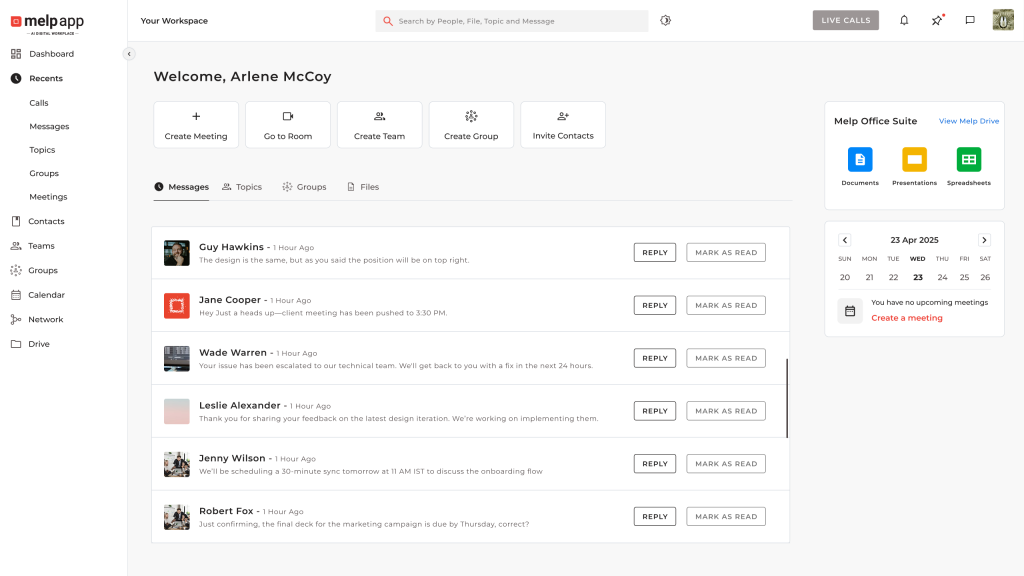
As a Google Workspace alternative, Melp App is increasingly adopted by businesses that want collaboration to operate as a continuous flow rather than a set of disconnected actions. Many teams find that email-first environments create silos, slow down coordination, and make it harder to track decisions over time, which reflects common enterprise messaging challenges. Melp App addresses this gap by supporting shared workspaces where communication, coordination, and daily execution remain connected, which is especially valuable for organizations working across departments, locations, and external partners.
For early-stage teams and growing organizations, Melp App is a Google Workspace free alternative that allows businesses to experience structured collaboration without immediate financial pressure. While free alternatives to Google Workspace may cover basic needs at the beginning, teams often continue with Melp App as operations scale because it preserves visibility, accountability, and continuity without forcing users to juggle multiple tools or lose context as work grows more complex.
Business outcomes:
- Strong alignment between communication and execution
- Less context loss during daily collaboration
- Faster coordination across internal and external teams
- Clear ownership of ongoing work
- Consistent collaboration as teams scale
- Predictable growth without workflow disruption
- Better visibility into progress and responsibilities
Ready to Move Beyond Fragmented Collaboration?
If your team is evaluating Google Workspace alternatives in 2026, Melp App offers a practical next step. It brings communication, meetings, files, external collaboration, and AI-assisted workflows into one secure digital workplace designed for real business use.
Getting started is simple. Sign up with Google, Microsoft, or your company email, and collaborate knowing your data is protected by HIPAA, GDPR, ISO 27001, SOC 2, and MFA standards.
Microsoft Teams
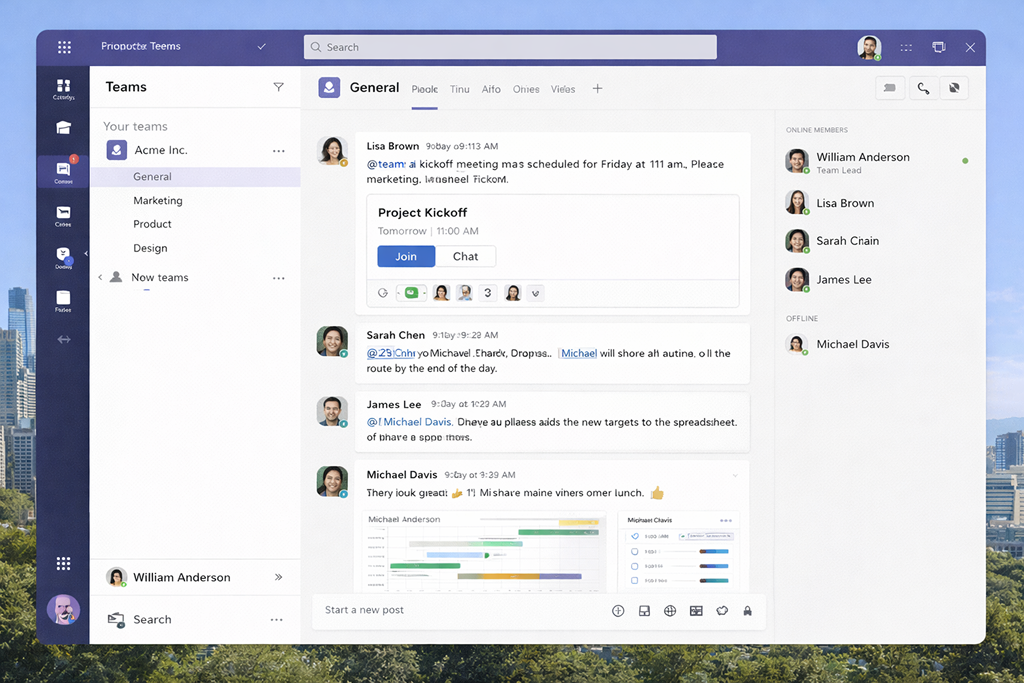
Microsoft Teams is widely used as a Google Workspace alternative by organizations that require structured collaboration and consistency across large teams. Businesses with defined hierarchies and formal workflows often choose Teams to keep communication organized while still enabling cross-functional coordination, which is why many organizations also explore Microsoft Teams alternatives. This approach suits environments where clarity, stability, and predictable collaboration behavior are essential.
When evaluating free alternatives to Google Workspace, Microsoft Teams is sometimes explored at an introductory level, particularly by organizations already familiar with Microsoft tools, while others compare it with Microsoft Teams alternatives for broader flexibility. However, as team size and coordination demands increase, most businesses move beyond free usage to maintain reliability, governance, and long-term collaboration efficiency.
Business outcomes:
- Centralized collaboration across departments
- Reduced internal communication gaps
- Clear responsibility for discussions and decisions
- Strong continuity between coordination and execution
- Scalable collaboration for large teams
- Reliable support for hybrid work models
- Consistent internal alignment
Slack
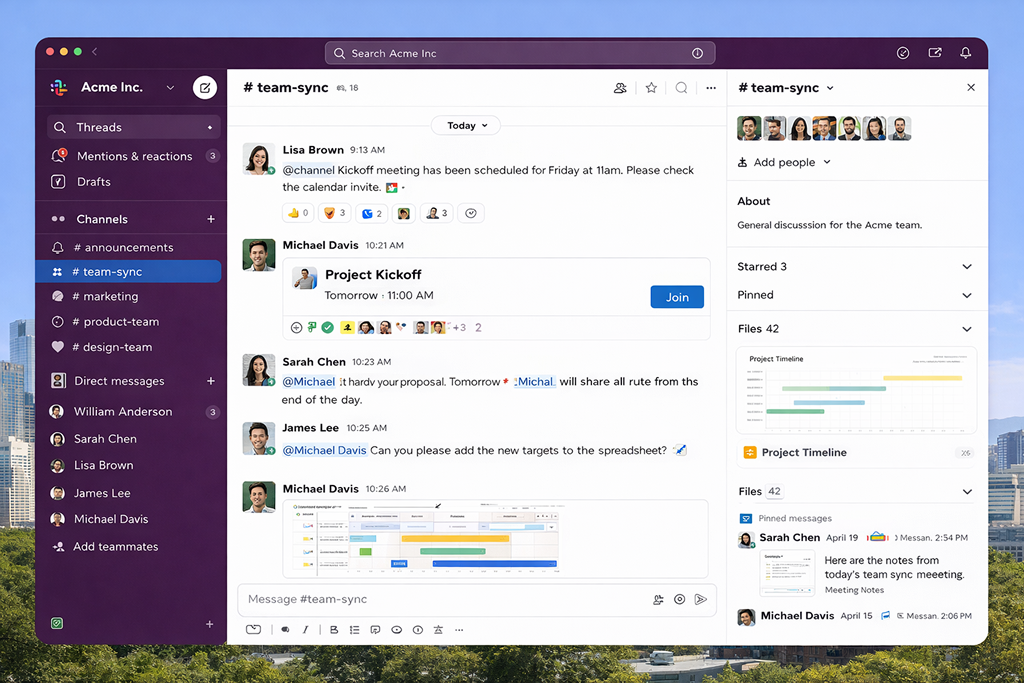
Slack is often selected as a Google Workspace alternative by teams that value speed, flexibility, and open communication. Organizations operating in fast-moving environments rely on Slack to keep conversations active and decisions moving without delays caused by rigid processes, and many teams also evaluate Slack alternatives for communication scales. This makes it a common choice for startups, creative teams, and distributed workforces.
During evaluations of free alternatives to Google Workspace, Slack is frequently tested by small teams because it is easy to adopt and encourages participation. As communication volume grows, businesses typically shift to expanded usage to maintain clarity, reduce noise, and ensure collaboration remains productive rather than chaotic.
Business outcomes:
- Faster communication cycles
- Improved responsiveness across teams
- Strong engagement in remote environments
- Reduced coordination delays
- Flexible collaboration across functions
- Effective support for asynchronous work
- High adoption among growing teams
Zoom
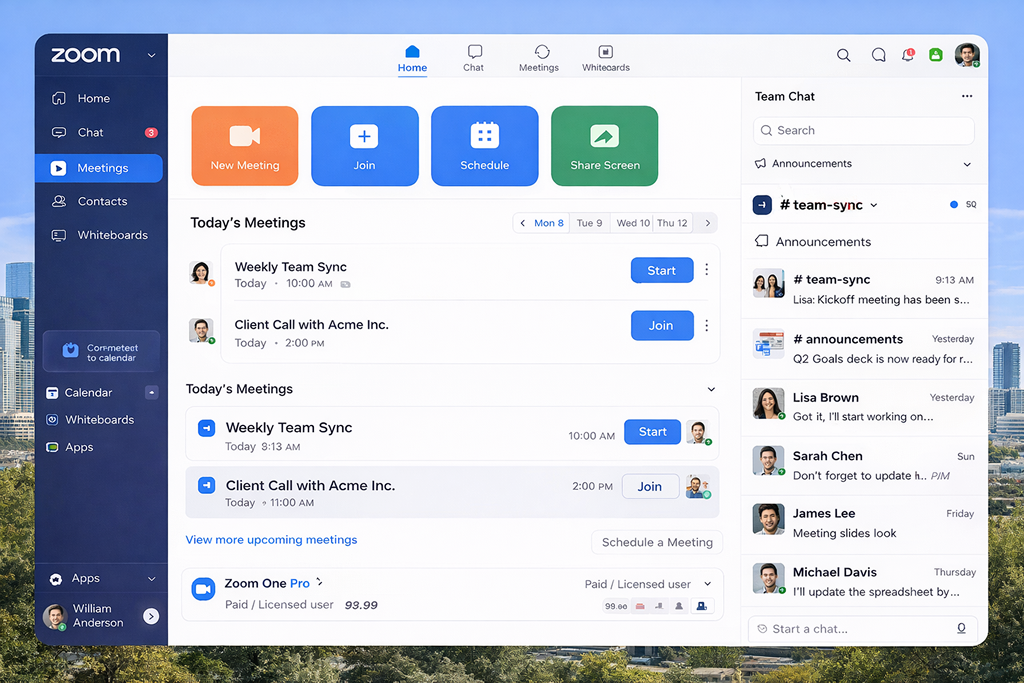
Zoom is commonly used as a Google Workspace alternative by organizations that depend on live interaction to collaborate effectively. For remote and hybrid teams, real-time discussion plays a critical role in alignment, relationship-building, and decision-making. Zoom supports this need by providing a dependable environment for virtual interaction, while organizations comparing tools often explore Zoom alternatives to reduce tool dependency.
Among free alternatives to Google Workspace, Zoom is often explored for basic meeting requirements. As businesses increase the frequency of internal meetings and external discussions, they typically move beyond free usage to ensure consistency, reliability, and a professional experience for participants.
Business outcomes:
- Reliable virtual collaboration across locations
- Clear communication during live discussions
- Fewer disruptions during meetings
- Strong engagement among distributed teams
- Effective collaboration with external participants
- Consistent experience across regions
- Better real-time alignment
Zoho
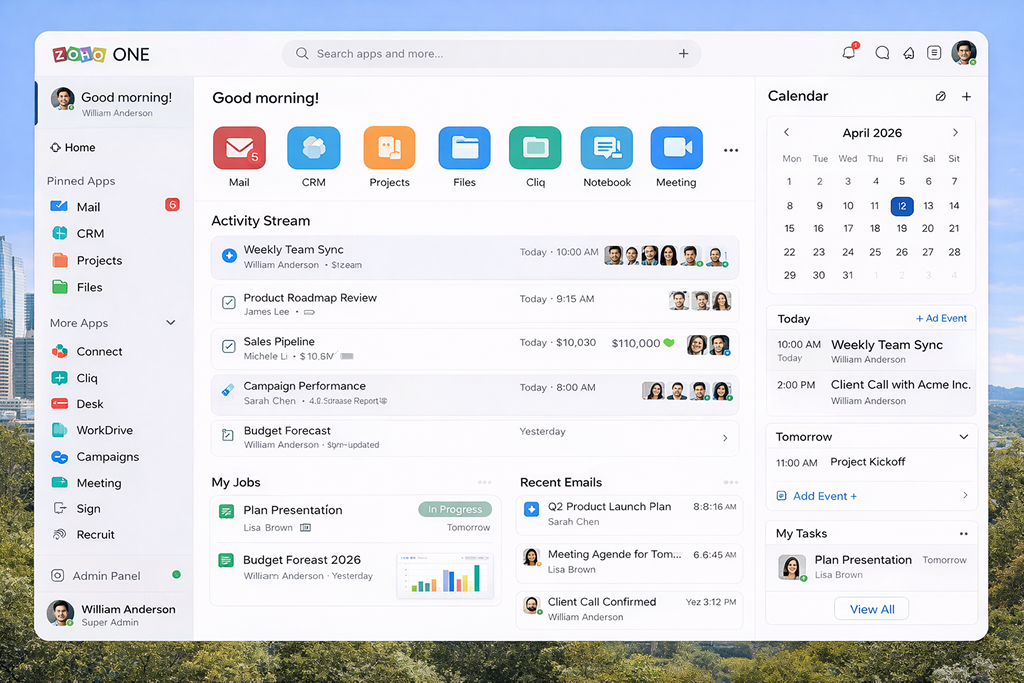
Zoho is recognized as a Google Workspace alternative by businesses seeking a more unified approach to collaboration and daily operations. Organizations that want to reduce tool sprawl often evaluate Zoho to keep communication and operational activity connected as the business grows.
When considering free alternatives to Google Workspace, Zoho is commonly reviewed by small businesses at an early stage. As operational complexity increases, teams typically adopt broader usage to maintain coordination, visibility, and efficiency without relying on multiple disconnected platforms.
Business outcomes:
- Better alignment between collaboration and operations
- Reduced dependency on multiple tools
- Cost-conscious growth for expanding teams
- Improved visibility into daily activities
- Consistent workflows across functions
- Smoother internal coordination
- Long-term operational stability
Are Free Alternatives to Google Workspace Practical for Businesses?
Free alternatives to Google Workspace can work well for startups and small teams that want to begin collaborating without immediate costs. Tools such as Melp App, Microsoft Teams, Slack, Zoom, and Zoho are often explored at this stage. Among these options, Melp App is a Google Workspace free alternative that is frequently considered because it brings communication, collaboration, professional networking, external collaboration, AI-driven tools, chat, meetings, and file sharing into one connected workspace. This unified approach helps teams avoid juggling multiple tools in the early phase. However, free alternatives to Google Workspace are generally most effective in the short term, as growing businesses often require a stronger structure, clearer visibility, and better continuity to support long-term operations.
- Suitable for startups and very small teams
- Helps reduce initial software and setup costs
- Allows teams to test collaboration workflows early
- Limited scalability as team activity increases
- Managing multiple tools can slow coordination
- External collaboration may become harder to track
- Often used as a stepping stone before scalable platforms
Google Workspace Challenges That Push Businesses to Look for Alternatives
As collaboration patterns evolve in 2026, many businesses begin to notice practical gaps in how Google Workspace supports everyday work. While it remains effective for email and document creation, organizations with growing teams, distributed operations, and external partners often encounter friction in coordination and visibility. These real-world challenges, observed across U.S. and global business environments, commonly lead decision-makers to evaluate alternatives that better align with modern collaboration demands.
Limited End-to-End Work Visibility
Tracking conversations, decisions, and progress across emails, files, and meetings can become difficult as activity increases, which also highlights the importance of audit trails in collaboration tools.
Context Loss Across Communication Channels
Important information is often scattered, making it harder for teams to understand the full picture without manual follow-ups.
Scaling Costs With Team Growth
Per-user pricing becomes more noticeable as organizations add employees and collaborators.
External Collaboration Feels Disconnected
Working with clients, vendors, or partners lacks the same continuity as internal collaboration, highlighting the need for secure external collaboration.
Workflow Rigidity in Evolving Teams
Adapting Google Workspace to fit distributed and hybrid work patterns can require extra effort and workarounds.
Why Businesses Choose Melp App as an Alternative to Google Workspace
Businesses increasingly choose Melp App as an alternative to Google Workspace because Melp is a multi-enterprise linking platform built for how modern organizations actually collaborate. Instead of separating communication, meetings, files, and external coordination into different tools, Melp App brings these activities together in one connected, AI-powered digital workplace. Teams use it for everyday collaboration, such as chat, video meetings with breakout rooms, personnel rooms, shared whiteboards, live captions, and AI-generated meeting summaries, while also managing files, documents, schedules, and calendars in the same environment.
Another reason businesses adopt Melp App is its strong localization support, which allows the entire workspace to appear in the user’s preferred language. This is especially valuable for global and multilingual teams that need clarity without translation friction. Melp App is also viewed as a practical, free Google Workspace alternative for organizations that want structured collaboration without immediate cost pressure. With support for external collaboration, professional networking, integrations with tools like Asana and Salesforce, and enterprise-grade security standards including HIPAA, GDPR, ISO, SOC 2, and MFA, the Melp App fits businesses seeking a secure, scalable, and unified digital workplace rather than a collection of disconnected tools.
Why Businesses Consider Melp App Stronger Than Other Google Workspace Alternatives
When companies evaluate Google Workspace alternatives, the comparison usually centers on how well a platform supports real collaboration over time, not just basic communication. As teams expand, work across locations, and collaborate with external partners, many organizations find that using separate tools for chat, meetings, and files creates unnecessary friction. When compared with widely adopted platforms such as Microsoft Teams, Slack, Zoom, and Zoho, Melp App is often viewed as a stronger option because it brings collaboration into one connected environment instead of spreading it across multiple platforms.
- Combines communication, coordination, and shared work in a single workspace
- Designed to support collaboration across multiple organizations, not only internal teams
- Allows employees, partners, clients, and vendors to work together in one place
- Reduces the operational overhead of managing several disconnected tools
- Supports global teams through localization and language adaptability
- Keeps conversations, meetings, and work context linked over time
- Aligns well with structured business workflows rather than casual-only use
- Scales naturally as teams and collaboration needs grow
- Provides an accessible free option for teams getting started
- Maintains strong security and compliance standards without added complexity
Together, these outcomes explain why businesses comparing Microsoft Teams, Slack, Zoom, and Zoho as Google Workspace alternatives often see Melp App as a more cohesive and long-term collaboration solution.
What Are the Best Alternatives to Google Workspace Business Productivity Software?
Businesses searching for the best alternative to Google Workspace business productivity software often compare platforms that support communication, meetings, documents, and team coordination in a single environment. Current conversations around best Google Workspace alternatives 2026 frequently include melp app, Microsoft Teams, Slack, Zoom, and Zoho Workplace. Organizations exploring an alternative Google Workspace solution usually want a system that keeps collaboration connected instead of spread across separate tools. In many evaluations of alternatives to Google Workspace business productivity suites, companies report that melp app helps reduce tool switching and keeps work context in one place. Some businesses using Google Workspace alternatives free during early trials later continue with melp app because they see clearer decision-making, improved workplace performance, and measurable ROI increase as teams grow.
What businesses usually evaluate
- A reliable alternative Google Workspace environment for daily collaboration
- Platforms discussed among best Google Workspace alternatives 2026
- Practical Google Workspace alternatives free during early testing
- Unified alternatives to Google Workspace business productivity suites
Why the Best Alternatives to Google Workspace Productivity Suites Focus on Unified Work
The best alternatives to Google Workspace productivity suites are increasingly designed around unified work platforms rather than separate productivity tools. When organizations review Google Workspace alternatives 2026, they often prioritize systems where communication, meetings, and documents remain connected. Businesses evaluating an alternative Google Workspace productivity platform frequently note that fewer tools reduce confusion and improve decision-making. Many teams comparing alternatives to Google Workspace business productivity suites say that unified environments help lower tool switching and keep collaboration visible. In several discussions around the best Google Workspace alternatives 2026, companies mention melp app because a connected workspace can improve workplace performance and support long-term ROI increase.
Reasons unified platforms are preferred
- Better visibility across conversations and work progress
- Reduced tool switching across daily workflows
- Improved decision-making across teams
- Stronger workplace performance as collaboration scales
Conclusion
Choosing the right collaboration platform in 2026 is less about replacing email or documents and more about supporting how teams actually work across locations, time zones, and external partners. As this guide highlights, Google Workspace alternatives such as Melp App, Microsoft Teams, Slack, Zoom, and Zoho address different collaboration needs, but businesses are increasingly prioritizing platforms that keep work connected, visible, and scalable. While free alternatives can help teams get started, long-term success depends on selecting a solution that supports accountability, external collaboration, and evolving workflows, making all-in-one digital workplace platforms a stronger foundation for sustained business growth.