Introduction
Microsoft Teams became the default choice for many businesses during the rapid shift to remote and hybrid work, but over time, organizations realized that popularity does not always mean the right fit. As teams grow, work across time zones, and collaborate more often with external partners, everyday work inside Teams can start to feel fragmented, with conversations scattered and decisions harder to trace, creating more challenges for remote team collaboration as organizations scale. This is why decision-makers are actively exploring Microsoft Teams alternatives in 2026, looking beyond basic chat and meetings toward collaboration that feels clearer, more flexible, and cost-predictable. Businesses are comparing options like Melp App, Google Workspace, Slack, Zoom, Zoho, and Discord to find tools that better support real workflows, regional needs, and decision-stage clarity rather than relying on feature lists alone. Many organizations now evaluate team collaboration platforms for businesses based on workflow continuity and operational clarity.
What Is Microsoft Teams?
Microsoft Teams is a business communication and collaboration platform designed to help teams work together from different locations. It allows employees to communicate in real time, coordinate work, and stay connected within a shared digital workspace. Many organizations use Microsoft Teams to manage daily communication, team coordination, and remote collaboration in one place within a digital workplace environment. As businesses grow and collaboration needs become more complex, teams often evaluate whether Microsoft Teams continues to fit their workflow or if other Microsoft Teams alternatives offer a better overall experience.
Why Businesses Are Searching for Alternatives to Microsoft Teams in 2026
According to Melp App, businesses in 2026 are not moving away from Microsoft Teams because it stopped working, but because collaboration needs have become more practical and outcome-focused. Teams are now spread across cities, countries, and time zones, and work increasingly involves external partners, vendors, and clients. In this environment, many organizations feel that everyday collaboration inside Microsoft Teams becomes harder to manage as usage grows.
The search for alternatives to Microsoft Teams is driven by real operational experience rather than trends. Business leaders are looking for platforms that keep conversations easier to follow, decisions simpler to trace, and collaboration more natural across internal and external teams, especially in cross-company collaboration scenarios. Clear pricing, faster adoption for new hires, and better visibility into ongoing work have become important factors, especially for companies operating across regions.
What businesses consistently experience as they scale:
- Conversations become crowded and difficult to follow
- Decisions are hard to trace after meetings end
- External collaboration feels restrictive
- Costs increase as more users are added
- New team members face a steep learning curve
- Remote teams struggle to stay aligned
- Managers lack a clear view of active work
These real-world challenges explain why businesses are actively evaluating Microsoft Teams alternatives that better support modern workflows in 2026.
If your team feels stretched between too many tools and scattered conversations, it may be time to experience a more unified way of working. Melp App brings communication, collaboration, external coordination, and AI-powered support into one digital workplace.
Explore Melp App and see how structured collaboration feels when everything works together.
What Are the Best Microsoft Teams Alternatives for Businesses in 2026?
Melp App, Google Workspace, Slack, Zoom, Zoho, and Discord are considered some of the best Microsoft Teams alternatives for businesses in 2026. Companies across the United States, Europe, and Asia are evaluating these platforms based on how well they support everyday collaboration, remote work, and communication with external partners. The focus is no longer on feature lists, but on real business impact, such as clarity in conversations, ease of adoption, and long-term cost control. In the sections below, these Microsoft Teams alternatives are explained through the outcomes they deliver and the practical value they create for modern business teams.
Melp App
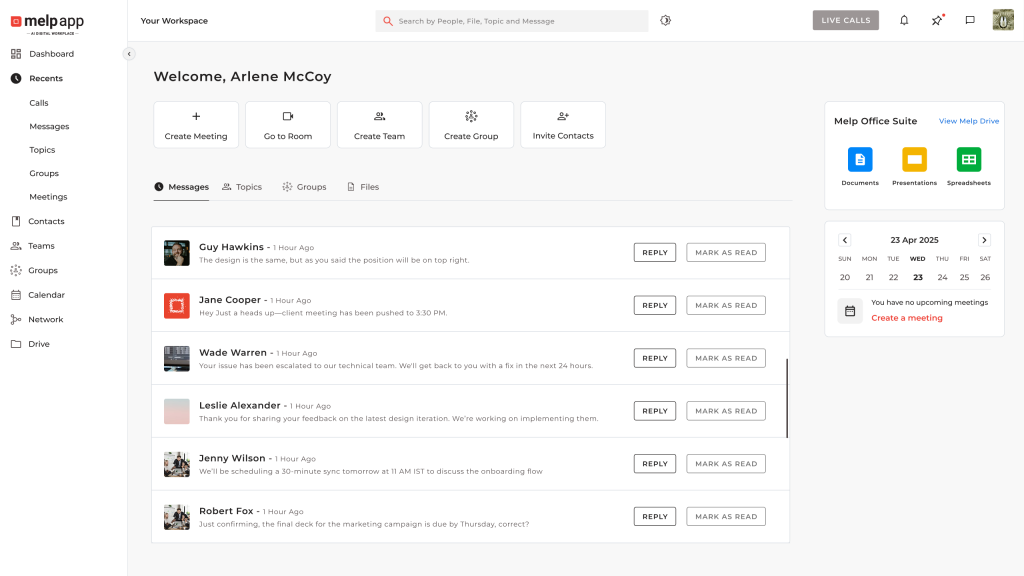
Melp App is increasingly viewed as a strong Microsoft Teams alternative by businesses that want collaboration to feel structured without becoming complicated. It is especially relevant for organizations working across locations, departments, and external partners where clarity matters more than volume. Many teams compare Melp App with Microsoft Teams when they feel daily communication has become scattered, and decision follow-through is getting harder to manage.
When businesses search for free alternatives to Microsoft Teams, Melp App stands out because its free option still reflects how real collaboration works at scale. This makes it attractive for startups and mid-sized teams that want to evaluate long-term fit before committing. Businesses exploring AI collaboration platforms often compare Melp App for its unified communication and workflow structure. Instead of feeling limited, the experience helps teams understand how work flows, how decisions stay visible, and how collaboration remains consistent as usage grows.
Business outcomes teams experience:
- Clear ownership of discussions and decisions
- Stronger collaboration with external partners
- Reduced communication clutter
- Better alignment across distributed teams
- Improved visibility into ongoing work
- Smoother execution after discussions
- Scalable collaboration without disruption
If Microsoft Teams is starting to feel limiting, Melp App offers a more connected way to work. Bring your team, partners, and external collaborators into one secure workspace without switching tools. Sign up with Google, Microsoft, or your company email and get started on a platform built with HIPAA, GDPR, ISO 27001, SOC 2 compliance, and multi-factor authentication.
Google Workspace
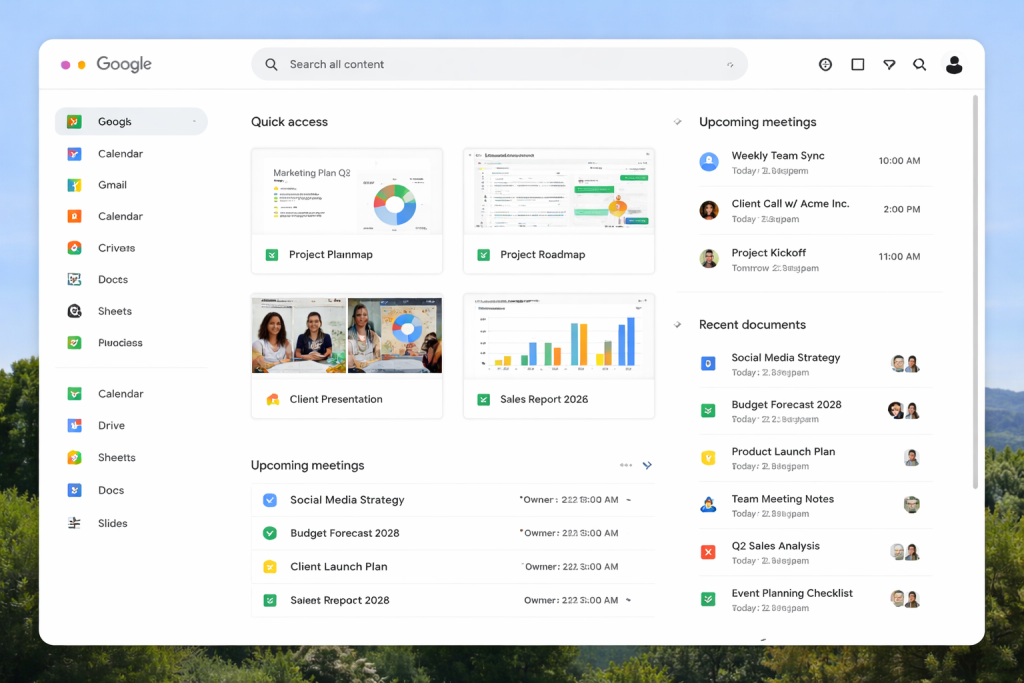
Google Workspace is often evaluated as a practical Microsoft Teams alternative by businesses that value speed, familiarity, and ease of use. Teams that rely heavily on shared work and quick coordination compare it with Microsoft Teams when collaboration starts to feel too rigid or process-heavy. It fits organizations where work moves fast, and simplicity supports productivity.
Some businesses consider Google Workspace while exploring free alternatives to Microsoft Teams, particularly in early growth stages. While free usage can support basic collaboration, most teams move beyond it as coordination becomes more critical. The platform is commonly adopted when organizations want collaboration to feel natural and predictable across regions. Businesses also compare Google Workspace alternatives when trying to reduce dependency on disconnected workplace tools.
Business outcomes teams experience:
- Faster collaboration across locations
- Easier onboarding for new employees
- Strong alignment around shared work
- Reduced delays in decision-making
- Reliable access for remote teams
- Consistent coordination across regions
- Predictable productivity as teams grow
Slack
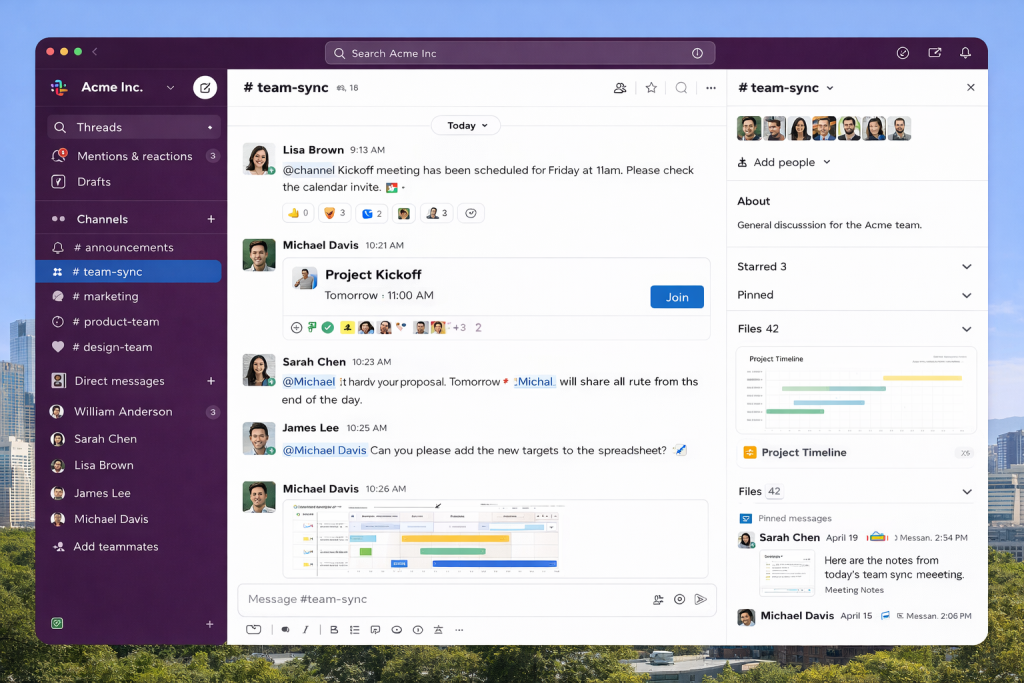
Slack is frequently chosen as a Microsoft Teams alternative by organizations that depend on fast, ongoing communication. Businesses compare Slack with Microsoft Teams when they want conversations to feel more immediate and easier to follow across teams, especially in real-time messaging environments. It works well in environments where collaboration happens continuously throughout the day.
During the search for free alternatives to Microsoft Teams, Slack is often tested by smaller teams. Over time, companies usually find that free usage supports early collaboration, but expanding teams invest further to maintain clarity and continuity. The value comes from keeping communication visible and responsive as work scales. Businesses looking for more structured communication often evaluate Slack alternatives that reduce workflow fragmentation.
Business outcomes teams experience:
- Faster internal response times
- Better visibility across teams
- Improved cross-department coordination
- Reduced reliance on email
- Higher engagement in remote teams
- Clear separation of work discussions
- Flexible communication as teams scale
Zoom
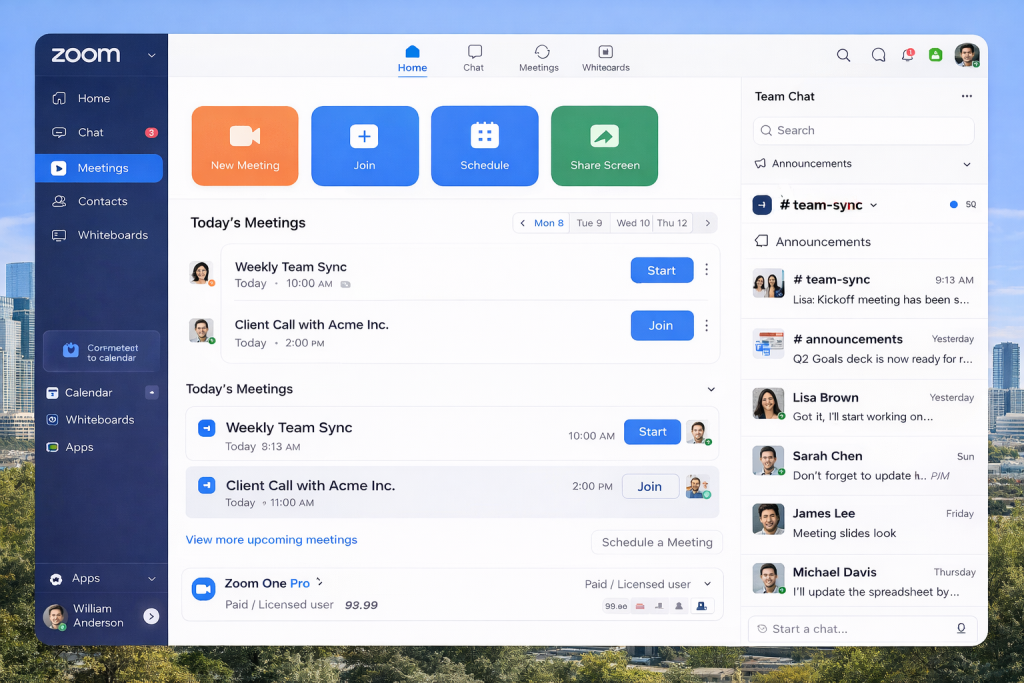
Zoom is commonly evaluated as a Microsoft Teams alternative by businesses where meetings play a central role in collaboration. Organizations compare Zoom with Microsoft Teams when reliability and clarity during discussions matter most, especially for client communication and virtual meeting collaboration..
Some businesses explore Zoom among free alternatives to Microsoft Teams for occasional meetings. While free usage works for light needs, companies with regular collaboration requirements usually expand usage to maintain consistency. Zoom is often chosen when communication quality directly affects trust and decision-making. Organizations needing broader workplace coordination also compare Zoom alternatives that combine meetings with collaboration workflows.
Business outcomes teams experience:
- Reliable communication across time zones
- Clear and focused meeting discussions
- Better engagement from participants
- Reduced friction during important calls
- Consistent experience for global teams
- Professional interaction with clients
- Strong trust in virtual collaboration
Zoho

Zoho is reviewed as a Microsoft Teams alternative by businesses that want collaboration to align closely with daily operations. Companies compare Zoho with Microsoft Teams when they prefer fewer disconnected tools and more consistency across teams.
While Zoho may appear in searches for free alternatives to Microsoft Teams, free usage is typically suitable for early-stage teams. As organizations grow, they expand usage to support more structured collaboration. Zoho appeals to businesses that value operational clarity and cost awareness.
Business outcomes teams experience:
- Better coordination across departments
- Reduced fragmentation between tools
- Clearer tracking of ongoing work
- Improved operational consistency
- Cost-conscious scaling
- Strong alignment between teams
- Simplified collaboration management
Discord
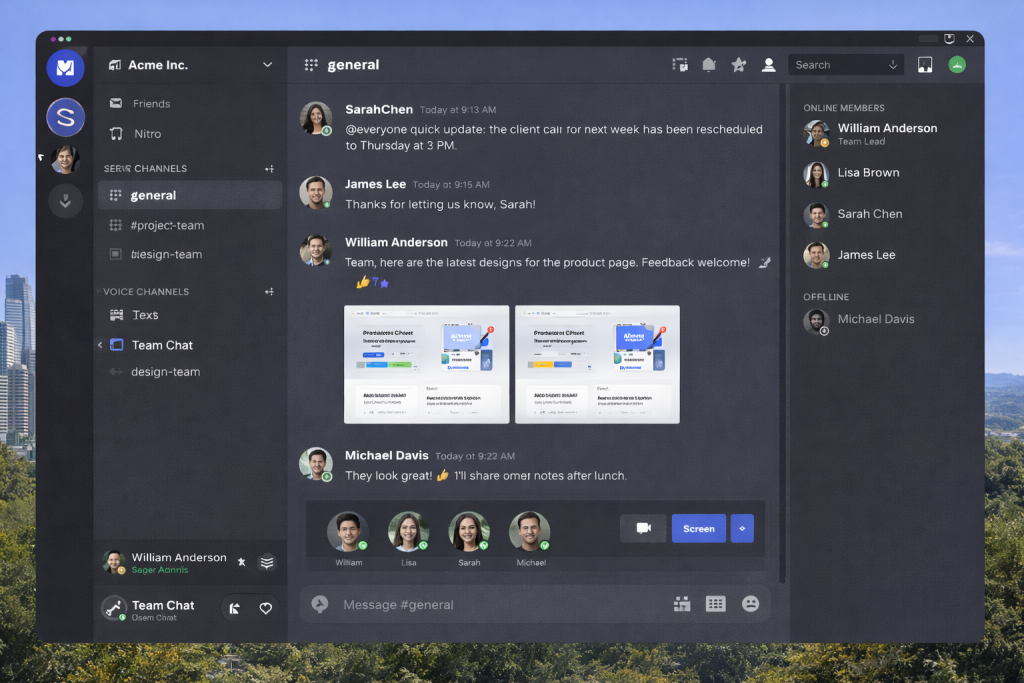
Discord is sometimes considered a Microsoft Teams alternative by creative, community-driven, and tech-focused teams. Businesses compare it with Microsoft Teams when informal, real-time interaction supports collaboration and culture.
Some teams try Discord while searching for free alternatives to Microsoft Teams, especially in early collaboration stages. Over time, organizations evaluate whether their informal structure aligns with long-term business needs. It works best when engagement and presence are priorities.
Business outcomes teams experience:
- High team engagement
- Real-time collaboration flow
- Strong sense of team presence
- Faster informal decision-making
- Clear separation between communities
- Flexible communication styles
- Better connection in creative teams
Are Free Alternatives to Microsoft Teams Suitable for Businesses?
Free alternatives to Microsoft Teams can be useful for businesses at an early stage, but they are rarely enough for long-term collaboration. Teams often start by comparing options like Melp App, Google Workspace, Slack, Zoom, Zoho, and Discord to understand what fits their workflow. Among these, Melp App is often seen as a more complete option because it brings communication, collaboration, professional networking, external collaboration, AI support, chat, meetings, and file sharing into one place. For startups or small teams, free tools help test collaboration needs without upfront cost, but as businesses grow, work across regions, or involve external partners, most organizations move toward more scalable solutions that keep collaboration clear and manageable.
When free alternatives to Microsoft Teams make sense for businesses:
- Early-stage startups with small teams
- Short-term or pilot projects
- Businesses testing remote or hybrid work
- Teams with limited external collaboration
- Budget-sensitive growth phases
- Simple communication and coordination needs
- Evaluation before adopting a scalable platform
5 Microsoft Teams Challenges That Push Businesses to Look for Teams Alternatives
Many businesses do not start out planning to replace Microsoft Teams. The decision usually comes after teams grow, collaboration becomes more complex, and everyday work starts to feel harder than it should. In 2026, companies across regions are actively searching for Teams alternatives because these challenges directly affect productivity, visibility, cost control, and overall digital workplace efficiency. Below are the most common Microsoft Teams challenges that lead businesses to explore other collaboration platforms.
1. Conversations Become Difficult to Follow as Teams Scale
As more people and projects are added, discussions spread across multiple spaces. Important updates and decisions are often buried, making it harder to find context when it is needed.
2. External Collaboration Feels Restrictive
Businesses working with clients, vendors, or partners often struggle to collaborate smoothly. Limited flexibility can slow communication and create confusion outside internal teams.
3. Costs Increase Faster Than Expected
As user count grows, licensing costs rise steadily. For many businesses, this makes long-term budgeting unpredictable and triggers a search for more cost-efficient alternatives.
4. Onboarding and Adoption Take Too Long
New employees and remote team members often face a learning curve. When adoption is slow, productivity drops, and teams take longer to become fully effective.
5. Limited Visibility Into Ongoing Work
Managers often lack a clear, real-time view of discussions, ownership, and progress. This reduces accountability and makes coordination across teams more challenging.
These real-world challenges explain why businesses increasingly evaluate Microsoft Teams alternatives that offer clearer collaboration, better scalability, and stronger long-term value.
Why Businesses Choose Melp App as an Alternative to Teams
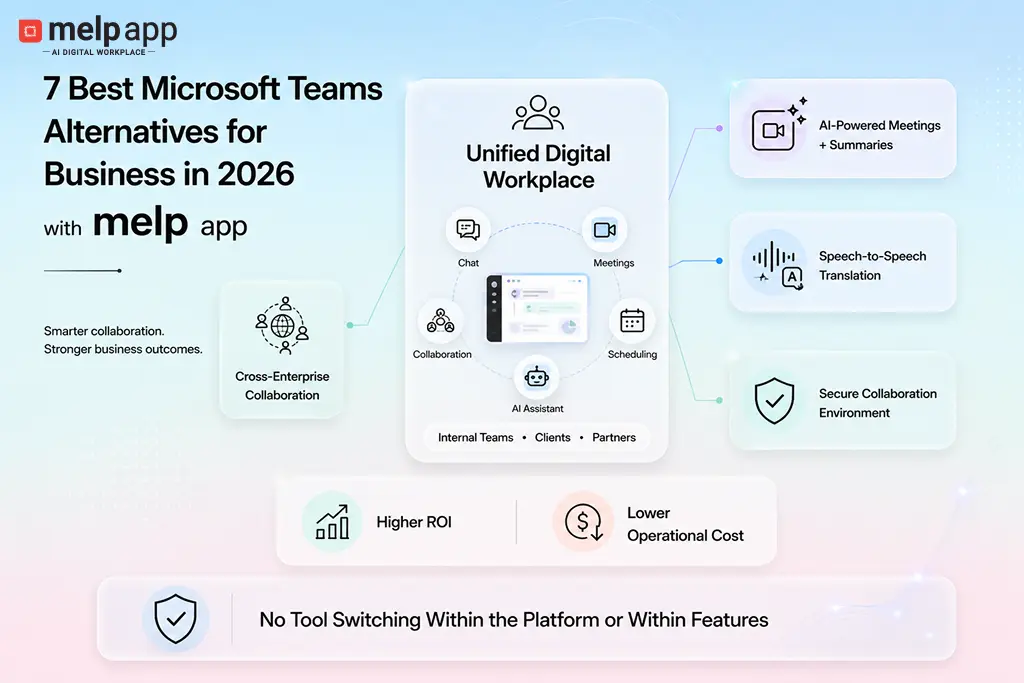
Businesses choose Melp App as an alternative to Microsoft Teams because Melp is a multi-enterprise linking platform, not just a tool for chat or meetings. It is built as an all-in-one, AI-powered digital workplace that connects collaboration, communication, external coordination, and professional networking in a single workspace, helping businesses reduce tool overload across growing teams. This structure helps businesses reduce dependency on scattered tools and keeps daily work more organized, especially as teams grow or work across locations.
Melp App supports real operational needs through video meetings with breakout rooms, AI-generated summaries, live captions, whiteboards, chat, text translation, file sharing, Melp Drive storage, document management, scheduling, and calendar coordination. Localization support allows teams to use the workspace in their preferred language, which improves adoption for global and regional teams. With enterprise-grade security standards such as HIPAA, GDPR, ISO 27001, SOC 2, and multi-factor authentication, Melp App is widely seen as a practical free Microsoft Teams alternative for businesses looking for a secure, scalable digital workplace.
Why Businesses Consider Melp App Stronger Than Other Microsoft Teams Alternatives
When businesses compare Microsoft Teams alternatives, they often look beyond individual capabilities and focus on overall impact. Compared with platforms like Google Workspace, Slack, Zoom, Zoho, and Discord, Melp App stands out because it addresses multiple collaboration needs together rather than solving only one part of the workflow.
- Provides one unified digital workplace instead of multiple disconnected tools
- Designed for multi-enterprise collaboration, not limited to internal teams
- Supports employees, clients, partners, and external stakeholders equally
- Reduces tool overload by keeping communication and coordination in one place
- Enables global collaboration with strong localization and language support
- Keeps conversations, meetings, and shared work connected over time, improving structured business collaboration across distributed teams.
- Built for structured business workflows, not casual-only communication
- Scales smoothly from startups to large enterprises
- Offers a usable free option, lowering the barrier to adoption
- Maintains enterprise-level security and compliance without added complexity
These outcomes explain why businesses evaluating Microsoft Teams alternatives often view Melp App as a stronger, more complete option when planning long-term collaboration.
Conclusion
In 2026, businesses are choosing collaboration tools based on how well they support real work, not just popularity. As teams grow and work across regions, many organizations explore Microsoft Teams alternatives like Melp App, Google Workspace, Slack, Zoom, Zoho, and Discord. The best option is the one that keeps communication clear, decisions easy to track, and collaboration scalable. Among these, Melp App is often noted for offering a more unified digital workplace that helps businesses stay organized as they grow. Companies comparing long-term collaboration strategies often evaluate Microsoft Teams alternatives for remote work before selecting a scalable platform.
Create your Melp App account now and move beyond fragmented collaboration