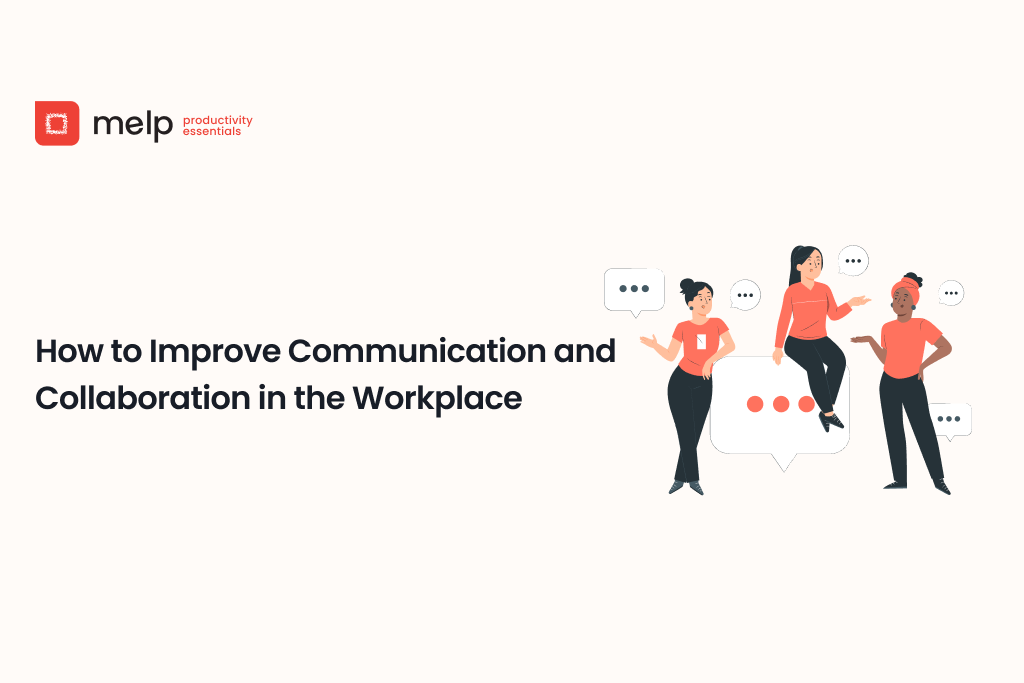
Most people don’t leave their jobs because of the work itself. They leave because of miscommunication, poor leadership, or the frustration of working in a team that just doesn’t work well together. That’s why improving communication and collaboration isn’t just a soft skill. It’s a core part of building a workplace where people want to stay and grow. Strong collaboration doesn’t happen by accident. Organizations that prioritize collaboration and communication in the workplace create stronger relationships, reduce misunderstandings, and help teams stay aligned around shared goals.
This doesn’t mean everyone has to agree all the time or be best friends. It means creating an environment where people can speak honestly, understand what’s expected, and work toward shared goals without unnecessary friction. Whether you’re a manager, a team member, or someone working solo but collaborating across departments, these strategies can change the way work feels and improve results at the same time.
Practical Ways to Strengthen Workplace Communication and Team Collaboration
These strategies are not theoretical or generic. They’re grounded in how real teams work and what makes people feel heard, supported, and connected. Let’s dive into them.
1. Prioritize Clarity in Every Interaction
A lack of clarity is one of the biggest silent killers of productivity. When someone doesn’t know what’s expected, they either do nothing, do it wrong, or waste time checking back repeatedly.
You don’t need to over-explain, but you do need to remove assumptions. Instead of saying, “Get this done quickly,” say, “Please submit this by Tuesday noon so we have time to review before Thursday’s meeting.”
Clarity also means giving context. If people know why something matters, not just what to do, they’re more engaged and more likely to make better decisions.
2. Make Listening Part of Your Daily Work
One of the most overlooked aspects of communication in collaboration is the ability to understand different perspectives before responding. Teams that listen carefully often solve problems faster and build stronger working relationships.
Most of us think we’re good listeners, but we often listen to respond, not to understand. Active listening means being present, not interrupting, and really trying to hear what the other person is saying, even if you disagree.
This creates space for better conversations, reduces misunderstandings, and makes people feel respected. When people know they’re being heard, they’re more likely to speak up with ideas or concerns that might otherwise stay buried.
3. Normalize Asking Questions Without Judgment
Encouraging questions creates a culture of learning and trust. It is also one of the most effective ways to improve team collaboration and communication skills because employees feel more confident sharing ideas and concerns.
In toxic work environments, people stay silent out of fear, whether it’s the fear of sounding inexperienced, annoying, or uninformed. But in healthy environments, questions are welcome. They’re seen as a sign of involvement and a desire to do the job well.
If someone on your team is always quiet, consider why. They may not feel safe to speak. Leaders can shift this by being the first to say, “I don’t know either, let’s figure it out together.”
The more we normalize asking questions, the fewer costly mistakes we make due to assumptions.
4. Create Consistent, Simple Communication Routines
Unpredictable communication creates chaos. One day there’s a meeting, the next day it’s canceled. Some tasks are shared over chat, others over email, some mentioned casually in passing, and things fall through the cracks. Organizations that establish predictable communication habits often improve workplace communications by reducing confusion and ensuring that important information reaches the right people at the right time.
Set simple, consistent routines. A daily 10-minute team check-in. A Monday priorities list. A Friday recap. It doesn’t have to be complicated. In fact, the simpler, the better. What matters is that everyone knows when and where communication is happening.
Consistency creates clarity. And clarity fuels collaboration. Strong communication becomes even more effective when teams have a single place to connect, share updates, and work together. From melp’s perspective, modern workplaces need more than basic messaging because collaboration now extends beyond internal teams to external stakeholders, partners, and clients. As an all-in-one digital workspace and multi-enterprise linking platform, melp helps organizations communicate and collaborate without switching between disconnected tools. Teams can manage conversations, meetings, files, networking, and coordination from one environment, making collaboration and communication in the workplace more structured and productive. This approach helps organizations improve workplace communications while reducing operational complexity and tool overload.
5. Address Tension and Conflict Early
Addressing concerns before they escalate is one of the simplest ways to improve team communication at work and prevent small misunderstandings from becoming larger organizational problems.
Avoiding conflict doesn’t make it go away. It just pushes it underground. And once it settles in, it turns into resentment, sarcasm, or that quiet withdrawal no one talks about. That kind of tension hurts a team more than any open disagreement.
The goal isn’t to eliminate conflict. It’s to deal with it before it becomes something worse. If something feels off, bring it up early and respectfully. Keep the focus on the issue, not the person.
There was a time when two team members stopped including each other in client planning threads. No one noticed at first, but misalignment built up and deadlines started slipping. When it finally came up in a check-in, it turned out they had the same goal, they just hadn’t aligned on how to get there. One quick conversation could’ve saved a month of friction.
It’s not always easy, but it’s always worth it.
6. Share Ownership and Let People Lead in Their Strengths
People are more invested in work they feel responsible for. Instead of keeping all decisions at the top, let people own projects or decisions in areas where they have insight or experience. When employees are trusted to take ownership of their responsibilities, they are more likely to communicate and collaborate openly, contribute ideas, and support their teammates.
This also makes collaboration more natural. When everyone feels like a valuable contributor, not just someone following instructions, they bring more ideas, take more initiative, and support others more openly.
This doesn’t mean there’s no structure. It means there’s room for everyone to lead where it makes sense.
7. Choose the Right Channel for the Message
Communication problems aren’t just about what’s said. They’re also about how it’s said and where. Typing a long message about a sensitive issue? That’s a recipe for misunderstanding. Having a meeting for something that could’ve been a quick message? That wastes everyone’s time.
Match the message to the medium. Use written communication for updates or documentation. Use calls or in-person chats for conversations that need tone, empathy, or deeper clarity. For team collaboration, try Melp’s platform, where communication via Teams and Topics helps you keep conversations organized by project or subject—making it easier for everyone to stay aligned without clutter or confusion.
There was a case where someone sent a strongly worded email about a broken workflow to three different teams. The intention was valid, but tone got misread, and instead of solving the issue, it stirred up frustration. That same message, delivered in a 10-minute face-to-face chat, would’ve landed much better.
8. Acknowledge the Effort Behind the Results
In many workplaces, only the final outcome gets celebrated. But what about the team member who stepped in last minute to help? Or the one who smoothed over a client issue quietly? Or the person who asked the hard question in a meeting that led to a better decision?
Recognition plays an important role in improving teamwork and communication because it reinforces positive behaviors, strengthens trust, and encourages employees to support one another more consistently.
These moments often go unnoticed, but they are signs of strong communication and collaboration.
Take time to acknowledge those efforts, even informally. A short thank-you message. A public shout-out. Recognition reinforces good behavior, and people naturally repeat what gets appreciated.
8 Smart Moves to Communicate & Collaborate Better
| Strategy | What It Means | Real-World Scenario |
|---|---|---|
| 1. Prioritize Clarity | Be specific and remove guesswork | Instead of “Do it soon,” say “Submit by Tuesday noon so we can review before Thursday.” |
| 2. Make Listening a Daily Habit | Hear to understand, not just reply | A manager stopped multitasking during 1:1s and found the team opened up more quickly. |
| 3. Normalize Questions | Encourage curiosity, not fear | A junior employee asked about a process step and uncovered a 3-week-old mistake no one noticed. |
| 4. Create Consistent Routines | Use steady check-ins and updates | A 10-minute daily standup helped a remote team cut task overlaps by half. |
| 5. Address Conflict Early | Talk before tension becomes damage | Two teammates avoided each other for weeks, until a review meeting helped reset expectations. |
| 6. Share Ownership | Let people lead in areas of strength | A marketing exec let the intern run user interviews—leading to a feature idea that boosted adoption. |
| 7. Choose the Right Channel | Match the message to the medium | A heated complaint sent over email created drama; a calm 5-minute call would’ve solved it. |
| 8. Acknowledge Effort | Praise unseen contributions | A quick “thanks” in a group chat for someone who stayed late built trust and loyalty. |
Why Organizations Choose melp for Workplace Communication and Collaboration
Strong workplace relationships are built on more than messages and meetings. Organizations need an environment where employees can exchange ideas, stay informed, and work together without barriers. As businesses grow, communication becomes more complex, making it essential to have systems that support clarity, accountability, and teamwork across departments.
Rather than focusing only on communication, melp focuses on creating connected work experiences. The platform brings together communication, collaboration, productivity, networking, and engagement into one ecosystem. This allows teams to improve team collaboration and communication skills while maintaining visibility across projects, departments, and business functions. Organizations using melp can communicate and collaborate more effectively because conversations, files, meetings, and updates remain connected in a single workspace.
Why businesses choose melp:
- Topic-based communication for organized discussions
- Team-based collaboration structure for better accountability
- Real-time messaging, voice calls, and video meetings
- AI-powered meeting summaries and productivity support
- Breakout rooms for focused team collaboration
- Professional networking capabilities beyond internal teams
- Speech-to-speech translation for multilingual collaboration
- AI document translation for global workforce communication
- Lower operational costs through platform consolidation
- Reduced tool switching within the platform and across features
- Better employee engagement and knowledge sharing
- Higher ROI through integrated communication workflows
- Enterprise-grade security with HIPAA, GDPR, and SOC 2 compliance
- Improved communication between departments in the workplace
- Centralized workspace for collaboration and productivity
Final Thought
You don’t need to change everything overnight. Learning how to improve communication and collaboration in the workplace begins with small, intentional steps: speaking, listening with focus, showing respect, and staying genuinely curious. These simple habits, practiced consistently, create stronger relationships and better results.
Whether you’re part of a fast-growing startup, a corporate team, or a tight-knit department, these shifts are real and doable. People work better when they connect better. And a workplace built on clarity and trust becomes one people want to thrive in, not just get through.
Ready to Improve How Your Team Connects?
Strong collaboration doesn’t happen by accident. It takes clarity, consistency, and the right tools to keep everyone aligned. Whether you’re part of a large organization or a small project team, better communication leads to better results. Sign up today with Melp and bring structure and flow to every conversation.