It’s no secret that the way people work has changed. What used to happen in office buildings, face-to-face, now happens through screens and shared digital spaces. People join meetings from their homes, manage projects with online tools, and work with teammates they’ve never met in person. This is what’s often called the digital workplace, and it’s a shift that’s not going away. Today, many organizations are looking for a digital workplace solution that reduces complexity rather than adding more tools. melp app takes a different approach as a multi-enterprise linking platform designed to support both internal and external collaboration, helping teams communicate, coordinate, and work together from a single connected workspace.
It’s easy to focus only on what’s new and exciting. But like any major change, this one comes with upsides and drawbacks. If you’ve ever tried working remotely or managing a digital team, you’ve probably experienced both.
This blog breaks it down honestly: the good, the bad, and what makes a digital workplace succeed.
What Is the Digital Workplace?
The digital workplace isn’t a specific tool or platform. It’s a way of working where digital tools replace physical offices. Employees don’t need to be in the same room to collaborate. Instead, they stay connected through messages, video calls, shared documents, and cloud-based task boards. A modern digital workplace solution helps organizations connect people, processes, and information regardless of physical location. The goal is to create a connected environment where work can happen efficiently from anywhere..
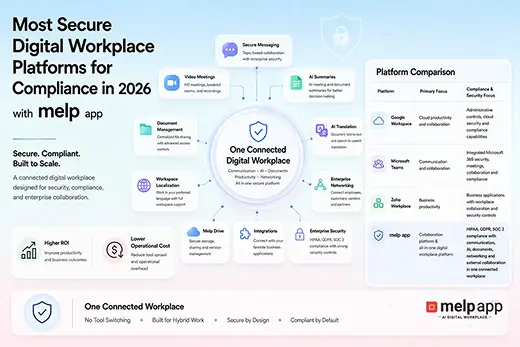
Many organizations use platforms like Microsoft 365 or Google Workspace as part of their digital workplace, but employees often need to switch between multiple apps for communication, meetings, files, and collaboration. In contrast, melp app is an all-in-one digital workplace platform that brings these functions together in one connected workspace, helping teams reduce tool switching, improve productivity, and simplify daily work.
In this setup, what matters most is outcomes, not hours spent at a desk. People are trusted to manage their own time and deliver results, whether they’re working from home, a coffee shop, or somewhere else entirely.
What Are the Key Factors Behind a Successful Digital Workplace?
A successful digital workplace depends on more than technology alone. Organizations need clear communication, streamlined workflows, accessible collaboration tools, and systems that support employees regardless of location. According to the melp app, the most effective digital workplaces reduce unnecessary complexity while making collaboration easier across teams, departments, and external partners. The sections below explain both the benefits and challenges organizations experience when adopting digital workplace models and how businesses can maximize long-term success.
Real Benefits of the Digital Workplace
There’s a reason so many teams are making the shift. The digital workplace comes with real advantages that improve flexibility, access, and productivity.
1. Location Freedom
One of the biggest wins is that people no longer need to live near a company’s headquarters. As long as someone has the right skills and a reliable internet connection, they can be part of a team, even if they live far away.
This opens doors for individuals who want more lifestyle freedom. It also allows organizations to find great talent without being limited by geography.
2. More Flexibility in Daily Schedules
The typical 9-to-5 schedule doesn’t work for everyone. In a digital setting, people can often build their workday around when they’re most productive. Some prefer starting early. Others do their best thinking in the late afternoon. One of the most discussed pros and cons of online communication is the balance between convenience and clarity. While digital messages allow fast communication, they can sometimes create misunderstandings when tone and context are missing.
Giving people room to manage their time leads to better focus and fewer burnout issues.
3. No More Daily Commutes
Commuting takes time, energy, and money. Whether it’s sitting in traffic or catching a crowded train, it’s rarely something people enjoy. Removing this part of the day gives workers back hours they can use for themselves, whether that means spending more time with family, catching up on rest, or starting the workday with a clear head.
4. More Opportunities for More People
When location no longer matters, jobs become available to a wider group. Someone living in a small town can now work on the same project as someone in a big city. Parents, caregivers, and people with mobility limitations also gain better access to jobs they may have missed out on before.
At the same time, teams become more diverse and well-rounded.
5. Better Focus for Some Workers
Without the distractions of a busy office, many people find it easier to concentrate. They can set up their work environment, choose how and when they tackle tasks, and block out time for deep thinking.
This level of control often leads to higher-quality work.
6. Daily Costs Go Down
People spend less on gas, takeout lunches, dry cleaning, and parking. These savings might seem small at first, but they add up quickly. On the business side, office space and facility expenses shrink too.
This frees up resources that can be used elsewhere, like better tools, team events, or training programs.
7. Better Use of Collaboration Tools
With the right tools, remote teamwork can be smoother. Shared files, real-time updates, and digital whiteboards help people stay on track, even if they’re not in the same location. When used well, these tools make processes clearer and help projects move faster. For a simple way to manage all of this in one place, try the Melp team collaboration platform.
Digital workplace collaboration becomes more effective when communication, files, meetings, and project updates are organized within connected systems. This helps teams stay aligned and reduces delays caused by disconnected workflows.
Real Challenges of the Digital Workplace
Of course, working online isn’t perfect. There are real downsides that can affect team culture, communication, and well-being. Here’s what many people run into.
1. Feeling Disconnected from Others
One major problem is the sense of isolation. Without casual hallway chats or shared lunch breaks, people can feel alone. Even in a busy workweek, human connection is important — and in digital settings, it doesn’t happen by accident. Leaders need to build space for connection, or else even great employees can lose motivation.
2. Miscommunication Happens Easily
It’s easy to misunderstand someone in a message. Without facial expressions or tone of voice, a short reply might come off as cold or dismissive. Long gaps between messages can create stress, even when nothing is wrong.
In a digital space, communication needs to be thoughtful and clear.
3. Too Many Tools Slow People Down
Instead of making work easier, having too many platforms can make it harder. Switching between one tool for chatting, another for tasks, and a third for meetings becomes a burden.
Keeping things simple is often more effective than adding new apps.
4. Tech Issues Disrupt Workflows
Everyone has faced a dropped call, a frozen screen, or a file that won’t load. These moments can derail meetings and delay decisions. When teams depend on tech to work, even small issues can have a big impact.
That’s why having strong support and simple tools matters.
5. Time Zones Create Confusion
Working with people across different time zones can make scheduling difficult. Someone might have to take a call before breakfast, while someone else stays online late at night. If this isn’t managed fairly, it creates frustration and fatigue.
Rotating meeting times or using asynchronous updates helps teams stay balanced.
6. It’s Harder to See Who’s Contributing
In person, it’s easier to notice who’s stepping up and who might be struggling. But in a digital setup, quite high performers can be overlooked, while others may appear active without delivering much.
Managers need better ways to track contributions and check in with their teams regularly.
7. Work Boundaries Start to Disappear
When your home is also your workplace, it can feel like work never ends. People often check messages late at night or feel pressure to always be available. Over time, this leads to stress and eventually burnout.
Setting clear working hours and respecting them is essential in a digital culture.
How to Make the Digital Workplace Work Better
A successful digital workplace isn’t just about having the right software. It’s about supporting people, setting good habits, and making sure work stays human.
Communicate Often and Clearly
Short, friendly updates help teams stay in sync. Use voice or video when the message is complex. Assume good intent when reading short messages. Digital workplace direct communication helps reduce confusion by ensuring employees receive updates quickly and understand expectations without unnecessary delays.
Simplify Your Tools
Pick a few reliable tools that cover your needs. Avoid switching platforms unless it solves a clear problem.
Make Space for Team Connection
Create regular time for informal chats. These don’t have to be big events; even a 10-minute check-in once a week can improve team trust. Digital workplace live interactions such as video meetings, virtual check-ins, and informal team conversations help employees feel more connected despite physical distance.
Be Fair with Scheduling
Watch for time zone imbalances and try to rotate important calls. Share meeting notes so everyone stays informed.
Track Contributions Thoughtfully
Look beyond who talks the most. Track what’s being done. A good feedback system helps you support quiet achievers.
Respect Downtime
Model healthy boundaries. Let people unplug at the end of the day. Make it okay to not be “always on.”
What It Actually Feels Like to Work Digitally: Real Moments
Rachel’s Day – When It Works Out
Rachel handles marketing for a growing company. Most mornings, she takes a quiet walk not for exercise, just to clear her head. After that, she makes coffee and logs in from her apartment. No commute, no rushing to get somewhere. Her team stays connected using shared documents and short check-ins. She blocks off her best focus hours for the heavy stuff. Most days, she wraps up early and still has time to enjoy the evening with her family. Honestly, the setup just works for her. It fits how she lives.
Kevin’s Day – When It Doesn’t
Kevin leads a support team, and his workdays are all over the place. He’s in back-to-back video calls, juggling chat messages, and chasing down files. It’s hard to know what’s urgent and what can wait. One time, he missed a message from a teammate in another time zone, and that delayed a rollout. The stress builds up. Even at night, work apps keep buzzing on his phone. His laptop usually stays open until bedtime. Some days, he feels like he’s working all the time—even when he’s not supposed to be.
Summary of Digital Workplace Benefits
| Benefit | Description |
|---|---|
| Work from Anywhere | Employees can contribute from any location, expanding access to talent. |
| Flexible Scheduling | People can work during their most productive hours, improving efficiency. |
| No Daily Commute | Saves time, reduces stress, and supports work-life balance. |
| Wider Job Opportunities | Candidates no longer need to relocate for good roles; employers hire globally. |
| Increased Productivity | Fewer office distractions allow some people to focus better. |
| Lower Daily Costs | Savings on transportation, food, and office-related expenses. |
| Efficient Tools | Digital platforms help organize communication, tasks, and collaboration. |
Summary of Digital Workplace Challenges
| Challenge | Description |
|---|---|
| Isolation and Disconnection | Lack of casual interaction can affect morale and team bonding. |
| Miscommunication | Without tone or body language, messages can be misunderstood. |
| Tool Overload | Managing too many platforms creates distraction and inefficiency. |
| Technical Issues | Glitches, poor connectivity, and platform failures slow down work. |
| Time Zone Conflicts | Scheduling meetings and feedback becomes complex across regions. |
| Unclear Visibility | It’s harder to track individual contributions without physical presence. |
| Lack of Work Boundaries | Blurred lines between work and personal life may lead to burnout. |
Why Businesses Choose melp app for Digital Workplace Success
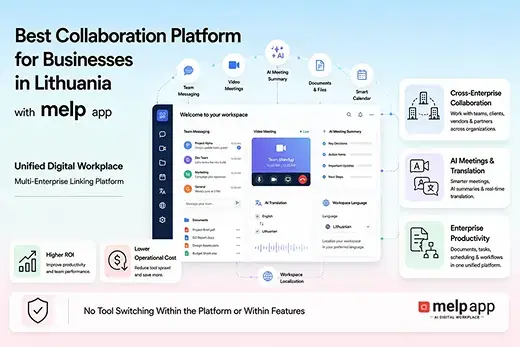
Many organizations are moving beyond traditional workplace software and adopting platforms that combine communication, collaboration, productivity, and networking into one connected environment. melp app follows a unique multi-enterprise linking platform approach that supports internal teams, external partners, customers, vendors, and business communities within a unified workspace. Instead of relying on multiple disconnected tools, businesses can manage communication, meetings, files, scheduling, networking, and collaboration from a single platform.
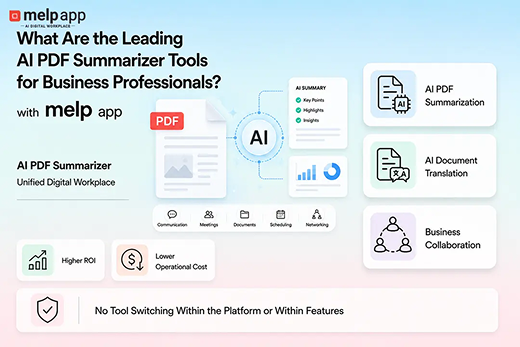
Modern startups, growing businesses, enterprise teams, and distributed organizations use melp app to reduce operational complexity while improving employee productivity and engagement. The platform supports multilingual communication through speech-to-speech translation, text-to-text translation, and document translation capabilities. Organizations can also benefit from AI-powered document summarization, enterprise messaging, breakout rooms, video conferencing, smart scheduling, and integrations with popular business tools such as Salesforce, Asana, Jira, and Google Drive.
Key Benefits
- Multi-enterprise linking platform for internal and external collaboration.
- Digital workplace communication and collaboration in one environment.
- Built-in video conferencing, voice calling, and enterprise messaging.
- AI meeting scheduler for faster coordination.
- Speech-to-speech translation for multilingual teams.
- Text and document translation capabilities.
- AI document summarizer for faster knowledge sharing.
- Integrations with Salesforce, Asana, Jira, Google Drive, and more.
- Higher ROI with lower operational costs.
- No tool switching within the platform or between features.
Final Thoughts
The digital workplace isn’t perfect, but it’s not going away. It offers flexibility, freedom, and new ways to build strong teams, but only if those teams are supported with intention.
The best results come from a mix of smart tools, honest communication, and respect for how people work best. When done well, the digital workplace becomes more than just a solution. It becomes a smarter, healthier way to work.
Make the Digital Workplace Work for You with Melp
The shift to digital work isn’t just a trend; it’s the new normal for many teams. If you’re navigating remote routines or hybrid hurdles, the right tools can make a difference. Melp helps you stay connected, organized, and productive. Sign up today with Melp and see the difference real collaboration makes.