Not long ago, businesses believed that using more tools meant getting more done. Marketing used one app, sales used another, operations had their own system — and everyone thought it worked. But as teams grew and workflows got more complex, this setup started showing cracks. What was once “efficient” slowly turned into a daily struggle just to stay organized.
In 2025, more companies are recognizing that too many tools are costing them time, money, and focus. The modern workplace doesn’t need twenty tools to stay productive — it needs one smart space where everything connects naturally.
That’s where all-in-one platforms are taking center stage. They’re not just simplifying work — they’re redefining what productivity feels like.
The truth about tool overload
Think about how many apps you use on an average workday. One for chatting, one for meetings, one for sharing documents, one for project updates, another for analytics — the list keeps growing. Each has its own login, notifications, and settings.
The problem? Every switch between tools breaks your concentration. According to Harvard Business Review, employees toggle between apps over 1,200 times a day, wasting valuable mental energy just trying to stay in sync (hbr.org).
When you multiply that across an entire team, the result is staggering. Work slows down, communication fragments, and collaboration loses its rhythm. Instead of focusing on goals, teams spend hours connecting disconnected systems.
That’s why the conversation inside boardrooms has changed. Businesses are no longer asking, “What tools should we add?” They’re asking, “How can we make everything work together — simply?”
The shift toward unified digital workspaces
Modern organizations are discovering that productivity doesn’t come from juggling apps — it comes from clarity. When everything a team needs is in one connected space, communication becomes natural, decisions are faster, and collaboration feels effortless.
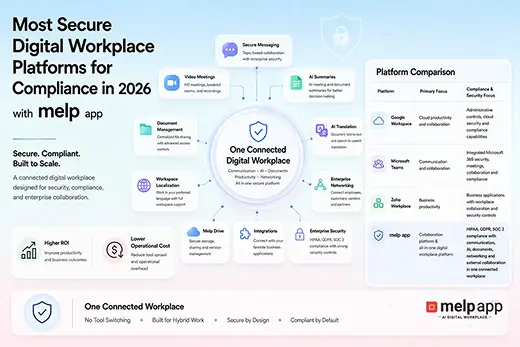
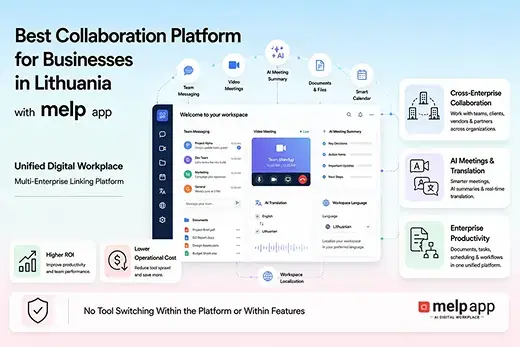
That’s why many growing businesses are moving toward Melp AI Digital Workplace — a unified environment where teams can connect, share, and collaborate without switching tabs. It combines everyday work needs into one streamlined experience, allowing conversations, meetings, and files to stay together and in context.
The beauty of this kind of platform isn’t just that it replaces scattered tools. It creates a sense of flow — where people can start an idea in chat, discuss it in a meeting, and finalize it together without leaving their workspace.
Why companies are embracing the change
There’s a practical reason behind this massive shift: simplicity drives focus. Here’s what’s motivating forward-thinking organizations to move away from tool overload.
1. Clarity replaces chaos: When everything happens in one place, there’s no confusion about where information lives. Teams no longer waste time searching for old messages, missing files, or meeting notes. They stay aligned from the first idea to the final delivery.
2. Work feels faster — and lighter: Switching between apps isn’t just time-consuming; it’s mentally draining. A connected workspace lets employees focus on one screen, one flow, one goal. The day feels smoother because the friction is gone.
3. Collaboration becomes human again: All-in-one systems help people work together naturally. Teams can share updates, brainstorm, and connect across time zones without worrying about missed messages or language barriers. It’s a shift from “working around tools” to “working with people.”
4. Better control over costs: When companies use ten different tools, they’re also paying ten different subscriptions. Consolidating into one platform simplifies billing and cuts unnecessary spending — a win for finance teams and leadership alike.
5. A modern work experience employees love: Today’s workforce expects technology that feels easy and enjoyable. A digital workspace like Melp AI Digital Workplace feels more like a natural extension of how people already communicate — not another tool they have to learn. It helps build engagement, not resistance.
When everything connects, work just makes sense
Imagine logging into one workspace each morning and finding everything right where you left it — your team discussions, meeting notes, shared files, and upcoming schedules. You can message a colleague, jump into a quick discussion, or share a file instantly — all without leaving the space.
That’s the feeling organizations describe after switching to a unified platform. With Melp AI Digital Workplace, communication stays structured around teams and topics, so conversations remain focused and easy to follow. Long threads automatically stay readable, files stay linked to discussions, and important updates never get buried.
Even meetings feel different. They start instantly, run smoothly, and end with clear takeaways — no clutter, no chasing notes afterward.
And because everything happens in one environment, people naturally stay in sync. The workplace feels less like a maze of apps and more like a shared office where ideas actually flow.
If your organization still runs on a patchwork of disconnected tools, it might be time to pause and ask: Are our tools helping us work — or just making us busy?
Discover how Melp AI Digital Workplace creates clarity and cohesion for modern teams. It’s more than software — it’s the digital version of a workplace that just works.
👉 Start your free Melp workspace today
The value behind a connected ecosystem
This shift to unified work platforms isn’t only about simplifying daily operations — it’s also about long-term value.
When companies bring communication, meetings, and collaboration under one roof, they unlock several deeper advantages:
- Consistency in decisions — Because conversations, context, and data live together, teams make better, faster calls.
- Transparency across departments — Everyone sees progress clearly, reducing duplication and confusion.
- Faster onboarding — New hires don’t spend weeks learning multiple tools; they simply start working.
- Reduced fatigue — Employees report feeling less drained because they spend less time managing technology and more time creating meaningful work.
According to McKinsey & Company, companies that adopt connected digital platforms see up to 30% higher efficiency and engagement across teams (mckinsey.com).
That’s not a small number. That’s an entire day of productivity gained each week — simply by bringing everything into one flow.
The human side of a digital workplace
Technology alone can’t make work better. It’s the experience it enables that matters.
That’s where Melp AI Digital Workplace stands out. It doesn’t overwhelm people with complex menus or dozens of integrations. Instead, it helps teams focus, talk, and share naturally — like they would in a real office. Conversations stay open, projects stay visible, and collaboration feels genuinely human.
The best part? It’s not about changing how you work; it’s about making how you work easier. Whether you’re managing a marketing campaign or coordinating across offices, everything stays aligned without the constant juggling act.
How to make the transition smoother
Moving from multiple tools to one platform doesn’t need to be complicated. The smartest approach is gradual:
- Start with one team or project — Move them entirely to your new digital workspace.
- Observe what changes — Notice how communication and coordination improve.
- Expand gradually — Once the benefits become visible (they will), scale it across other teams.
That’s how many companies introduce Melp AI Digital Workplace — not through massive rollouts, but through small wins that build confidence. Within weeks, employees realize how much simpler their days have become.
Experience Seamless Collaboration — Inside and Beyond Your Organization
Modern work doesn’t happen in isolation anymore. Every project involves people outside your walls — clients, freelancers, vendors, and partner companies. Keeping them all in sync can quickly turn messy when conversations scatter across different apps and email threads.
That’s why many growing teams are choosing Melp AI Digital Workplace. It creates one shared digital space where everyone — from your internal staff to external partners — can collaborate without barriers. Messages, discussions, and shared materials stay in one organized flow, easy to access and secure to manage.
When everyone works together in a single connected environment, communication feels more natural, progress moves faster, and nothing slips through the cracks.
See it in action: Watch this short video about Melp AI Digital Workplace and explore more on Melp’s official YouTube channel.
Final thoughts
The future of work isn’t about more technology. It’s about technology that disappears into the background — letting people focus on the real work.
All-in-one platforms are leading this evolution. They eliminate noise, reconnect teams, and make collaboration feel meaningful again.
If your workplace feels cluttered with too many tools, this is the moment to simplify — and rediscover how effortless teamwork can be.
👉 Schedule a personalized walkthrough of Melp AI Digital Workplace and experience how one connected space can help your business run smoother, faster, and with more clarity than ever before.
Because great work doesn’t come from having more tools — it comes from having the right one.