Introduction
Think about the last time you needed a quick answer at work. You probably did not open your email, write a carefully worded message, and wait half a day. You typed a short line, hit send, and expected a reply within minutes. That simple habit says a lot about how work actually happens now.
Work no longer moves in long, scheduled blocks of communication. It moves in short bursts. A question here. A clarification there. A quick update before a meeting starts. Real Time Messaging sits quietly behind all of this, shaping how teams think, respond, and move forward together, much like modern team collaboration tools.
This form of communication is not about speed for the sake of speed. It is about removing unnecessary pauses. It is about keeping conversations alive while work is happening, not after the fact. When done well, it feels natural. When done poorly, it becomes noise. Understanding the difference matters more than most teams realize.
What is Real Time Messaging?
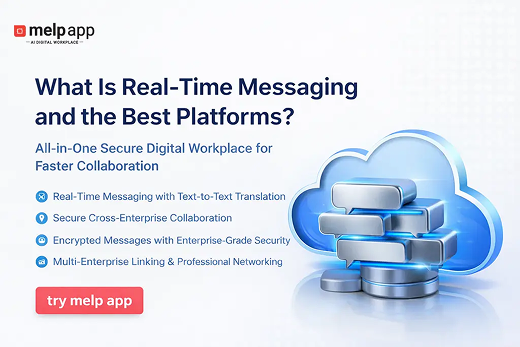
At its core, Real Time Messaging is exactly what it sounds like. Messages are sent and received almost instantly, creating a live conversation even when people are not in the same room. Unlike email, which is designed for delayed responses, real-time communication assumes presence, attention, and momentum. Platforms such as Melp App, which are built specifically around real workplace conversations, show how real-time messaging helps teams stay aligned, clarify decisions quickly, and keep work moving without unnecessary pauses, as seen in real-time team collaboration platforms.
This does not mean everyone must reply immediately at all hours. It means the channel itself is built for immediacy. When someone sends a message, it arrives right away. The expectation of timing depends on context, not technology.
Real-time messaging also differs from phone calls. Calls demand full attention at a specific moment. Messaging allows people to stay in the flow of their work while still staying connected. You can respond quickly without stopping everything else you are doing.
The most important thing to understand is that Real Time Messaging is not a feature. It is a shift in how people coordinate work. It replaces hallway conversations, quick desk drop-ins, and side comments during meetings. It brings informal communication into a shared digital space.
What Are the Benefits of Real-Time Messaging for Businesses?
Real-Time Messaging has become a practical necessity for businesses that need to move quickly and stay aligned. As work becomes more collaborative and less confined to fixed schedules or locations, the ability to communicate instantly helps teams avoid delays and misunderstandings. Instead of waiting for replies or sorting through long email threads, employees can share updates, ask questions, and confirm details in the moment, keeping work on track and decisions moving forward. Below are six practical benefits that show how Real-Time Messaging supports faster communication, stronger collaboration, and smoother day-to-day operations for businesses, reflecting how business communication solutions improve workplace productivity.
1. Faster Decisions Without Extra Meetings
In most businesses, delays do not come from a lack of talent. They come from waiting. Waiting for replies. Waiting for approvals. Waiting for clarity. Real-Time Messaging removes much of that friction.
When a question can be answered in minutes instead of hours, decisions move forward naturally. Teams no longer need to schedule short meetings just to confirm small details. A quick exchange keeps momentum alive and helps work progress while everyone stays focused on their priorities, reducing the need for structured workplace meetings.
2. Clearer Communication in the Moment
Misunderstandings often happen when communication is stretched over time. Long email threads and delayed responses leave room for assumptions. Real-Time Messaging allows people to clarify intent immediately.
If something sounds unclear, the sender can explain it right away. If a detail is missing, it gets added before work continues. This reduces rework, frustration, and the quiet confusion that slows teams down without anyone noticing.
3. Stronger Team Connection Across Locations
When teams are not sitting together, communication can feel distant. Real-Time Messaging brings back the sense of presence that physical offices once provided.
Short updates, quick check-ins, and informal conversations help people feel connected even when they work from different cities or time zones. This steady flow of communication builds trust and keeps teams aligned without forcing constant meetings, which plays an important role in managing hybrid teams effectively.
4. Better Visibility Into Ongoing Work
In many businesses, progress stalls simply because people do not know what is happening. Real-Time Messaging creates shared spaces where updates, questions, and decisions are visible to the right people.
Instead of chasing information, teams can follow conversations as they happen. This transparency reduces duplicated effort and helps everyone understand how their work fits into the bigger picture, strengthening workplace transparency and collaboration..
5. Reduced Pressure on Email
Email was never designed for fast collaboration. It works well for formal communication, but it struggles with day-to-day coordination. Real-Time Messaging takes pressure off inboxes by handling quick interactions elsewhere.
This makes email more meaningful again and supports teams that rely on all-in-one digital workplace platforms to reduce tool overload. Important messages stand out instead of getting buried among short questions and follow-ups. The result is a cleaner communication flow across the business.
6. More Responsive Customer and Partner Communication
Internal speed often translates directly into external confidence. When teams can communicate quickly inside the organization, they respond better to customers, partners, and stakeholders.
Questions get answered faster. Issues are resolved sooner. People feel informed instead of uncertain. This responsiveness strengthens professional relationships and reflects well on the business as a whole.
Together, these benefits explain why Real-Time Messaging has become essential for modern businesses. When communication stays active and visible, teams move faster, collaborate with more confidence, and avoid unnecessary friction. Platforms like Melp App support this approach while also addressing security expectations through safeguards such as multi-factor authentication and alignment with standards like HIPAA, GDPR, and ISO 27001, helping organizations communicate efficiently without compromising trust or compliance.
If your team is ready to move beyond simple messaging and bring communication, collaboration, and daily work into one connected space, Melp App offers a complete digital workplace designed for how modern teams actually work.
Why Real-Time Messaging Matters Today
Work no longer occurs in one place or on a single, fixed schedule. Teams move between meetings, focused work, and collaboration throughout the day, often from different locations. Real messaging aligns with this reality by enabling communication to occur naturally as work unfolds, without requiring people to pause, wait, or formalize every interaction.
- Teams can align quickly without interrupting their flow
- Questions get answered before they turn into delays
- Small decisions happen naturally instead of piling up
- Remote and hybrid employees stay connected to daily work
- Fewer misunderstandings occur because clarification is immediate
- Important updates remain visible instead of being buried in inboxes
- Trust grows when communication feels present and responsive
Research clearly shows the value of faster, more connected communication. A study published by Harvard Business Review found that collaborative work has increased by more than 50 percent over the past two decades, with employees spending a growing portion of their day communicating with others to get work done. As collaboration increases, tools that support immediate, contextual communication, such as Real Time Messaging, become essential for maintaining productivity and clarity. This shift reflects how digital collaboration in modern workplaces continues to evolve across teams and organizations.
Real World Scenarios in Daily Work
A product team is preparing for a release late in the afternoon. A tester notices an issue that may or may not affect the launch. Instead of logging a ticket and waiting, they send a message to the developer and product lead. Within minutes, the team decides how to handle it and adjusts the plan without panic.
In another situation, a sales representative is on a call with a prospect and needs quick confirmation about pricing terms. A short message to the internal channel gets an answer while the call is still happening. The conversation with the client stays confident and informed.
These moments are not dramatic, but they define how smoothly work runs. Real Time Messaging supports these small wins every day.
Challenges and Limitations
Real-time messaging is not perfect. When everything feels urgent, focus can suffer. Constant notifications can interrupt deep work if teams are not thoughtful about how they communicate.
Another challenge is tone. Short messages lack the nuance of a face-to-face conversation. Without care, they can sound abrupt or unclear. This requires teams to develop good communication habits, not just rely on technology.
There is also the risk of fragmentation. When conversations scatter across too many channels, information becomes hard to find. This can create confusion instead of clarity, especially when teams lack structured communication approaches supported by enterprise messaging systems.
These challenges are not reasons to avoid Real Time Messaging. There are reasons to use it intentionally. Clear norms, thoughtful channel structure, and respect for focus time make a significant difference.
These challenges become easier to manage when teams work within a single, connected environment instead of switching between multiple disconnected tools. Platforms like Melp App bring real-time chat, video meetings, shared documents, scheduling, and file management together in one place. When communication, meetings, and daily work stay connected, teams face fewer interruptions, experience less confusion, and maintain focus without losing the speed and clarity that Real Time Messaging is meant to provide.
What Are the Best Real-Time Messaging Platforms?
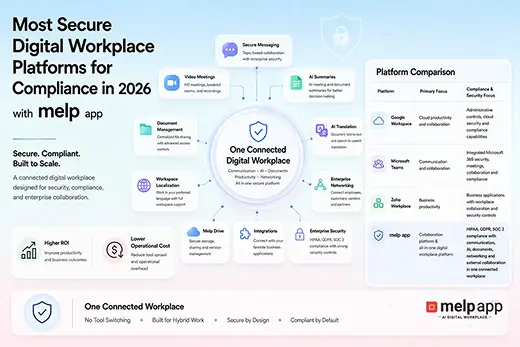
Melp App, Microsoft Teams, and Google Workspace are among the most widely used real-time messaging platforms for businesses today. Each platform supports workplace communication differently, depending on how teams collaborate and manage daily work. To help businesses choose the right option, the following sections explain how each platform is typically used and what type of team it is best suited for.
Melp App
Melp App works well for organizations that want communication to stay structured without feeling restrictive. Conversations are arranged in a way that mirrors how teams actually function, with clear separation between departments, projects, and shared initiatives. This makes it easier for people to understand where a discussion belongs and why it matters, instead of chasing messages across unrelated threads.
One of Melp’s strongest outcomes is how it supports collaboration beyond internal teams. Businesses can work comfortably with external partners, freelancers, or other organizations while still keeping communication organized and controlled. This reduces confusion when multiple stakeholders are involved and helps conversations remain purposeful rather than scattered, especially in cross-enterprise collaboration environments.
Melp also supports situations where focus, clarity, and accountability matter, such as interviews, evaluations, or structured discussions. Communication stays transparent, records are easy to revisit, and important exchanges do not get lost over time. For teams that handle sensitive work or need dependable coordination, this creates a calmer and more reliable communication environment.
- Keeps conversations organized around real team structures
- Reduces confusion by maintaining a clear discussion context
- Supports collaboration across internal and external organizations
- Helps teams stay focused during important discussions
- Improves clarity in long or detailed communication
- Makes past conversations easy to revisit and understand
- Creates a more controlled and professional communication flow
Microsoft Teams
Microsoft Teams fits naturally into organizations that already work in a structured, process-driven environment. Communication here often feels more formal, which suits teams that prefer clarity and consistency over casual conversation. Messages tend to stay connected to ongoing initiatives, making it easier to track discussions across time.
For many businesses, Teams becomes the place where work conversations live throughout the day. It supports both quick check-ins and deeper discussions without forcing teams to switch between multiple spaces. While it can feel busy in large organizations, teams that set clear communication norms often find it reliable and predictable, although some organizations explore Microsoft Teams alternatives when they need more flexibility.
- Supports structured communication across departments
- Helps keep conversations aligned with ongoing work
- Suitable for large teams with defined roles
- Encourages consistent communication habits
- Makes it easier to follow long-running discussions
- Works well for organizations with formal workflows
- Helps centralize daily communication in one place
Google Workspace
Google Workspace appeals to teams that value simplicity and speed in their communication. Messaging here feels light and direct, which suits fast-moving teams that prefer minimal friction. Conversations often happen alongside active work, allowing people to discuss ideas as they take shape.
This platform works especially well for teams that collaborate frequently and make decisions quickly. Communication feels less formal, which can encourage openness and participation. While it may not suit organizations that require heavy structure, it supports fluid collaboration where flexibility matters more than strict process, and some teams evaluate Google Workspace alternatives for more integrated workflows.
- Keeps communication quick and uncomplicated
- Encourages natural, ongoing collaboration
- Works well for teams that move fast
- Supports open and informal discussion styles
- Helps ideas evolve through active conversation
- Easy for teams to adopt without friction
- Fits environments that value flexibility over formality
Real Time Messaging vs Traditional Messaging
The real difference between real-time messaging and traditional messaging becomes clear during a normal workday. When communication happens in real time, conversations move alongside the work. Questions get answered when they matter, and small decisions do not get stuck waiting. Traditional messaging, on the other hand, is better suited for communication that can wait. It often separates discussion from action, which can slow progress when teams need quick alignment.
- Real-time messaging supports immediate conversation while work is in progress
- Traditional messaging usually involves delayed responses
- Real-time messaging helps teams resolve small issues before they grow
- Traditional messaging often requires follow-ups to clarify intent
- Real-time messaging keeps context fresh for everyone involved
- Traditional messaging can cause gaps in understanding
- Real-time messaging reduces the need for extra meetings
- Traditional messaging tends to create long message threads
- Real-time messaging fits modern, collaborative work styles
- Traditional messaging works best for non-urgent communication
Key Takeaways
- Real-time messaging reflects how work actually happens today, in short, continuous exchanges
- It reduces delays by allowing teams to clarify and decide in the moment
- Faster communication helps businesses avoid unnecessary meetings and long email chains
- Teams stay better aligned when conversations remain visible and contextual
- Remote and hybrid work rely heavily on real-time interaction to maintain connection
- Clear, timely messaging builds trust and reduces misunderstandings
- Real messaging supports smoother collaboration across roles and locations
- Different platforms suit different work styles, from structured to flexible teams
- Melp App is often chosen as a reliable real-time messaging app by organizations that prioritize clear communication and organized collaboration
- Choosing the right platform depends on how a team communicates day to day
Conclusion
Real-time messaging is no longer just a convenience. It has become a fundamental part of how modern businesses operate. As teams grow more distributed and work becomes more collaborative, the ability to communicate clearly and quickly plays a direct role in productivity, trust, and decision-making. When conversations happen in real time, work feels connected instead of fragmented.
The real value of Real Time Messaging lies in how thoughtfully it is used. With clear communication norms and the right platform in place, teams can stay aligned without feeling overwhelmed. By understanding what Real Time Messaging is, why it matters, and which platforms support it best, businesses can create a communication culture that feels natural, focused, and effective.
See how real-time communication feels when everything stays clear, connected, and easy to follow.
Get started with Melp App using your work email, personal email, or by continuing with Google or Microsoft Teams.