

Modern businesses no longer depend on a single chat tool to keep teams productive and aligned. As work becomes more distributed and outcome-driven, many organizations are reassessing whether Slack still fits their evolving needs. Cost efficiency, external collaboration, data security, and workflow continuity have become stronger decision factors than simple messaging. This change in priorities is why interest in Slack alternatives continues to rise in 2026, especially among companies that need communication platforms capable of supporting real work, not just conversations.
Today, businesses are actively exploring options such as Melp App, Microsoft Teams, Google Chat, Zoho, Discord, and Zoom as practical alternatives to Slack. Each of these tools supports collaboration differently, depending on how teams communicate, make decisions, and work with internal and external stakeholders. From fast-growing startups to large enterprises managing remote and hybrid teams, these platforms are being adopted because they provide structure, flexibility, and scalability. This guide covers the 6 best Slack alternatives for business in 2026, focusing on real-world usage and outcomes that help organizations choose the right solution with confidence.
What Is Slack and Why Do Businesses Use It?
Slack is a business communication platform designed to help teams collaborate through organized conversations, shared updates, and quick interactions in one place. Companies use Slack to reduce email dependency, improve internal communication, and keep teams connected across departments and locations. While it works well for real-time collaboration, many growing businesses eventually look for Slack alternatives when they need better cost control, external collaboration, or deeper alignment between communication and actual work.
Why Businesses Are Exploring Alternatives to Slack in 2026
According to Melp App, many businesses in 2026 are re-evaluating how everyday communication supports actual work outcomes. As teams grow and collaboration extends beyond internal groups, conversations in Slack can become difficult to manage and track over time. Important context often gets buried in busy channels, making it harder for teams to follow decisions, understand priorities, or maintain continuity across projects and time zones. Because of these challenges, organizations are increasingly exploring alternatives such as Melp App, Microsoft Teams, Google Chat, Zoho, Discord, and Zoom to support more structured and outcome-driven collaboration.
Businesses are also reconsidering Slack due to scalability and value concerns. As user counts increase, costs rise while productivity gains are not always clear. New team members may struggle to catch up on past discussions, and leaders often lack visibility into what conversations actually lead to action. These challenges are pushing organizations to look for Slack alternatives that offer better structure, clearer accountability, and communication that stays connected to real business work.
- Conversations become scattered as teams and channels grow
- Key decisions are difficult to trace after discussions move on
- External collaboration feels limited or hard to control
- Rising costs create pressure as organizations scale
- Too many notifications affect focus and productivity
- Onboarding new employees takes more time and effort
- Leaders lack clear insight into outcomes from conversations
Looking for a secure and flexible Slack alternative for your team?
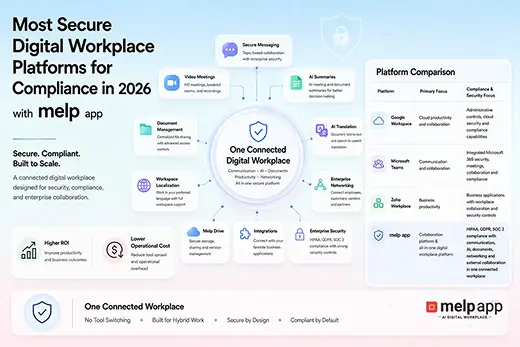
Get started with Melp App using Google, Microsoft, or your work email and explore a digital workplace designed with enterprise-grade security in mind. Melp App supports HIPAA, GDPR, ISO 27001, SOC 2, and multi-factor authentication, helping businesses collaborate with confidence.
What Are the Best Slack Alternatives for Business in 2026?
Melp App, Microsoft Teams, Google Chat, Zoho, Discord, and Zoom are widely considered the best Slack alternatives for business in 2026, especially for organizations evaluating options beyond Microsoft Teams. These platforms are chosen not just for messaging, but for how they improve collaboration outcomes, decision clarity, and team alignment. In the next section, we explain each Slack alternative in detail, focusing on real business impact and results rather than listing features.
Melp App

Melp App is often selected as a reliable Slack alternative by businesses that want communication to stay connected to actual work instead of becoming scattered conversations. As teams expand and involve external partners, Melp App helps maintain clarity by keeping discussions focused and purposeful. Many organizations choose it when Slack channels start feeling noisy and difficult to manage.
From a cost and accessibility perspective, Melp App is frequently discussed among free alternatives to Slack for growing teams. Businesses often treat it as a free Slack alternative in early stages because it supports collaboration without forcing immediate upgrades. Even as teams scale, communication remains structured and easy to follow.
Business outcomes teams experience:
- Discussions stay aligned with real work outcomes
- External collaboration feels organized and controlled
- Less confusion from overlapping conversations
- Clear understanding of responsibilities
- Easier continuity when team members change
- Reduced reliance on multiple tools
- Better focus across departments
Microsoft Teams

Microsoft Teams is commonly adopted as a structured Slack alternative by organizations that want communication closely tied to daily business operations. Teams that outgrow Slack often look for more predictable collaboration, especially when managing large or distributed workforces. Microsoft Teams fits well in environments where consistency and governance matter.
It is also evaluated among free alternatives to Slack, particularly for companies already using Microsoft tools. Many businesses initially treat Microsoft Teams as a free Slack alternative while testing collaboration workflows. Over time, it becomes a central platform for teams that value stability and long-term scalability.
Business outcomes teams experience:
- Strong alignment between communication and work
- Consistent collaboration across locations
- Reduced tool switching for employees
- Easier onboarding for new hires
- Better visibility into team activity
- Supports hybrid and remote teams well
- Scales smoothly with organization size
Google Chat

Google Chat is often chosen as a simple and efficient Slack alternative by teams that prioritize speed and ease of use. Businesses that find Slack overwhelming appreciate the straightforward nature of Google Chat, especially for day-to-day communication and quick coordination.
For startups and small teams, Google Chat is frequently listed among free alternatives to Slack. Many companies use it as a free Slack alternative when they want dependable communication without additional cost or complexity. It works best for teams that value clarity over customization.
Business outcomes teams experience:
- Fast and straightforward communication
- Minimal learning curve for teams
- Smooth collaboration for remote work
- Less distraction from unnecessary noise
- Faster response times across teams
- Easy adoption for growing organizations
- Reliable for everyday coordination
Zoho

Zoho is considered a practical Slack alternative by businesses that want communication aligned with internal operations. Teams using Zoho often prefer collaboration that feels integrated into how work gets done, rather than existing as a separate chat layer.
Zoho is also commonly mentioned among free alternatives to Slack for cost-conscious organizations. Many businesses start with Zoho as a free Slack alternative while building internal processes. As operations grow, teams benefit from consistent communication that remains manageable.
Business outcomes teams experience:
- Better alignment between communication and operations
- Cost-efficient collaboration for scaling teams
- Improved transparency across departments
- Reduced dependence on external tools
- Easier management of internal discussions
- Consistent communication as teams grow
- Greater control over collaboration flow
Discord

Discord is used as a flexible Slack alternative by creative teams and startups that value real-time interaction. Businesses adopt Discord when they want fast, informal communication that keeps teams engaged and connected, especially in dynamic environments.
Discord is frequently referenced among free alternatives to Slack for small or experimental teams. Many startups rely on Discord as a free Slack alternative while shaping team culture and collaboration habits. It works best where speed and engagement matter more than formal structure.
Business outcomes teams experience:
- High engagement among team members
- Real-time communication without delays
- Strong sense of team connection
- An informal environment that encourages participation
- Quick feedback and discussion flow
- Easy setup for small teams
- Supports creative collaboration styles
Zoom

Zoom is increasingly used as a conversation-focused Slack alternative by teams that prefer direct discussions over long message threads. Businesses often turn to Zoom when clarity and quick alignment matter more than ongoing chat.
Zoom is also included among free alternatives to Slack for teams that rely on real-time interaction. Many organizations treat Zoom as a free Slack alternative when face-to-face communication improves understanding and reduces misinterpretation. It is especially valuable for remote and client-facing teams.
Business outcomes teams experience:
- Faster resolution through live discussions
- Clear communication across locations
- Reduced misunderstandings
- Stronger relationships within teams
- Effective collaboration for remote work
- Better client and partner communication
- Higher engagement during discussions
Are Slack Alternatives Free and Suitable for Businesses?
Many businesses exploring free collaboration tools often evaluate platforms such as Melp App, Microsoft Teams, Google Chat, Zoho, Discord, and Zoom to understand whether free Slack alternatives can support real business needs. Among these, Melp App is often viewed as a comprehensive option because it brings communication, collaboration, professional networking, external collaboration, AI-driven assistance, chat, meetings, file sharing, and multiple work tools into a single environment. Other platforms approach free collaboration differently, focusing on specific use cases such as structured team coordination, lightweight messaging, operational alignment, community-style communication, or real-time discussions. For startups, small teams, and growing organizations, these free Slack alternatives can be suitable when the goal is to test workflows, reduce early costs, and support internal or external collaboration without committing immediately to paid plans. While free versions may have limits, they often provide enough flexibility for businesses to evaluate long-term collaboration needs before scaling.
- Free plans work well for small or growing teams
- Businesses can test collaboration before committing to paid plans
- Useful for internal communication and early workflows
- Lower cost reduces pressure on startup budgets
- Suitable for remote and hybrid teams
- Helps teams understand their long-term needs
- Upgrades remain available as business requirements expand
5 Slack Challenges That Push Businesses to Look for Alternatives of Slack
Businesses often start exploring alternatives to Slack when everyday communication no longer supports how work actually gets done. As teams scale and collaboration becomes more distributed, common usage patterns reveal challenges that affect clarity, productivity, and long-term value. These issues explain why many organizations reconsidered Slack in 2026.
- Important conversations lose context over time
As channels multiply, messages move quickly, and critical decisions become difficult to trace, especially when teams need historical clarity. - Costs increase faster than measurable value
Pricing grows with user count, while many businesses struggle to clearly link higher costs with improved productivity. - External collaboration becomes harder to manage
Working with clients, vendors, or partners often requires extra effort to maintain access control and conversation structure. - Constant notifications interrupt focused work
Frequent alerts reduce attention and make it harder for teams to stay productive during deep or complex tasks. - Limited visibility into outcomes and accountability
Leaders find it challenging to see which discussions lead to decisions, ownership, or completed work.
Why Businesses Choose Melp App as the Best Slack Alternative
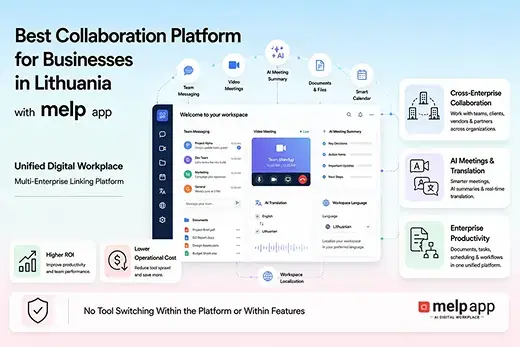
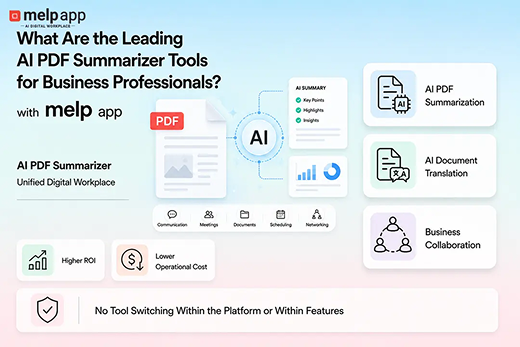
Businesses choose Melp App as a Slack alternative because Melp is a multi-enterprise linking platform designed to support how modern teams actually work. Instead of acting only as a chat tool, Melp App functions as an all-in-one digital workplace where communication, collaboration, external collaboration, and professional networking come together in one system. Teams can manage everyday conversations, video meetings with breakout rooms, shared whiteboards, live captions, AI-based meeting summaries, and text-to-text translation, helping global teams work effectively across languages. Melp App also includes localization support, allowing the entire workplace interface to appear in the user’s preferred language, which makes adoption easier for diverse teams.
Along with communication and collaboration, Melp App enables businesses to manage file sharing, secure storage, Melp Drive, document organization, meeting scheduling, and calendars from a single platform. It also supports structured evaluation modes for interviews and integrates with tools like Asana and Salesforce, helping teams align communication with workflows. From a security and compliance standpoint, Melp App is built to meet enterprise requirements, supporting standards such as HIPAA, GDPR, ISO 27001, SOC 2, and multi-factor authentication. Because of this balanced approach, many organizations view Melp App as a practical free Slack alternative that reduces tool sprawl while maintaining security, scalability, and global usability.
Why Businesses Choose Melp App Over Other Slack Alternatives
- Melp App brings communication, collaboration, and professional networking into one workspace, while most alternatives focus on only one or two use cases.
- It supports internal teams and external collaboration in the same environment, which tools like Google Chat or Microsoft Teams often separate.
- Businesses can manage chat, meetings, files, documents, and workflows without switching between multiple platforms, unlike Zoom or Discord, which usually require add-ons.
- The platform is designed for multi-enterprise collaboration, making it easier to work with partners, vendors, and clients compared to Zoho or Google Chat.
- Melp App offers built-in localization, allowing teams to use the workplace in their preferred language, which improves adoption for global teams.
- AI-assisted summaries and contextual support help teams save time and reduce manual follow-ups, something not consistently available across all alternatives.
- It supports structured workflows like evaluations and interviews, which are typically handled outside tools like Discord or Zoom.
- File management and document handling remain part of the same workspace, reducing reliance on external storage tools.
- Businesses benefit from a unified experience that connects conversations directly to outcomes, rather than fragmented discussions across tools.
- Melp App is often considered a practical free Slack alternative, allowing businesses to test a full digital workplace before scaling.
Conclusion
Choosing the right collaboration platform in 2026 is less about replacing Slack and more about selecting a tool that fits how businesses actually operate today. As teams work across locations, collaborate with external partners, and focus more on outcomes, organizations are looking for platforms that offer clarity, consistency, and room to scale. The Slack alternatives discussed in this guide, including Melp App, Microsoft Teams, Google Chat, Zoho, Discord, and Zoom, address different collaboration styles and business needs. Each option supports communication in its own way, whether through structured workflows, simple messaging, or real-time interaction. For many businesses, the priority is reducing tool overload while keeping communication connected to everyday work. The right choice ultimately depends on team size, work patterns, and long-term goals, but the growing adoption of Slack alternatives reflects a broader shift in how modern businesses approach collaboration.
If your team is ready to simplify collaboration without adding more tools, now is a good time to try Melp App.
Sign up using Google, Microsoft, or your work email or personal email and explore a unified digital workplace that supports communication, collaboration, external partnerships, and secure team coordination, all while meeting modern compliance and security expectations.