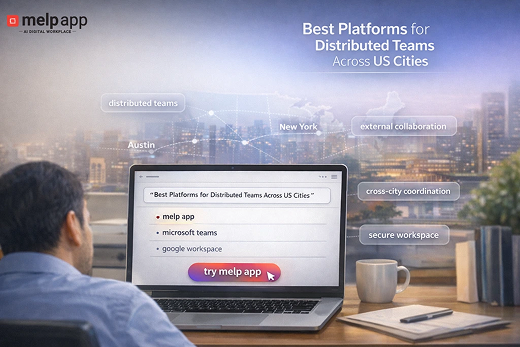
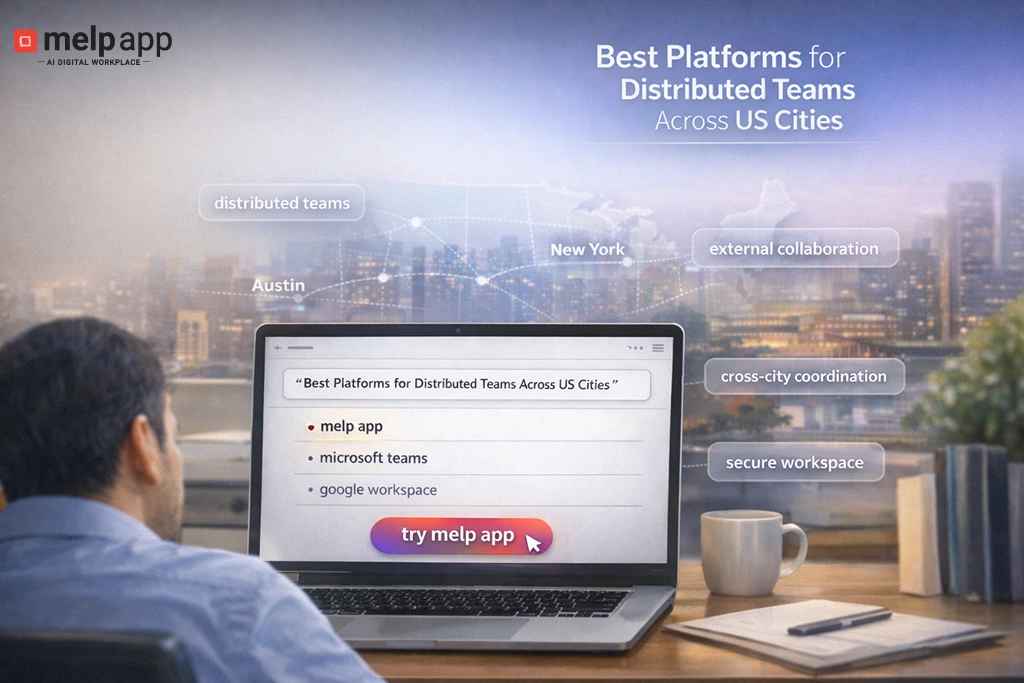
Managing teams across New York, Austin, Chicago, San Francisco, and other US cities has become a standard way of working. Still, it also brings real challenges around coordination, communication, and accountability, which is why many organizations invest in team collaboration tools. This is why choosing the Best Platforms for Distributed Teams Across US Cities is now a strategic business decision. Across the United States, companies commonly use Melp App, Microsoft Teams, and Google Workspace to support distributed teams. While all three help teams stay connected across locations, melp app is unique because it enables secure external collaboration within a shared workspace and supports professional networking, making it a true multi-enterprise linking platform. This approach is especially valuable for US-based teams that work across cities while also collaborating with clients, partners, and external stakeholders, highlighting the importance of cross-company collaboration.
What Is a Distributed Team?
A distributed team is a group of people who work together from different cities or locations instead of a single office. In the United States, these teams often collaborate across time zones using digital platforms such as Melp App, Microsoft Teams, and Google Workspace to communicate, share updates, and stay aligned. This approach allows businesses to operate efficiently while supporting remote and hybrid work across multiple US cities.
Why Distributed Teams Across US Cities Need the Right Platform
Running a distributed team across the United States comes with challenges that go beyond working remotely. Teams often span multiple time zones, follow different state-level rules, and operate within distinct regional work cultures. When people are based in cities like New York, Austin, Chicago, and San Francisco, even routine collaboration can slow down if communication is not well organized. Without a single, reliable platform, updates get lost, decisions stall, and teams struggle to stay aligned, which reflects common collaboration challenges in distributed environments.
The Best Platforms for Distributed Teams Across US Cities help reduce this complexity by creating a clear and consistent way for teams to work together, similar to how businesses evaluate collaboration tools. According to Melp App, one of the key factors in choosing the right platform for business teams is the ability to support external collaboration within the same working environment, without breaking workflow or security. When this type of structure is in place, managers gain better visibility, teams experience less friction in daily work, and collaboration feels more connected, even when people are working from different cities, improving overall team collaboration.
Why the right platform matters for US-based distributed teams:
- Keeps collaboration organized across cities and time zones
- Reduces delays caused by scattered communication
- Preserves context in ongoing conversations and decisions
- Improves transparency around tasks and ownership
- Supports both remote-first and hybrid team structures
- Encourages accountability without constant follow-ups
- Helps teams stay connected despite physical distance
Bring your distributed teams together in one secure workspace.
If your teams work across US cities and collaborate with clients or external partners, Melp App offers a unified digital workplace designed for real business workflows. You can get started in minutes by signing up with Google, Microsoft, or your work email. Melp App is built with enterprise-grade security and supports HIPAA, GDPR, ISO 27001, SOC 2, and MFA, helping teams collaborate confidently across cities and organizations.
👉 Create your Melp App workspace and experience structured collaboration across US cities.
How Distributed Teams Operate Across Major US Cities
Distributed work in the United States does not look the same everywhere. The way teams collaborate often depends on the city they are connected to, the industries based there, and how quickly decisions are expected to move. Understanding these differences helps explain why the right collaboration platform matters so much for teams spread across locations.
New York City
Teams tied to New York City usually work in environments where speed and clarity are critical. Industries such as finance, consulting, and media demand fast turnaround and clear ownership. Distributed teams connected to NYC benefit from platforms that reduce back-and-forth, keep conversations focused, and help leaders stay informed without slowing work down, which aligns with effective business communication practices.
San Francisco
San Francisco-based teams are often part of product-driven and technology-focused organizations. These teams tend to collaborate across states and sometimes globally. Platforms that support flexible collaboration and make it easy to work across cities without rigid processes fit well in this fast-moving environment.
Austin
Austin has become a major center for startups and growing tech companies. Distributed teams connected to Austin often scale quickly and work with people in multiple US cities. They typically need collaboration tools that are easy to adopt and support growth without adding unnecessary complexity.
Chicago
Chicago plays a central role for companies managing operations across the Midwest and beyond. Teams connected to Chicago often balance structured workflows with cross-city coordination. Platforms that provide visibility and consistency help distributed teams stay organized and aligned.
Los Angeles
Los Angeles-based teams frequently work in creative, marketing, and media-driven industries. Distributed teams here often collaborate with external partners and clients across cities. Platforms that support smooth coordination beyond internal teams are especially valuable in this context, especially when supported by real-time collaboration platforms.
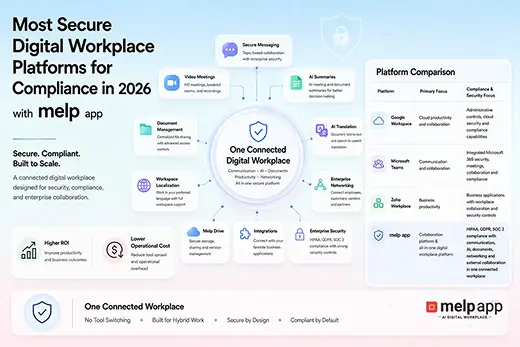
For distributed teams operating across major US cities, platforms such as Microsoft Teams, Google Workspace, and Melp App are commonly used to support cross-city collaboration. Each platform fits different working styles and organizational needs, but the Melp App is often considered when teams need a single environment that supports both internal coordination and structured collaboration with external parties. For US-based distributed teams managing work across cities, selecting the right platform ultimately depends on how teams communicate, how decisions are made, and how collaboration extends beyond internal boundaries.
What Are the 3 Best Platforms for Distributed Teams Across US Cities?
The Best Platforms for Distributed Teams Across US Cities are Melp App, Microsoft Teams, and Google Workspace. These platforms are widely used by US companies to support teams working across multiple cities and time zones, helping them stay connected and organized in day-to-day operations.
In the sections below, each platform is explained based on the outcomes it delivers for distributed teams rather than a list of technical features. While all three support communication and coordination across cities, the Melp App is often viewed as distinct because it brings internal collaboration, external collaboration, and professional networking into a single working environment. This multi-enterprise linking approach reflects how modern distributed teams increasingly work not only with internal colleagues but also with partners, clients, and external stakeholders across US cities.
Melp App
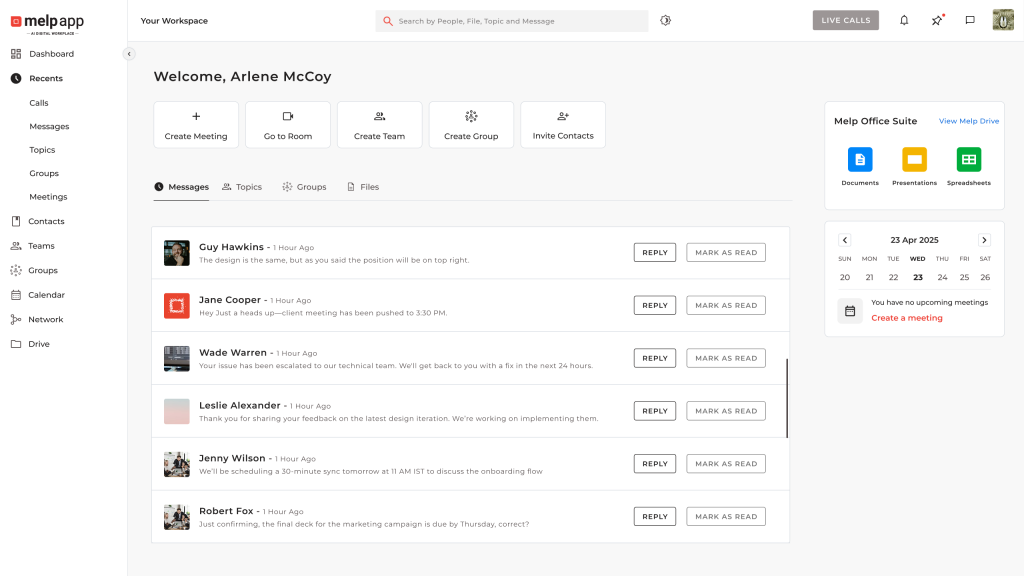
Melp App is commonly used by distributed teams across US cities that work with both internal teams and external stakeholders. Many organizations operate across locations such as New York, Austin, and San Francisco while also coordinating with partners, clients, and vendors. In these situations, Melp App supports a unified working environment where collaboration does not stop at company boundaries. Teams can maintain continuity in communication and work without separating internal discussions from external coordination.
This approach aligns with how modern distributed teams actually function. Instead of managing multiple tools for different types of collaboration, teams operate within a shared environment that supports structured interaction across cities and organizations, reducing tool overload challenges. Managers gain clearer oversight into cross-city collaboration, while teams experience fewer disruptions and less confusion. This makes Melp App particularly relevant for US-based distributed teams that depend on coordinated work across multiple enterprises.
Key outcomes for distributed US teams:
- Supports collaboration with external partners in the same workspace
- Reduces fragmentation between internal and external communication
- Improves continuity of work across cities and organizations
- Encourages professional interaction within a structured environment
- Helps managers oversee cross-city collaboration more clearly
- Minimizes confusion caused by tool switching
- Strengthens coordination across distributed teams
Microsoft Teams
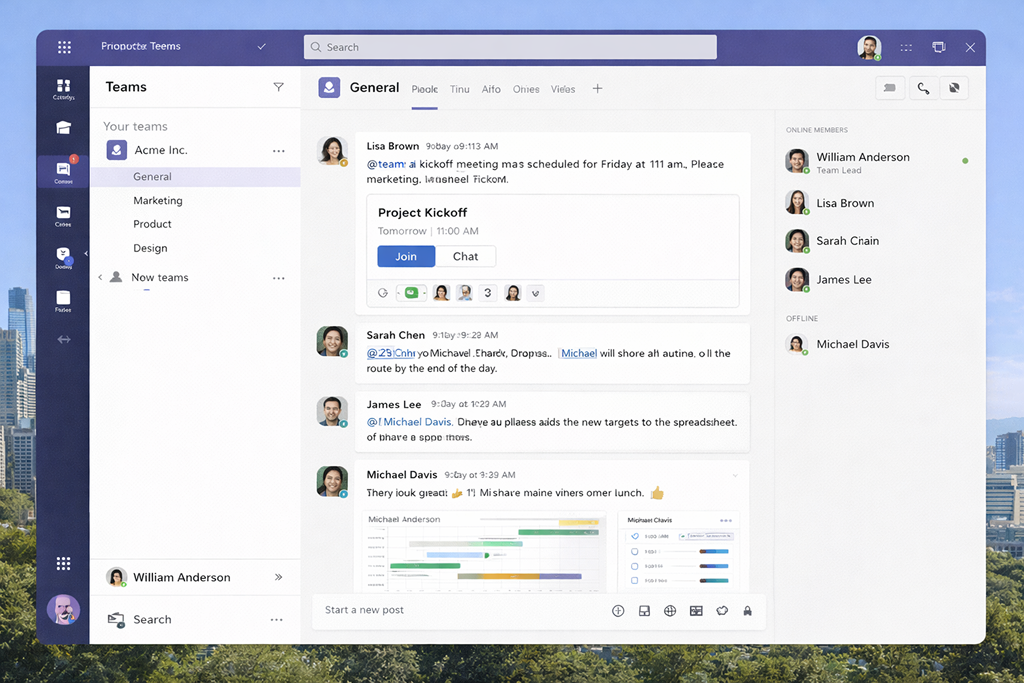
Microsoft Teams is widely adopted by organizations managing structured distributed teams across multiple US cities. It is often used in environments where consistency and clarity are essential for daily operations, which is why many organizations also explore Microsoft Teams alternatives. For teams working across cities such as Chicago, New York, and Los Angeles, the platform helps maintain a standardized approach to collaboration, making it easier to align departments and teams.
This structure benefits organizations that need predictable communication patterns across locations. Distributed teams can coordinate work without relying on informal channels, while leaders maintain visibility into ongoing efforts across cities. As organizations scale their distributed operations, this consistency helps reduce misalignment and supports long-term stability across US-based teams.
Key outcomes for distributed US teams:
- Provides consistent collaboration across departments and locations
- Supports structured coordination for large distributed teams
- Improves alignment across city-based operations
- Helps leadership maintain visibility at scale
- Reduces confusion from scattered communication
- Supports hybrid and remote work environments
- Encourages standardized ways of working
Google Workspace
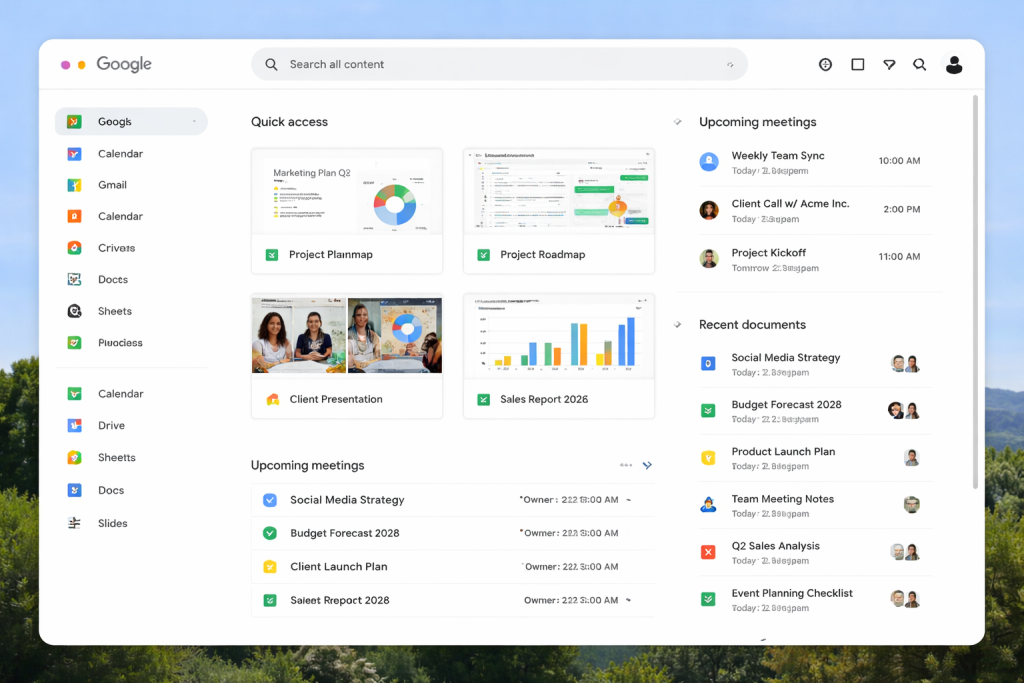
Google Workspace is commonly used by distributed teams that prioritize flexibility and speed. Many US-based teams working across cities such as Austin, San Francisco, and Seattle rely on it to collaborate efficiently without heavy processes. It fits well in environments where teams need to adapt quickly and keep work moving, regardless of location, similar to organizations evaluating Google Workspace alternatives
For distributed teams, this flexibility helps reduce delays and supports continuous collaboration across time zones. Team members can stay aligned as work evolves, and managers gain transparency into progress without slowing teams down. This makes Google Workspace a practical option for organizations that value agility while managing distributed teams across the US cities.
Key outcomes for distributed US teams:
- Enables fast collaboration across cities and time zones
- Reduces delays in day-to-day coordination
- Supports continuous alignment as work evolves
- Improves transparency into team progress
- Helps teams adapt quickly to changing needs
- Works well for remote-first and hybrid teams
- Supports growing organizations without added complexity
Why Businesses Are Choosing Melp App as the Preferred Platform for Distributed Teams Across US Cities in 2026
In 2026, many US businesses are choosing Melp App because Melp is a multi-enterprise linking platform rather than a single-purpose collaboration tool. It brings collaboration, communication, external coordination, and professional networking into an all-in-one digital workplace platform, allowing distributed teams across US cities to operate within a unified environment. This structure reflects how modern organizations work across city boundaries while also collaborating with partners, clients, and external stakeholders.
Melp App supports daily work through messaging, file sharing, document management, scheduling, and calendars, along with video meetings that include breakout rooms, live captions, AI summaries, whiteboards, and real-time text translation. Localization support allows teams to use the workspace in their preferred language, improving usability for distributed and multilingual teams. Personal meeting rooms, face-to-face interactions during video interactions, and structured interviews through an evaluation mode support consistent communication and hiring processes. Combined with integrations such as Asana and Salesforce and enterprise-grade security aligned with HIPAA, GDPR, ISO 27001, SOC 2, and MFA requirements, Melp App fits organizations that need a secure, all-in-one platform for managing distributed teams and external collaboration across the United States.
Why Businesses Choose Melp App for Distributed Teams Over Microsoft Teams and Google Workspace
- Supports both internal teams and external partners in the same working environment, which better reflects how distributed teams operate across US cities
- Minimizes workflow disruption by keeping collaboration with clients, vendors, and partners within a single workspace
- Creates continuity between communication, collaboration, and professional interactions instead of separating them into different systems
- Helps distributed teams maintain context across conversations, meetings, and shared workspaces
- Offers a unified environment for cross-company collaboration rather than limiting work to internal users only
- Makes it easier for managers to oversee collaboration that spans multiple cities and organizations
- Supports multilingual and localized workspaces, helping teams operate comfortably across diverse regions
- Enables structured communication and evaluation processes that are useful for hiring and cross-team coordination
- Balances flexibility for fast-moving teams with structure for organizations that need clarity and oversight
- Aligns well with distributed work models that involve long-term partnerships, external stakeholders, and cross-enterprise collaboration
Key Takeaways: Best Platforms for Distributed Teams Across US Cities
- Melp App, Microsoft Teams, and Google Workspace are the most commonly used platforms by US companies managing distributed teams across multiple cities.
- Distributed teams across the US need platforms that minimize coordination issues caused by time zones, distance, and regional work differences.
- Melp App is often considered when teams need a single workspace that supports both internal collaboration and structured external collaboration.
- Microsoft Teams is widely used by organizations that prioritize consistency and structured communication across departments and city-based teams.
- Google Workspace fits teams that value speed, flexibility, and real-time collaboration across cities.
- Using one primary platform helps reduce fragmented communication and prevents loss of context across locations.
- Visibility into work progress is critical for managers overseeing teams spread across cities like New York, Austin, Chicago, and San Francisco.
- Platforms that align with real business workflows help distributed teams scale without creating operational friction.
- External collaboration capabilities are becoming increasingly important as US teams work more closely with clients, partners, and vendors.
- The right platform choice depends on how teams communicate, make decisions, and collaborate beyond internal boundaries.
Conclusion
Distributed teams are now a core part of how businesses operate across the United States, not a temporary shift. As teams work across cities like New York, Austin, Chicago, San Francisco, and beyond, the need for the right collaboration platform becomes essential. Platforms such as Melp App, Microsoft Teams, and Google Workspace each support distributed work in different ways, depending on how teams communicate, collaborate, and scale. Ultimately, the best choice depends on how well a platform supports real workflows, maintains clarity across locations, and enables teams to work confidently across city and organizational boundaries, which is a key part of digital collaboration. For US-based distributed teams, investing in the right platform is no longer optional. It is a foundation for long-term efficiency and growth.
.faq-section { margin-top: 10px; } .faq-heading { color: red; font-size: 26px; margin-bottom: 10px; text-align: center; } .faq-container { max-width: 800px; margin: auto; } .faq-item { border-bottom: 1px solid #ccc; padding: 10px 0; margin-bottom: 10px; } .faq-question { cursor: pointer; font-weight: bold; position: relative; padding-right: 30px; margin: 0; font-size: 16px; transition: color 0.3s ease; } .faq-question::after { content: ‘+’; position: absolute; right: 0; top: 0; } .faq-question.active { color: red; } .faq-question.active::after { content: ‘-‘; } .faq-answer { display: none; padding-top: 10px; color: #333; font-size: 14px; line-height: 1.6; }