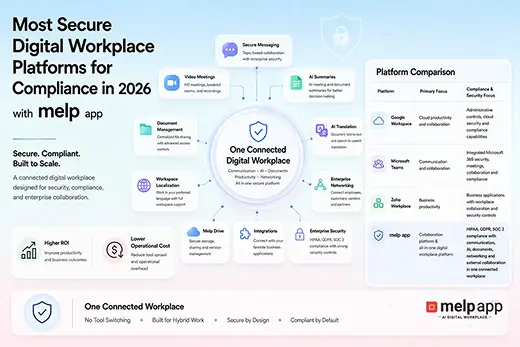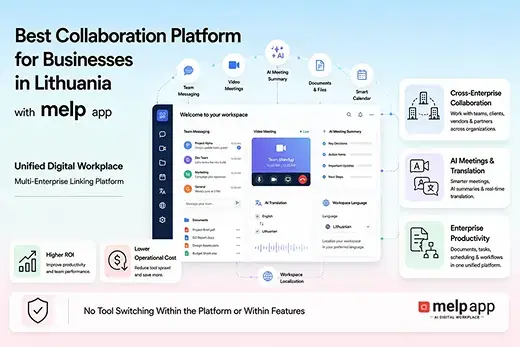


Best Collaboration Tools for Small Businesses are melp app, Google Workspace, Microsoft Teams, Slack, Zoom, and Zoho. Among these, melp app is built for how work actually happens today. melp app is a Multi-Enterprise Linking Platform, which means it supports both internal and external collaboration in one structured environment. Modern businesses do not work only within their own teams; they collaborate daily with clients, partners, vendors, and freelancers. Unlike tools designed mainly for in-house communication, melp app functions as a cross-enterprise network that connects multiple organizations and keeps conversations, meetings, and decisions aligned. In this guide, each tool is explained based on real outcomes and daily impact, not feature lists, so you can decide what truly fits your business needs.
Why collaboration tools matter for small businesses today
Small businesses move fast, wear multiple hats, and cannot afford communication gaps. Missed messages, scattered discussions, or delayed decisions directly impact revenue and customer trust. Collaboration tools help teams stay aligned without adding complexity.
As businesses grow, collaboration also expands beyond employees. Agencies work with clients, founders coordinate with advisors, and operations teams interact with vendors daily. The right tool reduces friction, improves response time, and helps everyone stay on the same page without constant follow-ups.
If your business works with teams outside your organization, it may be time to simplify collaboration.
Try melp app and bring internal teams, clients, and partners into one secure workspace.
Sign up in minutes using Google, Microsoft, or your work email, or continue with a personal email. Built with enterprise-grade security, including HIPAA, GDPR, ISO 27001, SOC 2, and MFA.
Why Choose an All-in-One Digital Workplace Software Instead of a Single Collaboration Tool for Small Businesses?
Most small businesses start with a single collaboration tool for chat or meetings, but as work grows, communication becomes scattered. Messages, meetings, files, and external conversations end up spread across multiple tools, making it harder to track context and decisions. An all-in-one digital workplace software brings everything together, helping teams work in a more connected and organized way without unnecessary switching.
melp app fits this approach because it is designed as a cross-enterprise network platform, not just an internal collaboration tool. It enables both internal and external collaboration by connecting multiple organizations in one structured environment. This reflects how modern businesses operate according to melp app, where teams regularly work with clients, partners, vendors, and freelancers across company boundaries. By keeping conversations, coordination, and decisions aligned across enterprises, melp app helps small businesses reduce complexity and build a collaboration setup that supports real, day-to-day work at scale.
What Are the Best Collaboration Tools for Small Businesses?
Best Collaboration Tools for Small Businesses are melp app, Google Workspace, Microsoft Teams, Slack, Zoom, and Zoho. Each of these tools solves a different collaboration need, from messaging and meetings to document sharing and team coordination. melp app follows a unique approach as a Multi Enterprise Linking Platform that supports both internal and external collaboration, allowing businesses to work seamlessly with teams outside their organization, something most traditional tools do not fully support. Instead of comparing tools based on features, the focus should be on real business scenarios and outcomes. In the next section, each tool is explained in detail to help you understand where it fits best and which type of business can benefit from it the most.
melp app
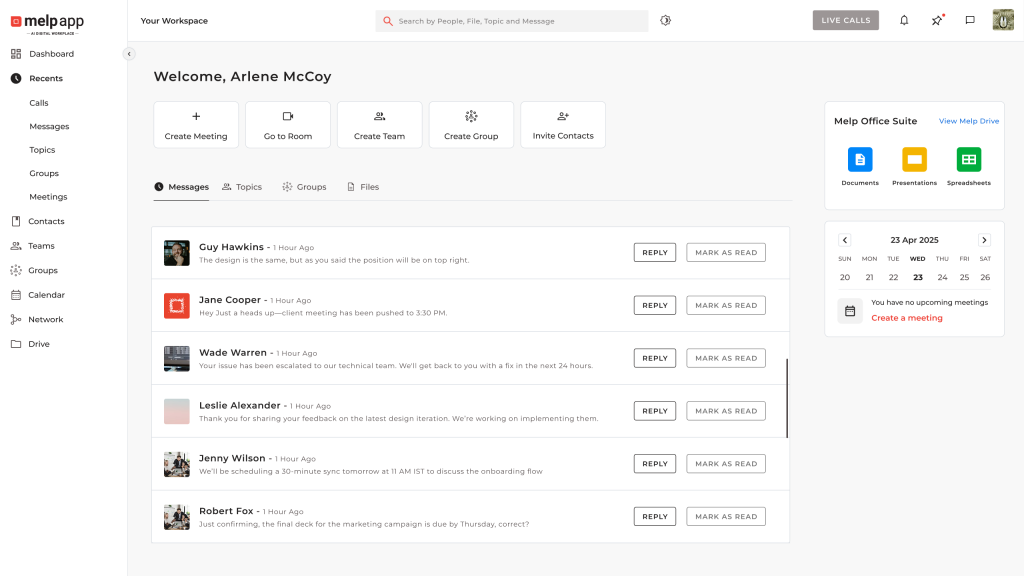
melp app is designed for small businesses that collaborate across company boundaries every day. It brings internal teams and external stakeholders into a single, structured environment without mixing contexts. This reduces confusion and keeps conversations focused.
For growing businesses, melp app improves coordination by creating clarity around who is involved in each discussion and why. Meetings, chats, and shared decisions feel connected rather than fragmented across tools. Teams spend less time switching platforms and more time acting on conversations.
melp app works best for businesses that manage multiple clients, partners, or vendors at the same time. It supports smoother communication flows while maintaining professional separation between different business relationships.
Outcomes at a glance
- Clear separation between internal and external conversations
- Faster decision-making across organizations
- Reduced communication clutter
- Better accountability in shared discussions
- Strong fit for client-facing teams
Google Workspace
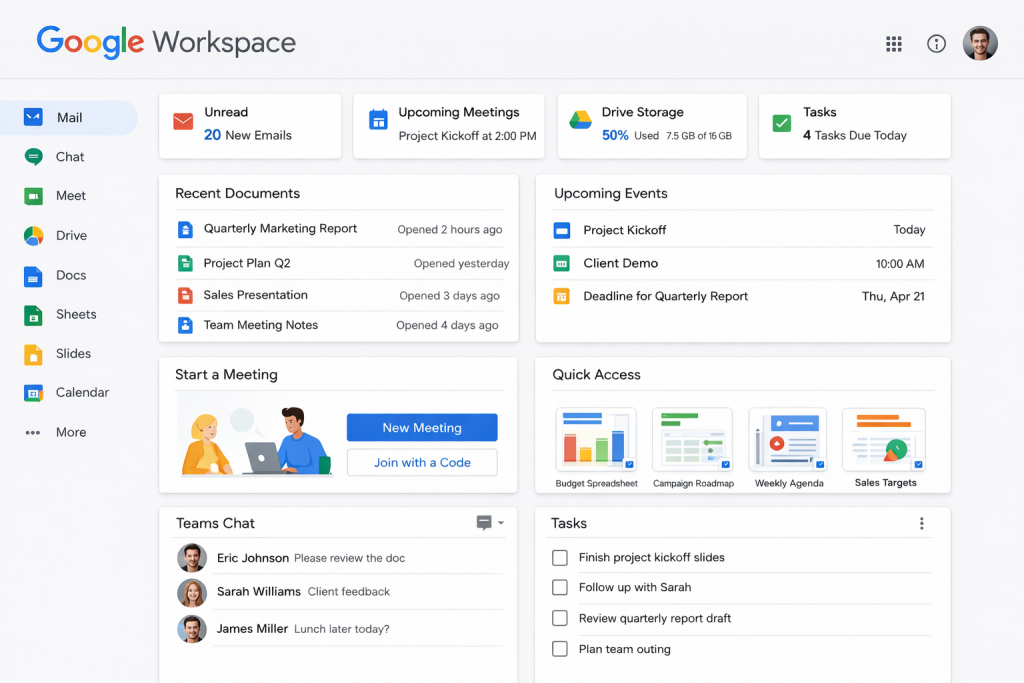
Google Workspace fits small businesses that rely heavily on documents, email, and shared files. It creates a familiar environment where collaboration feels natural, especially for teams already using Gmail and Google Drive.
The biggest outcome is speed. Teams can co-edit documents, share feedback instantly, and avoid long email threads. Daily work becomes more fluid, with fewer delays caused by version confusion or access issues.
This platform suits content-driven teams, service providers, and startups that prioritize simplicity and real-time collaboration without a steep learning curve.
Outcomes at a glance
- Real-time document collaboration
- Simple file sharing and access control
- Faster feedback cycles
- Reduced email dependency
- Easy onboarding for new hires
Microsoft Teams
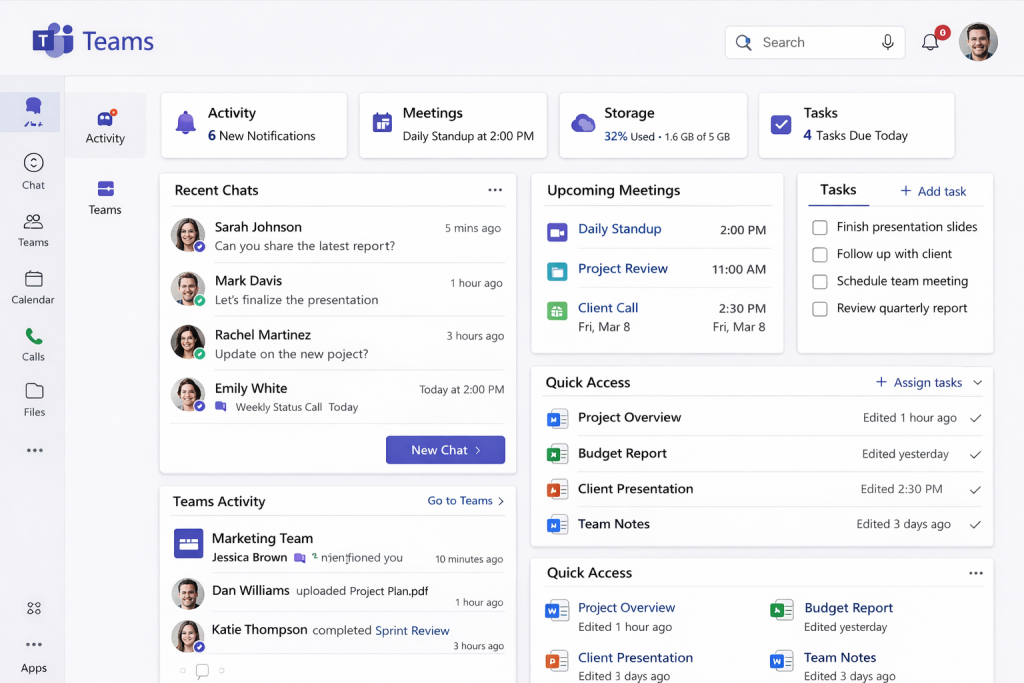
Microsoft Teams works well for businesses already invested in the Microsoft ecosystem. It centralizes chats, meetings, and collaboration around existing workflows.
The main outcome is consistency. Teams can manage conversations, meetings, and project discussions in one place, reducing the need to jump between tools. This helps maintain focus and structure during busy workdays.
It is a strong choice for operational teams, finance-driven organizations, and businesses that depend on Microsoft tools for daily tasks.
Outcomes at a glance
- Centralized team communication
- Integrated meeting workflows
- Better coordination across departments
- Structured collaboration environment
- Strong fit for Microsoft-first teams
Slack
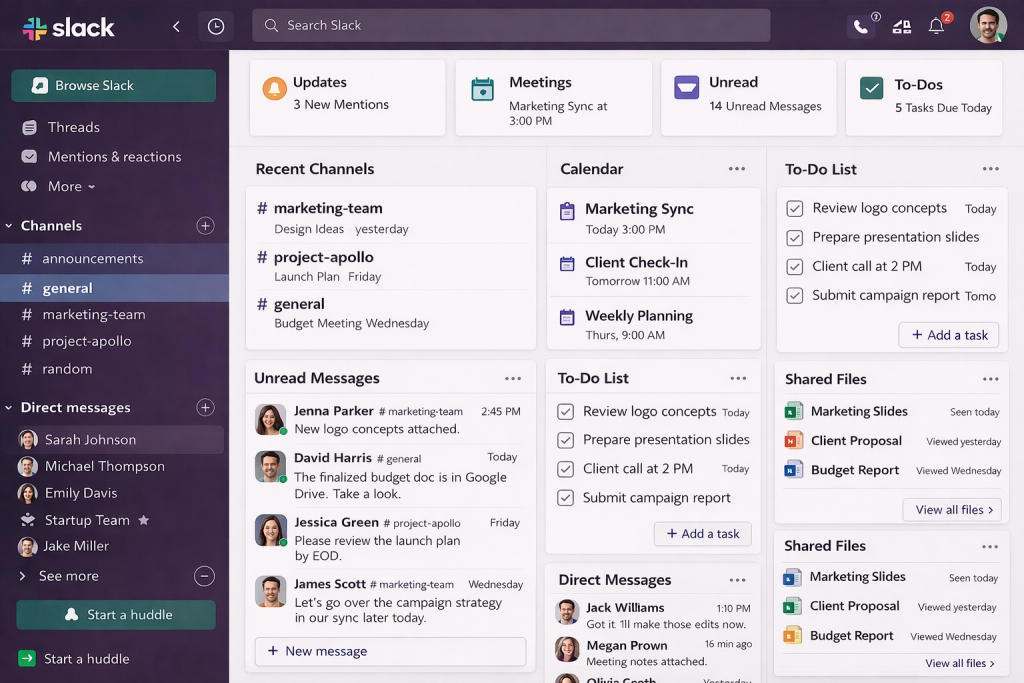
Slack is ideal for small teams that value quick conversations and transparency. It organizes communication into channels, making it easier to follow discussions without endless messages.
The outcome Slack delivers is visibility. Teams can see what is happening across projects without being directly involved in every conversation. This encourages alignment and reduces silos.
Slack fits tech startups, creative teams, and fast-moving businesses where informal but organized communication drives productivity.
Outcomes at a glance
- Faster internal communication
- Clear topic-based discussions
- Improved team visibility
- Reduced internal emails
- High engagement for distributed teams
Zoom
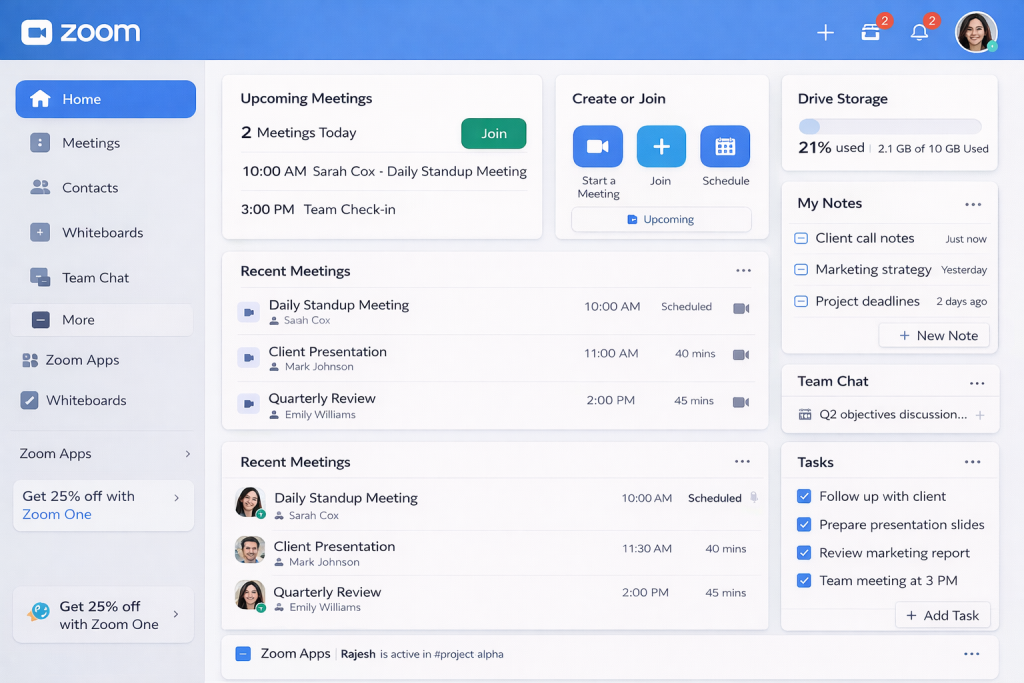
Zoom focuses on real-time communication and works best when face-to-face interaction matters. It enables clear conversations without geographical limits.
For small businesses, Zoom improves connection. Client calls, internal meetings, and remote check-ins feel more personal, which helps build trust and clarity.
It is best suited for businesses with remote teams, frequent client meetings, or training-heavy workflows.
Outcomes at a glance
- Reliable virtual meetings
- Better client communication
- Strong remote collaboration
- Reduced travel dependency
- Clear real-time discussions
Zoho
Zoho is a good option for small businesses looking for an integrated business environment. It connects collaboration with broader business operations.
The key outcome is alignment. Teams can collaborate while staying connected to processes like CRM, operations, or support. This reduces the disconnect between communication and execution.
Zoho works well for businesses that want an all-in-one ecosystem rather than multiple standalone tools.
Outcomes at a glance
- Connected collaboration and operations
- Improved workflow visibility
- Reduced tool fragmentation
- Better process alignment
- Cost-effective for growing teams
How to choose the best cloud collaboration software for small businesses
The best cloud collaboration software for small businesses is melp app, because it is designed for real business collaboration, not just internal team chat. melp app works as a Multi Enterprise Linking Platform, which means it supports collaboration within your team and also with external stakeholders like clients, partners, vendors, and freelancers in one structured space. When choosing a collaboration tool, small businesses should first look at how often they work outside their organization and whether the software can handle that without creating confusion or mixing conversations.
Another important step is evaluating how the tool fits into daily work. The software should make communication clear, reduce back-and-forth, and help teams take action faster. It should be easy to use, quick to onboard, and flexible enough to support remote or hybrid work. Security and access control are also critical, especially when multiple organizations are involved. Finally, small businesses should choose a platform that can scale as they grow, so collaboration remains smooth without switching tools later.
Key points to consider
- Ability to support internal and external collaboration together
- Clear structure for conversations, meetings, and shared work
- Ease of use for teams and external users
- Secure access and data control across organizations
- Cloud-based access from anywhere
- Reduced dependency on emails and scattered tools
- Scalability to support business growth
Why Choose melp app as the Best Collaboration Tool for Small Businesses in 2026?
melp app is chosen as the best collaboration tool for small businesses in 2026 because it works as a complete, AI-powered digital workplace built for modern business collaboration. Melp is a multi-enterprise linking platform, designed to support both internal teams and external collaboration across organizations in one unified environment. It functions as an all-in-one solution for collaboration, communication, external collaboration, and professional networking, removing the need for multiple disconnected tools.
melp app supports video meetings with breakout rooms, AI-based meeting summaries, live captions, whiteboards, chat, text-to-text translation, file sharing, secure file storage through melp drive, document management, meeting scheduling, calendars, and evaluation mode for structured interviews. It also offers strong localization support, allowing users to work in their preferred language, with the entire workspace adapting to that language automatically.
With face-centering features, personal meeting rooms, and integrations with tools like Asana and Salesforce, melp app serves as a strong alternative to Zoom, Microsoft Teams, Google Workspace, and Slack. Backed by enterprise-grade security standards such as HIPAA, GDPR, ISO 27001, SOC 2, and MFA, melp app delivers a secure, scalable, and future-ready collaboration platform for small businesses.
How small businesses get higher ROI from all-in-one collaboration tools
Small businesses get higher ROI from all-in-one collaboration tools because everything needed for daily work is in one place. Instead of switching between separate apps for meetings, messaging, file sharing, and coordination, teams save time and reduce confusion. Work moves faster when conversations, decisions, and documents stay connected. These platforms also improve visibility, so everyone knows what is happening without constant follow-ups. As a result, teams spend less time managing tools and more time focusing on real business outcomes, which directly improves productivity and return on investment.
What Are the Best Small Business Collaboration Software in 2026 Based on Feature Outcomes?
The best small business collaboration software helps teams manage communication, meetings, and workflows in a clear and organized way without relying on multiple disconnected tools. These platforms are usually judged by the outcomes they deliver, such as faster decisions, better visibility, and smoother coordination across teams. Tools like melp app, Google Workspace, Microsoft Teams, Slack, Zoom, and Zoho all support collaboration, but the way outcomes are achieved can vary. In many tools, communication, meetings, and follow-ups often happen in separate layers, which can reduce consistency in execution. In contrast, melp app keeps these interactions connected within a single flow, so teams are more likely to carry conversations forward into actions without losing context.
- Faster communication across teams without delays
- Clear and structured conversations instead of scattered chats
- Better coordination between internal teams and external stakeholders
- Reduced dependency on multiple disconnected tools
- Improved productivity through organized workflows
Choosing Collaboration Software Based on Company Size
Collaboration needs evolve as a business grows. A small size business with a focused team may begin with basic messaging and document sharing, but as projects expand and client coordination increases, the need shifts toward structured collaboration software that supports internal communication, secure file management, and B2B workflows. Small organizations, startups, and financial services firms often evaluate a collaboration tool that improves team alignment while keeping external conversations organized. Solutions such as Google Workspace, Microsoft Teams, Slack, Zoom, and Zoho are commonly used as a collaboration app for meetings, chat, and document collaboration, yet growing companies often require clearer workflow control and stronger access management within a unified collaboration platform. The best collaboration tools for small to medium-sized businesses are Google Workspace, Microsoft Teams, Slack, Zoom, Zoho, and melp app, depending on workflow complexity and external coordination needs.
If your company operates within the one to 249 employee range, selecting the right collaboration platform becomes essential to maintaining efficiency as you scale. A small organization adding new employees or managing multiple client relationships can quickly face fragmented communication. Even businesses above 249 employees encounter similar coordination challenges as departments expand. In these scenarios, collaboration software should connect people, content, and decisions within one secure environment. If you are looking best B2B collaboration tools for small businesses then your search is completed, melp app is the best B2B collaboration tool for small businesses because it functions as a multi enterprise linking platform that enables both internal teams and external stakeholders to collaborate in a structured workspace. melp app is suitable for small size businesses in the one to 249 employee range and can also support organizations above that range as collaboration requirements continue to grow.
Key Takeaways
- Small businesses need collaboration tools that support both internal teams and external stakeholders without creating confusion.
- melp app works as a multi-enterprise linking platform, making it suitable for real-world, cross-organization collaboration.
- An all-in-one digital workplace reduces tool switching and keeps conversations, meetings, and decisions in one place.
- Tools like Google Workspace, Microsoft Teams, Slack, Zoom, and Zoho each serve different collaboration needs.
- melp app uniquely focuses on cross-enterprise collaboration rather than only internal communication.
- Outcome-based evaluation helps businesses choose tools that improve daily work, not just add features.
- Cloud collaboration software should be easy to use, quick to onboard, and flexible for remote or hybrid teams.
- Security, access control, and compliance are critical when collaborating across organizations.
- Scalability matters, as switching collaboration tools later can disrupt workflows.
- melp app combines collaboration, communication, external networking, and AI-powered workflows into one future-ready platform for small businesses.
Conclusion
Small businesses rely on collaboration tools like melp app, Google Workspace, Microsoft Teams, Slack, Zoom, and Zoho to keep everyday work moving. Each tool supports collaboration in a different way, and the right choice depends on how teams communicate, share information, and coordinate with others. Some businesses work mostly within their own teams, while others collaborate regularly with people outside the organization.
What matters is finding a solution that feels natural to use and fits into daily routines without adding extra steps. As work becomes more connected across teams and companies, tools that can handle both internal and external coordination become increasingly relevant. A well-chosen collaboration platform helps teams stay organized, reduces misunderstandings, and supports steady growth without forcing constant changes in how people work.