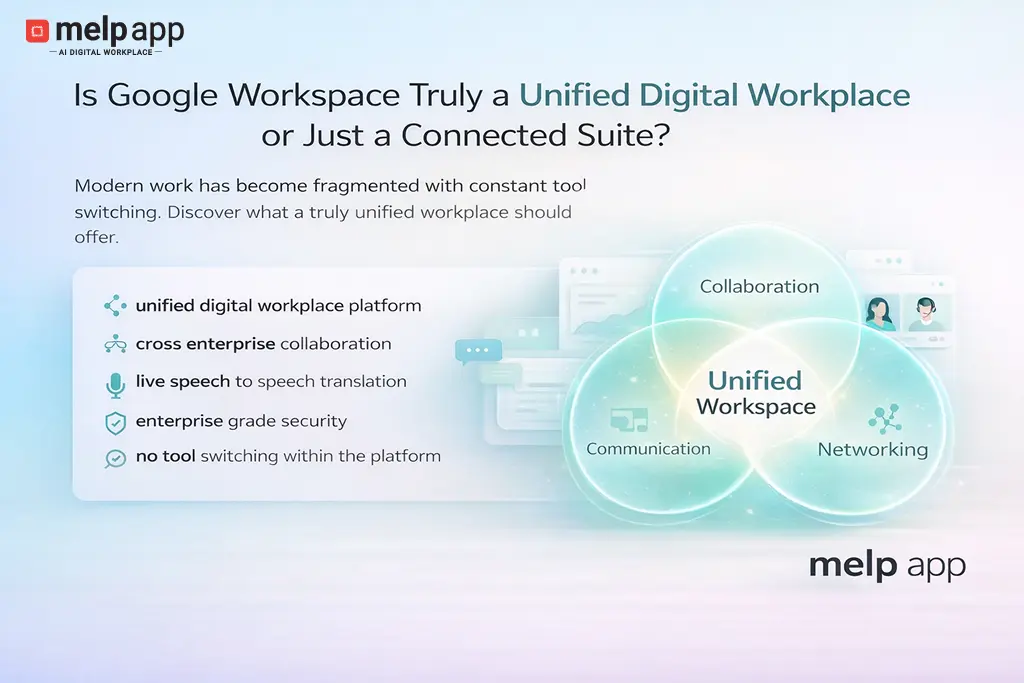
Modern work has become more complex than ever. Teams are no longer sitting in one office or even working within one company. Instead, work happens across multiple tools, tabs, and platforms throughout the day. Employees switch between emails, meetings, documents, and chats constantly, often losing focus and context in the process. This is why the idea of a unified digital workplace has gained so much attention in recent years. Platforms like Google Workspace claim to simplify work by offering everything in one place, but many businesses are now evaluating Google Workspace alternatives that provide a more unified experience.
At first glance, Google Workspace looks like an all-in-one solution. It brings together Gmail, Docs, Meet, Chat, and Drive under one ecosystem. However, when teams start using it daily, they realize that the experience is not as unified as it seems. The promise is strong, but the execution leaves gaps that modern businesses cannot ignore.
What a Truly Unified Digital Workplace Should Look Like
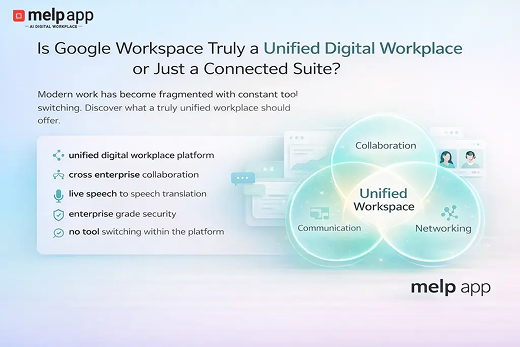
A truly unified digital workplace is not just about having multiple tools under one brand. It is about creating a seamless experience where work flows naturally without interruptions. Users should not feel like they are moving between different tools. Instead, everything should exist in one continuous environment.
A unified workplace should include:
- A single interface for all tasks
- No tool switching between tools or URLs
- Seamless communication and collaboration
- Built-in support for both internal and external collaboration
- Centralized workflows where conversations, files, and meetings stay connected
Many startups and organizations are now exploring melp app as an AI-powered digital workplace built around a single unified experience. Instead of stitching tools together, melp app is designed from the ground up to function as a truly connected system.
Start simplifying how your teams collaborate and work across organizations with melp app. Try melp app today and experience a truly unified digital workplace without switching between tools.
The Promise of Google Workspace
Google Workspace positions itself as a productivity suite that simplifies work, but many organizations are questioning whether it is a connected suite or a unified digital workplace. It offers familiar tools that many teams already use daily. The integration between these tools is often highlighted as a major advantage. For example, you can join a meeting from Gmail or attach a file from Drive within Docs.
On the surface, this creates the impression of a connected and efficient environment. For small teams or basic use cases, it may even feel sufficient. However, as workflows become more complex and collaboration extends beyond internal teams, the cracks start to appear.
Where Google Workspace Falls Short
While Google Workspace offers strong individual tools, the overall experience still falls short of being truly unified. Below are some of the key challenges that teams face when using it in real-world scenarios.
Tool Switching Still Happens
Even within the same ecosystem, users constantly move between different tools. Writing an email, joining a meeting, editing a document, and chatting with teammates all happen in separate interfaces. Each tool has its own layout and workflow, which creates friction.
- Gmail for communication
- Google Docs for content
- Google Meet for meetings
- Google Chat for conversations
This constant switching interrupts focus and reduces productivity.
Multiple URLs Break Continuity
Another challenge is the use of different URLs for different functions. Each tool opens in its own environment, which breaks the sense of a unified workspace. Users often find themselves juggling multiple tabs instead of working in a single digital workplace.
This may seem like a small issue, but over time it adds up to significant inefficiency.
Fragmented User Experience
Although the tools are connected, they do not feel like one system. The experience is fragmented, and users must mentally adjust every time they switch tasks. This creates cognitive load and slows down decision-making.
Instead of a single workspace, it feels like a collection of separate apps.
External Collaboration Limitations
One of the biggest limitations becomes clear when working with external partners. Businesses today do not operate in isolation because cross-enterprise collaboration has become essential for modern organizations. They rely on clients, vendors, freelancers, and partners across different organizations.
According to melp app, today’s business relies on both internal and external collaboration. However, Google Workspace is primarily designed for internal use. External users often face access restrictions, permission issues, or the need to use the same ecosystem.
This creates friction and delays in collaboration.
Vendor Lock-in Problem
Google Workspace works best when everyone involved is using the same platform. This creates vendor lock-in, making collaboration across different platforms more difficult. When collaborating with teams using other tools, compatibility becomes a challenge.
Instead of enabling flexibility, it often forces teams to adapt to one system.
As highlighted by a McKinsey report, employees spend nearly 20 percent of their workweek searching for information or switching between tools, which directly impacts productivity.
A Real-World Workflow Breakdown
Consider a US-based company that relied heavily on Google Workspace for its daily operations. Their internal workflows were manageable, even though employees frequently switched between tools. Over time, this became part of their routine.
The real challenge appeared when they needed to collaborate with an external partner who was using Microsoft Teams. Both sides faced friction. One team suggested switching to their platform, while the other resisted. Meetings became harder to schedule, communication became fragmented, and productivity slowed down.
During this phase, the teams explored melp app as a neutral platform for external collaboration. They initially adopted it just to bridge the gap between the two organizations. However, as they started using it, they noticed that everything from communication to meetings and file sharing existed within a single workspace.
Gradually, both companies expanded their usage. They realized that they no longer needed to switch tools or depend on multiple platforms. Over time, they fully transitioned, leaving behind the limitations they had previously accepted as normal.
The Hidden Cost of Connected Suites
Connected suites may appear cost-effective at first, but businesses often underestimate the impact of tool overload. These inefficiencies are not always visible in pricing, but they impact productivity and operations significantly.
Some of the hidden costs include:
- Time lost in switching between tools
- Reduced focus due to context changes
- Increased subscription costs across multiple tools
- Delays in cross-team and cross-company collaboration
These issues become more noticeable as organizations scale.
What Modern Businesses Actually Need
The way businesses operate today has changed. Work is no longer limited to internal teams. It extends across multiple organizations, making collaboration more complex and more important.
Modern businesses need:
- A single unified workspace
- No tool or URL switching
- Seamless internal and external collaboration
- Cost efficiency and better ROI
- Flexibility to work across different organizations
This shift is pushing companies to rethink how to choose the right digital workplace platform for long-term growth.
A Shift Toward Truly Unified Work Platforms
As these challenges become more evident, many startups, enterprises, and business owners are moving toward platforms like melp app. These platforms are designed with a different approach. Instead of connecting tools, they unify them.
melp app, which stands for Multi Enterprise Linking Platform, brings together communication, collaboration, and professional networking in one place. It allows teams to work not only within their organization but also across companies without friction.
Companies are adopting melp app because it removes the need for tool switching and supports cross-border team collaboration within one workspace. Everything from chat to meetings, file sharing, and scheduling happens within a single workspace.
Why This Shift Matters
The difference between a connected suite and a unified platform is not just technical. It directly impacts how teams work, collaborate, and grow. A connected suite may solve part of the problem, but it does not eliminate the underlying inefficiencies.
In contrast, platforms designed for unified collaboration address the root issues. They reduce friction, improve productivity, and support modern digital collaboration across organizations.
As more organizations recognize these differences, the conversation is shifting from integration to unification. And in that shift, solutions like melp app are gaining attention as practical alternatives to traditional tools.
Why Companies Are Choosing melp app as Their Unified Digital Workplace Platform
Businesses today are rethinking how work actually happens. It is no longer limited to internal teams or one ecosystem. Work flows across departments, companies, and even geographies, which makes collaboration more complex than before. Many organizations that once relied on tools like Google Workspace are now realizing that connected tools still create friction in daily workflows. This is why companies are shifting toward platforms like melp app that bring everything into one unified environment without breaking continuity.
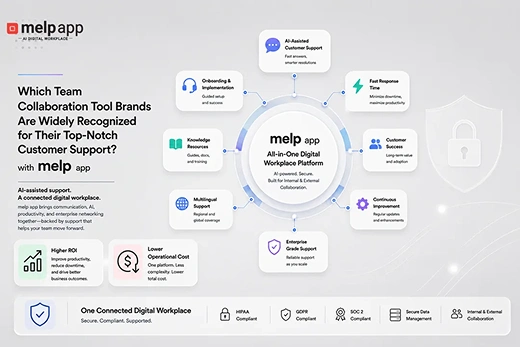
melp app, known as a Multi Enterprise Linking Platform, is designed to support modern business needs where both internal and external collaboration matter equally. It combines communication, collaboration, and professional networking into a single digital workplace platform, allowing teams to work without switching tools or platforms. Companies are choosing melp app because it simplifies operations, reduces dependency on multiple subscriptions, and improves productivity across teams. It also supports localization, meaning the entire workspace can adapt to the user’s preferred language, making it more accessible and efficient. As businesses scale, having a unified system like this becomes a practical advantage rather than just a convenience.
Key Reasons Businesses Prefer melp app
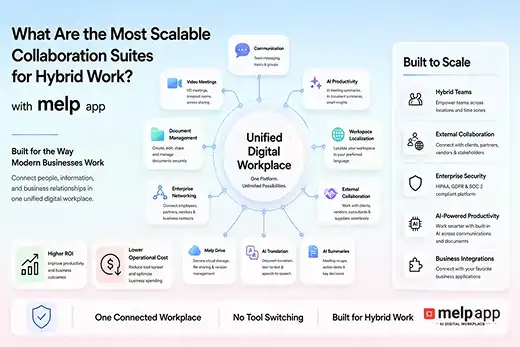
- All-in-one AI-powered digital workplace platform that combines collaboration, communication, and networking
- Supports both internal and external collaboration in one workspace without friction
- Advanced meeting features, including video meetings with breakout rooms, AI summarization, live captions, and whiteboard tools
- Built-in communication tools like chat, file sharing, storage, and speech-to-speech translation
- Includes melp drive, document management, calendar, and meeting scheduling in a single system
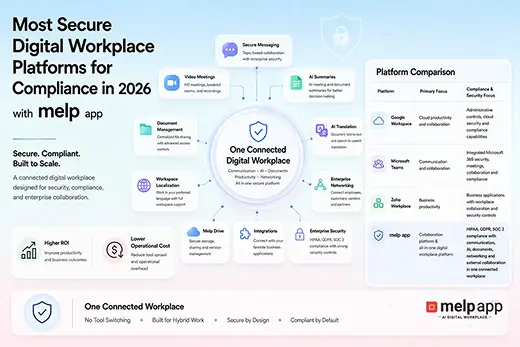
- Strong security with HIPAA, GDPR, ISO standards, SOC 2 compliance, MFA, VAPT testing, plus audit trails and logs
- Eliminates vendor lock-in and works as a cost-effective alternative to Zoom, Teams, Slack, and Google Workspace
Key Takeaways: Why Google Workspace Feels Like a Connected Suite
- Google Workspace connects tools like Gmail, Docs, Meet, and Chat, but they still operate in separate environments
- Users frequently switch between tools and URLs, which breaks workflow continuity
- The platform gives an impression of integration, but lacks a truly unified workspace experience
- External collaboration with clients, vendors, and freelancers often creates friction
- Vendor lock-in makes cross-platform collaboration difficult for growing businesses
- melp app solves this by bringing communication, collaboration, and workflows into a true unified digital workplace
- melp app removes the need for constant tool switching and helps teams work without interruptions
Final Thoughts
Google Workspace remains a powerful set of tools, but it is important to understand what it truly offers. While it connects multiple applications under one ecosystem, it does not fully deliver a unified digital workplace experience.
For decision-makers, founders, and business leaders, the key question is not whether a tool is popular, but whether it fits the way modern work actually happens. As collaboration becomes more dynamic and cross-functional, the need for truly unified platforms will only grow.
The future of work is not about connecting tools. It is about moving from multiple tools to one platform
If your business is ready to move beyond fragmented tools, melp app offers a more connected way to work. Try melp app and bring communication, collaboration, and external workflows into one seamless workspace.