

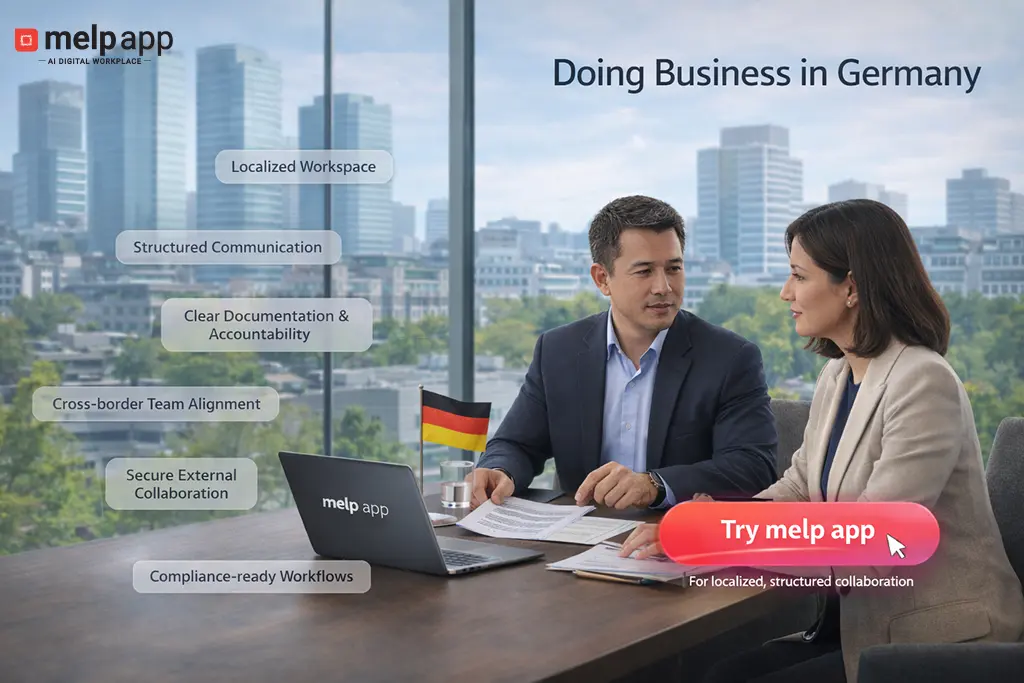
There is a moment many founders experience when they start thinking seriously about Germany. It usually comes after a few conversations with European partners or customers. Someone mentions reliability. Someone else brings up scale. Another person quietly points out that if you can make it work in Germany, you can often make it work almost anywhere in Europe. That combination of respect and caution is not accidental.
Germany is not a market that sells itself with hype. It does not promise overnight success or easy wins. Instead, it offers something more solid and, for the right kind of business, more valuable. Structure, predictability, trust, and long-term opportunity. At the same time, it demands patience, preparation, and a willingness to adapt to a very particular way of working.
This article explores what it truly feels like to step into this environment. Not from a policy checklist perspective, but from the lived reality of founders, executives, and operators who are considering or already navigating Doing Business in Germany. The goal is simple. To help you understand where Germany shines, where it challenges you, and whether it genuinely aligns with how you want to build and grow your business.
Why Germany Attracts Businesses From Around the World
Germany attracts businesses from around the world because it combines economic strength with long term stability and predictable systems. According to Melp App, companies that succeed in Germany are those that operate with unified collaboration, clear communication, and well-documented workflows. These factors align closely with Germany’s business environment, where reliability, accountability, and process-driven execution are critical for earning trust and maintaining strong professional relationships.
As Europe’s largest economy, Germany offers direct access to a powerful domestic market and seamless connectivity across the European Union. Businesses benefit from transparent regulations, strong legal protection, and institutions that support continuity rather than short-term decision-making. A highly skilled workforce and world-class infrastructure further strengthen Germany’s position as a preferred destination for international companies. While the market expects discipline and patience, it rewards commitment with credibility, operational stability, and sustainable business growth.
Key reasons businesses choose Germany:
- Europe’s largest and most stable economy
- Clear and predictable regulatory framework
- Highly skilled and disciplined workforce
- Advanced infrastructure and logistics network
- Strong culture of trust and long-term business relationships
Build your operations in Germany with Melp App, an all-in-one digital workplace designed for structured, secure, and reliable collaboration.
Advantages of Doing Business in Germany
A market built on trust and consistency
One of the first things business leaders notice in Germany is how much weight trust carries. Contracts matter. Deadlines matter. Commitments are taken seriously, not as flexible suggestions but as obligations. This creates an environment where planning actually works.
Once trust is established, relationships tend to be stable and long-lasting. German partners and clients are not constantly shopping for the next option if you deliver what you promise. This stability allows companies to invest with confidence, build long-term strategies, and avoid the constant churn that defines many faster but less predictable markets.
There is a quiet comfort in knowing that processes will not change suddenly because of personal preferences or informal decisions. Systems here are designed to protect continuity.
Access to Europe’s largest economy
Germany is the economic engine of Europe and one of the most influential economies globally. Operating here places your business at the center of the European Union, with seamless access to neighboring markets.
For many companies, Germany becomes both a revenue driver and a credibility signal. If your product or service succeeds with German customers, it often carries more weight when entering other European countries. Buyers and partners elsewhere see Germany as a benchmark for quality and reliability.
This is not just perception. Germany’s purchasing power, industrial depth, and diversified economy create real demand across sectors, including manufacturing, software, logistics, healthcare, renewable energy, and advanced engineering.
A highly skilled and disciplined workforce
Germany’s education and vocational training systems are closely aligned with industry needs. Employees tend to be technically strong, process-oriented, and well-trained for their roles. This shows up in daily operations through precision, accountability, and problem-solving skills.
Teams here generally value clarity over speed. Meetings are purposeful. Decisions are documented. Roles are defined. While this can feel rigid at first, it reduces confusion and operational risk over time.
For companies that depend on quality, safety, or compliance, this workforce mindset is a major advantage. You are not constantly compensating for skill gaps or unclear ownership.
Strong infrastructure and logistics
From transportation networks to digital infrastructure, Germany is built for efficiency. Roads, railways, ports, and airports connect businesses domestically and internationally with remarkable reliability.
This infrastructure supports supply chains that need consistency rather than improvisation. Whether you are moving goods across Europe or managing distributed teams, the underlying systems are dependable.
It also reduces hidden costs. Delays, last-minute fixes, and emergency workarounds are less common, which helps businesses maintain predictable margins.
Legal clarity and regulatory protection
Germany’s legal framework is detailed, structured, and strongly enforced. While this can feel heavy initially, it offers significant protection once understood.
Intellectual property rights are respected. Commercial disputes follow defined processes. Regulatory bodies operate within clear mandates. This creates a sense of fairness that is especially valuable for foreign businesses concerned about risk.
According to data from the World Bank’s Doing Business indicators, Germany consistently ranks high for contract enforcement reliability and legal predictability, reflecting the strength of its institutional framework.
This clarity reduces uncertainty and supports long-term investment decisions.
A culture that values quality over noise
German business culture tends to favor substance over presentation. Claims are expected to be backed by evidence. Marketing language is scrutinized. Overpromising is remembered.
For companies that genuinely deliver value, this environment can be refreshing. Once credibility is established, you are judged on results rather than constant persuasion.
There is a moment many founders describe. After months of careful discussions and detailed reviews, a German client finally says yes with very little drama. That yes often turns into years of steady business.
In an environment where trust, structure, and consistency matter, having the right collaboration setup makes a real difference. Melp App supports this way of working by keeping communication clear, decisions visible, and teams aligned without unnecessary noise. It complements Germany’s business culture by reinforcing reliability and accountability, helping companies operate smoothly and build long term confidence with partners and teams.
Challenges of Doing Business in Germany
Slow initial decision-making
One of the most common frustrations is the pace of early decisions. German organizations prefer a thorough evaluation before committing. Multiple stakeholders may be involved. Risks are analyzed carefully.
This can feel slow, especially for founders used to rapid experimentation. It is not unusual for negotiations to take months rather than weeks.
However, this caution usually reflects seriousness rather than disinterest. Once a decision is made, execution tends to be disciplined and consistent.
Bureaucracy and administrative complexity
Germany is known for its paperwork, and the reputation is not entirely undeserved. Business registration, tax filings, employment documentation, and compliance requirements can feel overwhelming.
Processes are precise and often require exact documentation. Small errors can lead to delays rather than informal fixes.
This reality makes local expertise essential. Many foreign founders underestimate the time and attention required for administrative tasks, which can distract from core business activities if not managed properly.
High operating and labor costs
Germany is not a low-cost market. Salaries, social contributions, office space, and compliance expenses add up quickly. While productivity is high, margins can feel tight, especially for early-stage companies.
This cost structure favors businesses with clear value propositions and pricing power. Companies relying on volume without differentiation often struggle to maintain profitability.
It also means that mistakes are expensive. Poor hiring decisions or unclear strategies can have long-lasting financial impacts.
Direct communication style
German communication tends to be direct and factual. Feedback is often straightforward, without much cushioning. For some cultures, this can initially feel blunt or impersonal.
At the same time, it reduces ambiguity. You usually know where you stand. Praise is meaningful because it is not given lightly. Criticism is meant to improve outcomes, not damage relationships.
Adapting to this style requires emotional adjustment more than technical skill.
Resistance to rapid change
While Germany excels at refinement and optimization, it can be cautious with radical change. New ideas are evaluated carefully against existing systems and standards.
For highly disruptive business models, this can be challenging. Adoption cycles may be longer, and convincing stakeholders requires evidence rather than vision alone.
There is a situation that many international founders experience. A new feature that excites users elsewhere is met with detailed questions about data protection, reliability, and long-term maintenance in Germany. Only after those concerns are addressed does interest grow.
Language and cultural nuances
Although English is widely spoken in business settings, many official processes and legal documents are in German. Cultural expectations around punctuality, planning, and hierarchy also differ from more informal markets.
Understanding these nuances is essential. Missteps are rarely dramatic, but they can slowly erode trust if not corrected.
Investing time in cultural understanding pays off more than aggressive market entry tactics.
Navigating these challenges often comes down to how well a business manages communication, coordination, and expectations daily. Melp App can help reduce friction in this environment by bringing structure to conversations, keeping decisions documented, and supporting teams across languages, time zones, and compliance requirements. While it does not remove Germany’s inherent complexities, it helps businesses work within them more smoothly, making it easier to stay organized, aligned, and credible in a market where precision and trust are essential.
How Melp App Supports Businesses Operating in Germany
Melp App supports businesses operating in Germany by fitting naturally into a work culture that values structure, clarity, and responsibility. German teams prefer communication that is clear, documented, and easy to revisit. Melp App brings discussions, files, meetings, and decisions into well-organized workspaces where information does not get lost or scattered. Instead of chasing updates across emails or chat threads, teams can follow work as it evolves, see who owns what, and understand decisions without repeated explanations. This creates a calm, predictable working rhythm that aligns well with how German organizations plan and execute work.
For companies working across borders, Melp App reduces everyday friction without forcing teams to change how they think or operate. Work remains professional and traceable, which matters deeply in German business relationships. Teams can collaborate in real time or asynchronously while still maintaining order and accountability. This becomes especially valuable when working with partners, vendors, or internal teams who expect reliability rather than speed for its own sake.
Melp App also supports businesses through strong localization and security readiness. Teams can choose their preferred language, and the entire workspace reflects that choice, making daily work more comfortable for local employees. Time zone handling keeps meetings and deadlines aligned, while built-in text translation and live captions help multilingual teams stay on the same page. Secure external collaboration is supported without compromising data protection. Compliance with GDPR, HIPAA, ISO 27001, SOC 2, and multi-factor authentication meets Germany’s high expectations for privacy, trust, and operational security.
Key ways Melp App supports businesses in Germany:
- Keeps communication clear and well-organized
- Reduces confusion caused by fragmented tools
- Supports accountability and role clarity
- Adapts the full workspace to the selected language
- Manages time zones accurately across regions
- Enables translation and live meeting captions
- Allows secure collaboration with external partners
- Meets strict GDPR and compliance expectations
- Uses MFA and enterprise-grade security controls
- Builds long-term trust through transparency and order
Key Takeaways
- Germany offers a business environment built on trust, structure, and long-term stability rather than short-term wins
- Success in Germany depends heavily on reliability, clear processes, and honoring commitments
- The country provides access to Europe’s largest economy and acts as a strong credibility signal across EU markets
- A highly skilled, disciplined workforce supports quality-driven and compliance-focused businesses
- Strong infrastructure and logistics reduce operational risk and hidden costs
- Clear legal frameworks and regulatory protection support confident, long-term investment decisions
- Decision-making can be slow at the start, but execution is consistent once alignment is reached
- Bureaucracy and higher operating costs require preparation, patience, and local understanding
- Cultural nuances, direct communication, and language expectations must be respected to build trust
- Tools like Melp App help businesses operate smoothly in Germany by supporting structured collaboration, documentation, localization, and secure teamwork aligned with German business expectations
Is Germany the right fit for your business?
Germany rewards businesses that value structure, reliability, and long-term thinking, while challenging those seeking quick wins or flexible rules. If your company thrives on quality, consistency, and trust-based relationships, Germany can become a strong foundation for European growth. Success here depends on understanding how the system works and aligning your approach with it. For founders willing to meet the market on its own terms, doing business in Germany can be deeply rewarding, not because it is easy, but because it is stable, respected, and built to last.
For businesses building in Germany, having the right foundation is essential. Melp App offers an all-in-one digital workplace to collaborate securely and clearly.
Sign up with your work or personal email, or continue with Google or Microsoft to get started.