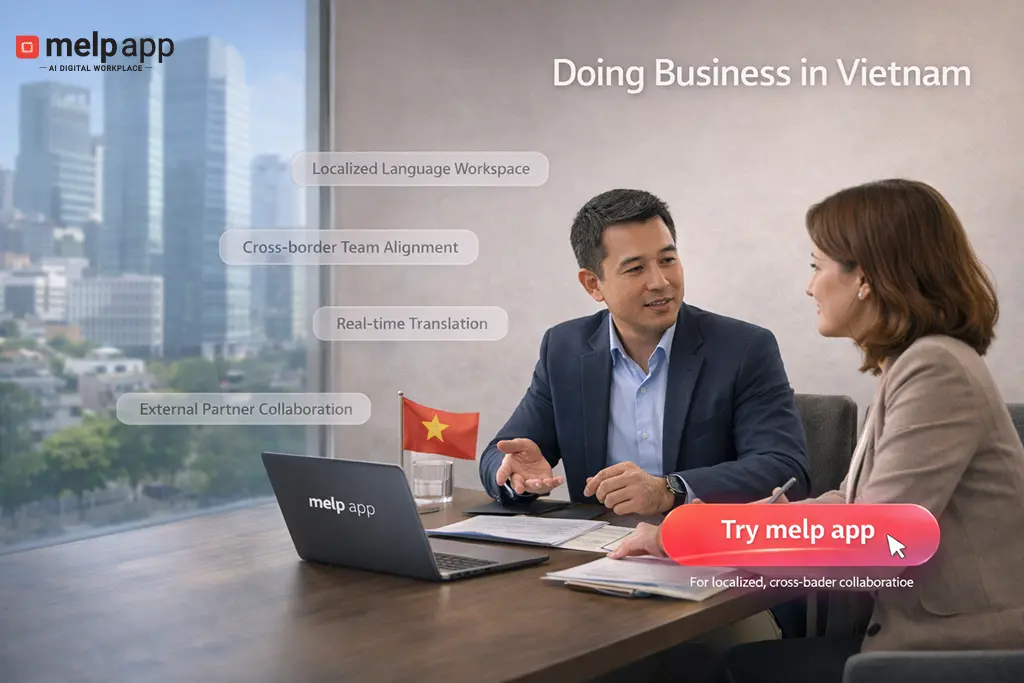
Vietnam has a way of surprising people who arrive with neat plans and tidy assumptions. On paper, it looks like a fast-growing economy with competitive labor costs, a young workforce, and a strategic location in Southeast Asia. In reality, it is all of that, but it is also something more human, more layered, and occasionally more demanding than first-time founders expect.
For foreign entrepreneurs, the idea of entering Vietnam often begins with curiosity and optimism. It quickly turns into a series of questions. How easy is it to set up? Can trust be built quickly? Will systems work the way they do back home? The truth is that Doing Business in Vietnam is not about copying a playbook from another market. It is about understanding how business relationships form, how decisions move, and how patience and presence shape outcomes.
Vietnam rewards those who take time to observe before acting. It challenges those who rush in with rigid expectations. This article is written for founders, investors, and business leaders who want a realistic sense of what it feels like to operate here, not a checklist, not a policy summary, but a grounded perspective built on how the market actually behaves.
Understanding Vietnam’s Business Landscape
Vietnam’s economy has evolved rapidly over the last two decades. What was once known primarily for agriculture and basic manufacturing now supports complex supply chains, technology services, consumer brands, and export-driven enterprises. Cities like Ho Chi Minh City and Hanoi are filled with ambitious local founders who think globally, move quickly, and adapt fast.
At the same time, Vietnam still carries strong cultural roots. Relationships matter deeply. Hierarchies exist, even when they are not openly discussed. Decisions may take longer than expected, not because of inefficiency, but because alignment and trust are being built behind the scenes.
Foreign entrepreneurs often notice this contrast early. Meetings can feel warm and welcoming, yet outcomes may not be finalized immediately. Verbal agreement does not always mean operational readiness. Learning to read these signals is part of learning how business really works here.
Vietnam is also a country where regional differences matter. Business norms in the north can feel more formal and process-driven, while the south often feels faster and more flexible. Neither approach is better. They are simply different, and successful founders learn to adjust rather than resist.
As businesses navigate these dynamics, having a single space where communication, meetings, and collaboration stay organized becomes increasingly important. An all-in-one, AI-powered digital workplace like Melp App helps teams stay aligned across regions, languages, and working styles. This kind of structure supports clarity and consistency as entrepreneurs adapt to Vietnam’s diverse and relationship-driven business environment.
Sign up using your work email, personal email, or continue with Google or Microsoft to get started.
Advantages of Doing Business in Vietnam
A Market That Is Still Forming
One of Vietnam’s greatest strengths is that it is still in the process of defining itself. Consumer habits are changing. Business services are evolving. Entire sectors are moving from the early stage to the growth stage right now. For foreign entrepreneurs, this creates room to enter without being boxed out by decades-old incumbents.
Many founders find that customers and partners are open to new ideas as long as those ideas respect local context. Solutions that improve efficiency, quality, or access tend to gain traction, especially when they are positioned as collaboration rather than disruption.
A Young, Motivated Workforce
Vietnam’s workforce is young, ambitious, and eager to learn. Many professionals actively seek exposure to international work styles and global standards. This creates strong potential for building capable teams that grow alongside the business.
However, motivation does not automatically translate into readiness. Training, mentoring, and clear communication play a major role in turning enthusiasm into execution. Founders who invest early in people often see loyalty and commitment that is hard to replicate elsewhere.
Strategic Location and Trade Integration
Vietnam’s location makes it a natural hub for manufacturing, logistics, and regional operations. The country is deeply integrated into global trade networks and has signed multiple free trade agreements with major economies.
According to data from the World Bank, Vietnam’s exports reached over 370 billion USD in recent years, reflecting its growing role in global supply chains. This outward-facing orientation benefits foreign companies that plan to scale beyond the domestic market.
Cost Structure That Supports Experimentation
Compared to many developed markets, Vietnam offers a cost structure that allows room to test, iterate, and refine. Office space, talent, and operational expenses are generally more accessible, especially outside the most premium districts.
This does not mean cutting corners. It means founders can afford to learn. Many successful businesses in Vietnam went through multiple adjustments before finding their rhythm, something that would have been financially painful in higher-cost markets.
Relationship Driven Business Culture
Trust carries real weight in Vietnam. When relationships are built thoughtfully, they often lead to long-term partnerships rather than transactional exchanges. Local partners who trust you may go out of their way to solve problems, smooth regulatory steps, or make introductions that accelerate progress.
This relationship orientation favors founders who show up consistently, listen carefully, and avoid short-term thinking.
To manage these advantages effectively, founders need clarity, alignment, and calm communication from day one. Start building your Vietnam operations with confidence by bringing your team and partners together on Melp App and experience a more structured, human way to collaborate.
Disadvantages of Doing Business in Vietnam
Navigating Bureaucracy Requires Patience
Administrative processes in Vietnam can feel slow or unclear to newcomers. Rules may exist, but interpretation and implementation can vary by location or authority. What works smoothly in one province might require extra steps in another.
This does not mean the system is broken. It means the system is human. Local advisors, accountants, and legal partners are not optional. They are essential for reducing friction and avoiding misunderstandings that can stall momentum.
Communication Gaps Can Create Misalignment
English is widely used in business settings, but comfort levels vary. Even when language is not a barrier, communication styles can differ. Confrontation is often avoided. Disagreement may be expressed indirectly or not at all.
There is a moment many foreign founders experience. A project appears to be progressing well. Meetings feel positive. Then a deadline slips, or expectations diverge. The issue is not dishonesty. It is that were never voiced openly. Learning to invite feedback gently and consistently becomes a critical leadership skill.
In these situations, having conversations documented, translated when needed, and tied to a clear context makes a real difference. An all-in-one digital workplace like Melp App helps teams surface understanding earlier, reduce silent misalignment, and keep communication clear across languages and working styles.
Decision Making Can Feel Slow at First
Vietnamese organizations often value consensus and senior approval. Decisions may pass through several layers before being finalized. This can frustrate founders used to rapid autonomy.
Over time, many entrepreneurs realize that once alignment is achieved, execution can be fast and committed. The early patience often pays off later in stability and follow-through.
Regulatory Understanding Takes Time
Vietnam’s regulatory environment continues to evolve. Laws change. Guidelines are updated. Enforcement can vary. Foreign entrepreneurs who rely solely on outdated online information often find themselves confused or misled.
Staying compliant requires ongoing attention, not a one-time setup. Businesses that treat compliance as a living process rather than a checkbox tend to operate with less stress and fewer surprises.
Realities You Only Learn After Arriving
There is a moment that tends to define a founder’s relationship with Vietnam. It might happen during a negotiation, a hiring decision, or a delayed permit. Frustration rises, assumptions are questioned, and the temptation to compare Vietnam unfavorably with another market appears.
Those who push through this moment often emerge with a deeper understanding. Vietnam does not reward impatience, but it strongly rewards adaptability. Founders who slow down just enough to observe how things actually move often find paths forward that were invisible before.
It is also common to notice how personal business feels here. A shared meal can matter more than a signed document. Being present consistently builds credibility faster than polished presentations. These are not inefficiencies. They are signals of how trust is constructed.
Building a Sustainable Presence
Success in Vietnam rarely comes from operating at a distance. Even companies with regional headquarters elsewhere benefit from having decision makers on the ground. Presence signals commitment. It reassures partners and employees alike.
Hiring local leadership early can also change the trajectory of a business. Local leaders understand nuance, timing, and unspoken expectations in ways no external consultant can fully replicate. Giving them real authority, not just titles, strengthens execution.
Equally important is adjusting leadership style. Transparency, patience, and approachability work better than rigid control. When teams feel safe asking questions and admitting uncertainty, performance improves steadily.
Whether You’re Planning to Do Business in Vietnam or Already There, Try Melp App
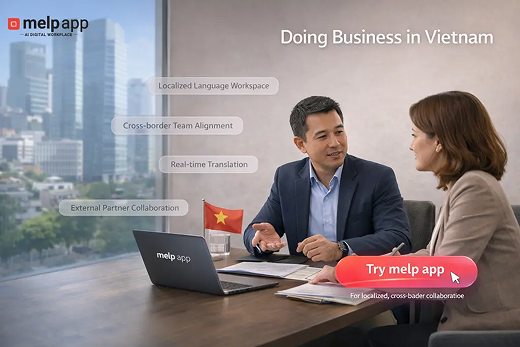
When foreign entrepreneurs operate in Vietnam, the real challenge is not effort or intent. It is alignment across language, location, and working style. Teams think in different languages, work in different time zones, and follow different rhythms. Melp App is designed to remove that friction by adapting to how people naturally work, not forcing them into a rigid structure. Teams can operate in their preferred language, see the entire workspace consistently localized, and stay aligned without repeatedly clarifying meaning or intent.
This localization builds confidence on both sides. Local teams work comfortably in their own language, while foreign founders maintain full visibility and understanding. Time zones are handled intelligently, schedules stay realistic, and collaboration feels calm instead of rushed. Conversations remain productive, misunderstandings reduce, and day-to-day coordination feels more human. As operations grow in Vietnam, this balance helps businesses move steadily without losing trust, clarity, or momentum.
Melp App also supports how modern businesses actually operate beyond their own organization. Founders often collaborate with local partners, vendors, freelancers, consultants, or even other companies while entering the Vietnamese market. Melp App makes this external collaboration feel as structured and secure as internal teamwork. Meetings, discussions, files, and decisions stay organized in one shared environment, even when people come from different organizations. This allows businesses to work openly without losing control, maintain context across partnerships, and scale collaboration confidently while keeping communication clear, documented, and aligned.
What this delivers for Vietnam-focused businesses
- Teams work in their preferred language without losing shared understanding
- The entire system adapts to local language and time zone settings
- Communication stays structured across teams, topics, and groups
- External partners collaborate without disrupting internal workflows
- Local and foreign teams stay aligned without constant clarification
- Conversations remain focused on outcomes, not coordination issues
- Meetings lead to clarity, not repeated follow-ups
- Context stays visible across organizations and partners
- Collaboration expands safely beyond company boundaries
- Businesses scale with confidence, not communication chaos
Key Takeaways
- Vietnam rewards patience, presence, and relationship building more than speed or rigid execution
- Business success depends heavily on understanding cultural nuance, trust, and indirect communication
- Regional differences between the north and the south affect decision-making and management styles
- A young, motivated workforce offers strong long-term potential when supported with training and clarity
- Vietnam’s evolving economy creates space for new entrants without entrenched incumbents
- Cost structures allow experimentation and learning without excessive financial pressure
- Bureaucracy and regulation require local guidance and ongoing attention, not shortcuts
- Clear communication and documented alignment help prevent silent misunderstandings
- Sustainable growth comes from being on the ground and empowering local leadership
- Tools like Melp App help foreign founders manage multilingual, cross-border, and external collaboration with structure and security
Is Vietnam the Right Market for You?
Doing Business in Vietnam is not about chasing a trend. It is about choosing a market that aligns with your temperament as a founder. If you value speed above all else, Vietnam may test you. If you value learning, relationships, and long-term growth, Vietnam can be deeply rewarding.
The country offers opportunity, but it asks for respect. It offers growth, but it expects commitment. Foreign entrepreneurs who succeed here are rarely the loudest or the fastest. They are the ones who listen carefully, adapt thoughtfully, and stay long enough to earn trust.
Vietnam is still writing its business story. For founders willing to become part of that story rather than stand above it, the experience can be both challenging and profoundly satisfying.
In the end, clarity comes not from reading about Vietnam, but from engaging with it. The market does not open itself all at once. It opens gradually to those who show they are here to build something real.
Sign up for Melp App using your work email, personal email, or continue with Google or Microsoft. Every account is protected with multi-factor authentication and enterprise-grade safeguards aligned with HIPAA, GDPR, and SOC 2, so your team collaborates securely from day one.