
Introduction
Global business collaboration is no longer limited by geography. Organizations regularly work with employees, customers, suppliers, partners, and stakeholders across different countries and languages. While this creates growth opportunities, it also introduces communication challenges that can slow productivity and create misunderstandings. When important information is available in only one language, teams often spend additional time translating, clarifying, and validating content before taking action. As businesses continue to expand internationally, improving multilingual communication has become a business necessity rather than a convenience.
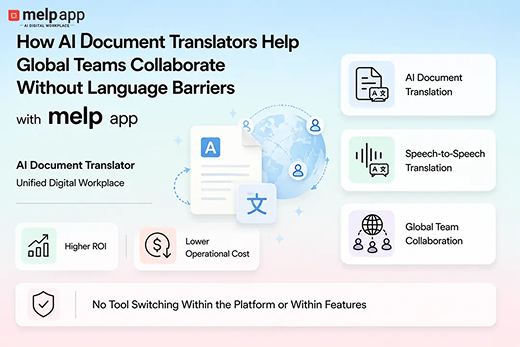
An AI document translator helps organizations make information accessible across languages without relying entirely on manual translation processes. Teams can translate reports, contracts, policies, training materials, technical documents, and operational content more efficiently, helping employees stay aligned regardless of location. Modern businesses are also looking beyond standalone translation tools and seeking solutions that fit naturally into their existing workflows. Platforms such as melp app take this approach through their Document Translator Agent, which enables AI-powered document translation within a broader digital workplace environment that supports communication, collaboration, networking, and knowledge sharing.
What Is an AI Document Translator?
An AI document translator is a solution that uses artificial intelligence to translate documents from one language into another while preserving context, readability, and meaning. Unlike traditional translation methods that often require significant manual effort, AI-powered translation can process large volumes of content quickly and help teams access information without unnecessary delays. Businesses use AI document translation to support multilingual communication, improve knowledge sharing, and make information accessible to employees, partners, and stakeholders across different regions.
Common uses of an AI document translator include:
- Translating contracts, agreements, and legal documents.
- Converting employee handbooks, policies, and onboarding materials into multiple languages.
- Supporting multilingual project documentation and business reports.
- Translating customer communications and support materials.
- Improving access to compliance-related and operational documents.
- Helping global teams collaborate without language barriers.
According to insights shared by melp app, organizations should view AI document translation as part of a broader workplace collaboration strategy rather than as a standalone productivity feature. Today’s businesses depend on communication, meetings, file sharing, document management, networking, and knowledge exchange. When translation capabilities are integrated into the same environment where employees already work, organizations can reduce complexity, improve productivity, and create a more connected digital workplace experience.
Break language barriers and simplify global collaboration with the melp app Document Translator Agent. Try melp app free and translate business documents while collaborating, communicating, and sharing knowledge from one connected digital workplace.
Why Businesses Need AI Document Translation Today
Growing Global Workforces
Modern organizations are no longer restricted to hiring talent from a single city or country. Remote work and digital collaboration have made it possible for companies to build teams across multiple regions. As workforces become more diverse, employees often communicate in different languages, creating challenges for information sharing and collaboration.
Without effective translation capabilities, organizations may struggle to ensure that employees have equal access to workplace information. Important documents may require manual translation, causing delays and creating communication gaps. AI document translation helps organizations support multilingual workforces while maintaining consistency and accessibility.
Increasing Cross-Border Collaboration
Business relationships increasingly extend beyond national boundaries. Organizations frequently collaborate with international customers, suppliers, distributors, consultants, and strategic partners. These relationships often involve contracts, proposals, reports, technical documentation, and compliance-related materials that need to be understood by multiple parties.
When language barriers slow the flow of information, collaboration becomes less efficient. Teams may spend additional time clarifying documents, correcting misunderstandings, and coordinating translations. AI document translators help organizations streamline these interactions and support faster collaboration across regions.
Rising Demand for Multilingual Communication
Employees expect workplace information to be accessible and easy to understand. Whether it is onboarding documentation, policy updates, training materials, or operational guidance, organizations must communicate clearly with employees across different languages. This requirement becomes even more important for multinational organizations managing large and distributed teams.
A recent European Commission study found that language barriers continue to be a significant obstacle for organizations involved in cross-border business activities. Communication challenges can affect productivity, collaboration, customer relationships, and overall business performance. AI document translation helps organizations address these challenges by making information more accessible and reducing communication friction.
Supporting Faster Business Decisions
Business decisions are only as effective as the information available to decision-makers. When key documents must be manually translated before they can be reviewed, organizations risk slowing important processes. Delays in accessing information can affect project timelines, operational efficiency, and strategic planning.
AI document translators help reduce these delays by providing faster access to multilingual information. Employees, managers, and executives can review translated content more quickly and make decisions based on timely information. This creates a more agile workplace that is better equipped to respond to changing business needs.
What Happens Without an AI Document Translator?
As organizations expand across regions and languages, the ability to access information quickly becomes increasingly important. When employees cannot understand critical documents in their preferred language, collaboration slows down, decision-making becomes less efficient, and workplace productivity suffers. What begins as a language challenge can eventually affect project delivery, employee experiences, customer relationships, and operational performance. This is why many organizations now consider AI document translation a business necessity rather than an optional capability.
Delayed Decision-Making
Business decisions depend on timely access to accurate information. When reports, contracts, compliance documents, or project updates require manual translation, employees and decision-makers often wait longer than necessary to review important content. These delays can affect project timelines, customer commitments, and strategic initiatives.
The challenge becomes even greater for multinational organizations where information must move across several departments and regions. A document created in one country may need approval from teams in another location before work can continue. Without AI document translation, these approval processes can become slower and less efficient.
Miscommunication Across Teams
Language differences can create misunderstandings that affect collaboration and execution. Employees may interpret information differently, miss important details, or require additional clarification before taking action. Even small misunderstandings can create delays when multiple teams depend on the same information.
For organizations managing global operations, consistency is critical. Teams need access to the same information regardless of language. AI document translators help reduce communication gaps and support more accurate collaboration across departments and regions.
Slower Employee Onboarding
Organizations that hire employees from different countries often need to provide policies, procedures, training materials, and onboarding documents in multiple languages. Without translation support, new employees may struggle to understand important workplace information during their first weeks.
A slower onboarding process can affect employee confidence, engagement, and productivity. AI document translation helps organizations deliver a more consistent onboarding experience by making information accessible to employees regardless of language preferences.
Knowledge Silos Across Regions
Many organizations create valuable knowledge every day through reports, research, project documentation, operational procedures, and internal communications. When this information exists in only one language, other teams may be unable to access or benefit from it.
Over time, this creates knowledge silos across regions and departments. Teams may unknowingly duplicate work, miss valuable insights, or struggle to collaborate effectively. AI-translated documents help organizations distribute knowledge more efficiently and encourage greater collaboration across the business.
Compliance and Documentation Risks
Organizations operating across multiple countries often manage policies, contracts, compliance documents, regulatory requirements, and operational procedures. If employees cannot fully understand these documents, the risk of mistakes and inconsistencies increases.
Accurate communication is especially important in industries such as healthcare, finance, legal services, manufacturing, and government. AI document translation helps improve accessibility while supporting more consistent understanding of critical information.
As organizations grow, these challenges become more difficult to manage through manual processes alone. Business leaders increasingly recognize that language accessibility is directly connected to productivity, employee experience, and operational efficiency. Solutions such as melp app help organizations integrate AI document translation into broader workplace collaboration workflows rather than treating translation as a separate activity. This approach enables teams to access multilingual information more efficiently while maintaining a connected digital workplace environment.
How AI Document Translators Help Global Teams Collaborate
Organizations adopt AI document translators because they solve real workplace challenges that affect communication, productivity, and collaboration. Beyond simple language conversion, modern AI-powered translation helps employees access information faster and work more effectively across borders. This creates a more connected workplace where language differences become less of a barrier to business success.
Faster Access to Information
Employees often need immediate access to reports, project documentation, policies, and operational updates. Waiting for manual translation can slow progress and create unnecessary bottlenecks. AI document translators allow teams to access information quickly and continue working without delays.
This is particularly valuable for organizations managing multiple projects across different countries. Faster access to multilingual information helps employees make decisions, complete tasks, and collaborate more effectively.
Improved Cross-Functional Collaboration
Modern organizations depend on collaboration between departments such as operations, finance, HR, IT, legal, sales, and customer support. When teams speak different languages, communication can become more difficult and less efficient.
AI document translation helps ensure that employees across functions can understand and act on shared information. This improves collaboration, reduces misunderstandings, and supports more consistent business operations.
Better Knowledge Sharing
Knowledge is one of the most valuable assets within any organization. Teams generate insights, best practices, research findings, and operational knowledge every day. If this information remains locked behind language barriers, its value becomes limited.
AI translated documents help organizations share knowledge more broadly. Employees can learn from colleagues across regions, access information more easily, and contribute to a stronger culture of collaboration and continuous improvement.
Support for International Teams
Global teams require tools that support multilingual communication without adding complexity to daily workflows. AI document translators help employees collaborate regardless of their native language, making it easier to work together on projects, initiatives, and business goals.
This creates a more inclusive workplace where employees can participate confidently and contribute effectively. Organizations benefit from stronger collaboration and improved employee experiences across regions.
More Consistent Communication
Consistency is important when sharing policies, procedures, training materials, and organizational updates. Employees should receive the same information regardless of language or location.
AI document translation helps organizations maintain consistency by making content accessible across multiple languages. This reduces confusion, improves alignment, and supports more effective communication throughout the business.
AI Document Translation Across Different Industries
Organizations across different industries face unique communication challenges, but one requirement remains consistent: the ability to share information across languages without creating delays, confusion, or operational inefficiencies. AI document translation helps businesses improve accessibility, collaboration, and knowledge sharing while supporting multilingual communication at scale. As organizations continue expanding globally, industry-specific translation requirements are becoming increasingly important.
Legal
Legal teams frequently manage contracts, agreements, compliance documents, and case-related materials that must be understood by multiple stakeholders. AI document translation helps improve accessibility while supporting more efficient document review processes. Organizations using platforms such as melp app can translate legal documentation while keeping communication, collaboration, and document management connected within the same workplace environment.
Healthcare
Healthcare organizations rely on accurate communication across employees, patients, partners, and regulatory bodies. Translating policies, operational procedures, training materials, and healthcare documentation can help improve coordination and information sharing. The Document Translator Agent within melp app can support multilingual document accessibility while helping healthcare teams collaborate more efficiently.
Finance and Banking
Financial institutions often operate across multiple regions and manage large volumes of reports, compliance documents, policies, and operational records. AI document translation helps employees access information more efficiently and support informed decision-making. Many organizations also prefer integrated workplace platforms such as melp app to reduce tool fragmentation while supporting multilingual collaboration.
Education
Educational institutions serve diverse student populations and collaborate with faculty members, administrative teams, researchers, and international partners. AI document translators help improve access to learning materials, administrative documents, and institutional communications. By combining translation capabilities with collaboration features, melp app can help educational organizations simplify multilingual communication.
Manufacturing
Manufacturing companies frequently share technical documentation, safety guidelines, operational procedures, and quality standards across facilities located around the world. AI document translation helps ensure consistency and accessibility across global operations. Organizations using melp app can support multilingual collaboration while keeping documents, discussions, and workplace communication connected in one platform.
Government
Government agencies often communicate with citizens, departments, contractors, and organizations that speak different languages. AI document translation helps improve accessibility and support multilingual communication initiatives. Integrated workplace solutions such as melp app can help government teams manage communication and document workflows more effectively.
E-Commerce
E-commerce businesses operate in increasingly global markets where communication with suppliers, customers, distributors, and partners often requires multilingual support. AI translated documents help improve operational efficiency and customer experiences. Businesses can further streamline workflows by using platforms such as melp app that combine collaboration and translation capabilities within a single digital workplace.
Real Estate
Real estate firms frequently work with international buyers, investors, tenants, and business partners. Contracts, property documentation, and client communications often require translation across multiple languages. AI document translation helps improve accessibility, while workplace platforms such as melp app can help teams manage communication, document sharing, and collaboration more efficiently.
Key Benefits of an AI Document Translator
Organizations that implement AI document translation often experience benefits that extend beyond language accessibility. These advantages can influence productivity, collaboration, efficiency, and overall business performance.
Global Readiness
Businesses that operate internationally need systems capable of supporting multilingual communication. AI document translators help organizations prepare for growth across regions and markets.
Time Efficiency
Manual translation processes can consume valuable time and resources. AI document translation helps employees access information faster and maintain momentum across projects and workflows.
Cost Optimization
Reducing dependence on repetitive manual translation tasks can improve operational efficiency. Organizations can allocate more resources toward strategic business activities rather than administrative translation work.
Compliance and Accuracy
Organizations often need to communicate important information consistently across multiple locations. AI document translation helps improve accessibility while supporting accurate communication practices.
Better Business Decisions
When employees and leaders can access information in their preferred language, decision-making becomes faster and more informed. Better access to information often leads to better business outcomes.
The Challenges of Using a Standalone AI Document Translator
AI document translators can help organizations overcome language barriers, but not every solution delivers the same workplace experience. Many businesses initially adopt standalone translation tools because they appear simple and cost-effective. However, as collaboration requirements grow, organizations often discover that translation is only one part of a much larger workflow. Employees still need to communicate, share files, conduct meetings, collaborate with partners, manage documents, and access knowledge across different languages.
Tool Switching Reduces Productivity
One of the biggest challenges associated with standalone AI document translators is the amount of tool switching they introduce into daily workflows. Employees often need to download a document, upload it into a translation platform, wait for processing, download the translated version, and then return to their workplace application to share the results.
While these steps may seem minor individually, they create friction when repeated across multiple projects and departments. Over time, constant switching between applications can reduce productivity and make collaboration less efficient.
Multiple Software Subscriptions Increase Costs
Organizations frequently invest in separate solutions for communication, meetings, document management, file sharing, networking, project collaboration, and translation. As the number of tools grows, so do software costs and administrative responsibilities.
Business leaders often discover that managing multiple subscriptions creates complexity while reducing overall return on investment. Instead of simplifying work, excessive tools can create fragmented workflows that make collaboration more difficult.
Workplace Documents Leave the Primary Environment
Many standalone translation platforms require users to move documents outside their primary workplace environment. This means employees must manually upload files before receiving translated versions.
For organizations handling confidential information, this process can create operational concerns. Employees may need to move contracts, policies, financial reports, compliance documentation, customer information, or internal business records between multiple systems before completing a simple translation task.
Security and Privacy Concerns
Businesses are becoming increasingly focused on data governance, privacy, and security. When workplace documents are uploaded to external platforms, organizations must consider how information is processed, stored, and managed.
Many employees also rely on publicly available AI tools when they need quick translations. Solutions such as ChatGPT, Gemini, and similar AI platforms can help translate content, but they often require users to manually upload information, provide prompts, review outputs, and then move translated content back into workplace systems. For organizations managing sensitive information, this process may not always align with internal governance requirements and can create additional administrative overhead.
Version Control and Collaboration Challenges
When documents move across multiple tools, maintaining version consistency becomes more difficult. Employees may accidentally share outdated files, create duplicate versions, or lose visibility into the latest updates.
This challenge becomes even more significant when multiple teams collaborate on the same document across different regions. Without a connected workplace environment, tracking document changes can become time-consuming and inefficient.
Common challenges businesses face with standalone translation tools include:
- Frequent tool switching
- Higher software and subscription costs
- Fragmented collaboration experiences
- Additional administrative overhead
- Security and privacy concerns
- Version control challenges
- Reduced workflow visibility
- Slower document-sharing processes
Organizations looking to avoid these challenges often move toward integrated workplace platforms that combine communication, collaboration, document management, and AI capabilities within a single environment. This approach reduces operational complexity while helping teams work more efficiently across languages and regions.
How melp app Supports AI Document Translation Within a Digital Workplace
Many organizations start by searching for a standalone AI document translator, but translation alone rarely solves broader workplace challenges. Modern teams need communication, collaboration, file sharing, meetings, networking, and knowledge management alongside multilingual document access. melp app approaches this differently by embedding its Document Translator Agent within a complete digital workplace platform. This allows employees to translate business documents while staying connected to the same environment where they communicate, collaborate, and share information. As a result, organizations can reduce workflow fragmentation and create a more seamless experience for global teams.
The Document Translator Agent in melp app supports PDF files, Word documents, Excel spreadsheets, PowerPoint presentations, images, and TXT files across multiple languages. The platform is designed to support organizations in industries such as legal, healthcare, finance and banking, education, manufacturing, government, e-commerce, and real estate. Beyond translation, melp app combines AI-powered productivity capabilities with internal and external collaboration features to support modern workplace requirements. Many organizations exploring digital workplace modernization evaluate solutions such as melp app because they want translation, communication, collaboration, and knowledge-sharing capabilities available within a single environment. This helps reduce tool sprawl, improve productivity, and support global business operations more effectively.
Key Capabilities and Business Outcomes
- AI Document Translator for multilingual business documents
- AI Document Summarizer for faster document understanding
- Speech-to-speech translation support
- Text-to-text translation across multiple languages
- Support for PDF, Word, Excel, PowerPoint, Image, and TXT files
- Internal collaboration and external collaboration within one platform
- Professional networking capabilities for business ecosystems
- Video meetings with breakout rooms
- Lower operational costs through reduced tool sprawl
- Higher ROI with no tool switching within platform workflows
Conclusion
AI document translators are becoming essential for organizations that operate across multiple regions and languages. They help businesses improve communication, accelerate collaboration, and make critical information more accessible to employees, partners, and stakeholders. However, organizations often achieve greater long-term value when translation is part of a broader workplace strategy rather than a standalone tool. This is one reason why many businesses are exploring platforms such as melp app, which combine AI document translation, collaboration, communication, networking, and workplace productivity capabilities within a unified digital workplace.
Send it to a colleague who would find it useful.