Many small business owners worry that meaningful security requires expensive tools, large teams, or complex systems. This belief often leaves them unsure about where to start or what steps truly matter. The reality is very different. Strong Organizational Security is less about big budgets and more about consistent habits, informed decision-making, and awareness of what needs protection. A small company can build a surprisingly resilient security foundation by focusing on the right priorities, even when resources are tight. This guide provides practical strategies to help small businesses enhance security in a realistic and manageable way.
What Is the Meaning of Organizational Security?
When people hear the words Organizational Security, they often think about advanced software or technical firewalls. Those tools can be useful, but they represent only one part of the larger picture. Even simple improvements in how a team communicates, such as using a structured platform like Melp App, play an important role in keeping information handled more responsibly. Security also involves people, communication routines, workflow decisions, and the everyday choices employees make while handling information. A small business stores customer data, invoices, login details, internal messages, and files that shape its operations. When any of this information is exposed or lost, the impact can be far more damaging than it appears on the surface.
Cyber threats have become more aggressive and far more complex, and the latest findings from the 2025 Hiscox Cyber Readiness Report show just how quickly the landscape is shifting for smaller companies. The study, now in its ninth year, collected responses from nearly 6,000 small businesses across seven different countries. What it reveals is a growing strain on teams, budgets, and day-to-day operations.
- Nearly six in ten small businesses reported dealing with at least one cyber incident in the past year.
- About one-third faced financial penalties after an attack, and over a quarter encountered ransomware. Among those hit by ransomware, most admitted to paying in order to regain access.
- Around seven in ten believe companies should openly report whether they paid ransom and how much was involved.
- More than half said attackers exploited weaknesses linked to Artificial Intelligence tools.
- Even with these risks, a majority still view AI as a valuable opportunity for their business rather than a direct threat.
This research makes one message unmistakable: small businesses need stronger Organizational Security practices because the threats they face are no longer rare or predictable.
Identify the Most Important Information Before Doing Anything Else
Small businesses often try to adopt too many tools at once or jump into solutions that do not solve their real problems. A better approach is to pause and list the information that matters the most. This usually includes financial accounts, employee details, customer data, contracts, project documents, and the systems used to communicate. Once these core assets are identified, it becomes much easier to decide which steps are necessary and which are optional.
This exercise also prevents unnecessary spending. When the focus remains on protecting what is genuinely important, businesses avoid buying tools they do not need. Small teams have an advantage here because they manage fewer systems and have simpler structures. This allows them to secure their environment with targeted efforts instead of large investments.
Build Awareness Within the Team
Most security incidents begin with a simple mistake rather than a sophisticated attack. An employee opens a suspicious email, shares a password without thinking, or uploads a document to the wrong place. Strengthening Organizational Security begins by helping the team understand these risks. The goal is not to frighten people but to help them develop a basic level of awareness. Strong awareness also improves communication and collaboration across small teams during daily operations
Training does not have to be formal or expensive. Many organizations offer free security materials, short online lessons, and easy examples that demonstrate what dangerous messages look like. Small teams can discuss common risks during meetings, share tips, or walk through simple scenarios. When people understand what unsafe behavior looks like, they naturally begin to make better decisions. Over time, this awareness becomes one of the strongest layers of protection.
Set Clear Rules Around Access and Permissions
Security becomes more difficult when everyone has access to everything. This is a common issue in small companies because it feels convenient to let anyone open any file or system. The problem appears later, when no one remembers who can view what or when a former employee still has access to internal accounts.
Creating a simple permission structure solves this issue. Assign access based on job roles. Separate general information from sensitive documents. Use the built-in restrictions provided by most cloud platforms. Remove access immediately when someone leaves the company. These steps cost nothing but significantly reduce the possibility of unintentional exposure. A well-controlled access system also makes it harder for attackers to reach confidential information because there are fewer points of entry.
Improve Password Habits and Use Stronger Authentication
Weak or reused passwords remain one of the most common causes of security problems. Encouraging better password practices immediately improves Organizational Security. Ask employees to create long, unique passwords for every system. Remind them not to reuse old ones. Most online platforms now offer multi-factor authentication at no additional charge. Turning it on adds an extra verification step that blocks many unauthorized attempts.
Password managers are another low-cost solution that can make a large difference. They store and generate secure passwords so users do not need to remember complex combinations. This reduces the temptation to use simple or repeated passwords. Once a password routine becomes consistent across the organization, many common threats lose their power.
Keep Equipment and Software Updated
Outdated software is easier for attackers to exploit because older versions often contain vulnerabilities that have already been discovered publicly. Updates exist to fix these weaknesses, yet many small businesses postpone them due to inconvenience. Turning on automatic updates is the simplest way to avoid this problem, and it costs nothing.
For devices that do not update automatically, a monthly checklist works well. This routine ensures that every computer, phone, and tablet remains protected. Keeping software updated is one of the least expensive and most effective security steps available. Regular maintenance also supports better organizational security across growing businesses.
Choose Safer Communication Tools
A large part of daily work involves communication. Files are shared, instructions are sent, and sensitive information moves back and forth. If employees use personal messaging apps or unprotected channels, the business becomes more vulnerable without realizing it. Selecting secure communication tools greatly reduces this risk. Many platforms provide encryption and access controls in their free or low-cost plans.
Encourage the team to use the same communication system consistently. This creates cleaner workflows and reduces the chances of information leakage. It also strengthens the overall structure of Organizational Security because all important conversations and documents remain in a controlled space.
A structured communication space like Melp App can support these goals by keeping team discussions organized and easy to follow. It helps prevent sensitive information from getting mixed into unrelated conversations, which reduces accidental exposure. Because updates, messages, and shared work stay within a clearly arranged environment, the team collaborates with fewer mistakes and more accountability. For small businesses, this added clarity and control strengthen Organizational Security without requiring heavy investment.
Ready to simplify team communication? Try the Melp App and keep your workspace organized and secure. Sign up now.
Create Short, Clear, and Practical Security Guidelines
Policies help people understand what is allowed and what is unsafe. They do not need to be long or detailed. In fact, shorter guidelines are more likely to be read and followed. Include rules for device use, data handling, password expectations, remote work behavior, communication standards, and reporting procedures for anything suspicious.
Review the policy occasionally so that it stays relevant. When everyone follows the same rules, security becomes easier to manage. Clear expectations remove confusion and help create consistent habits across the organization.
Protect Information Through Regular Backups
Even strong security systems cannot prevent every unexpected event. That is why backups are essential. They protect the business from data loss due to mistakes, system failures, or malicious activity. Cloud storage provides affordable backup options that run automatically. Set up a second copy of important files in a separate location if possible. The goal is to ensure that the business can recover quickly and continue operating without major disruption.
Backups also reduce stress levels. When owners know that important documents are safe, they can make decisions more confidently and spend less time worrying about what might go wrong.
Review and Adjust Your Security Practices Periodically
Security is a moving target. Threats change, tools evolve, and businesses grow. Even a small company benefits from reviewing its security posture once in a while. These reviews do not need to be complicated. A simple checklist can verify whether permissions are correct, devices are updated, backups are functioning, and policies are being followed.
If the budget allows, consider asking an external consultant to evaluate your systems once a year. Many professionals offer affordable audits specifically designed for small businesses. The insights gained from these reviews help refine security plans and identify gaps before they cause problems.
How to Build Organizational Security with the Melp App
Running a small business often means juggling conversations, files, and decisions across several places, which can easily create confusion. Melp App helps reduce that chaos by giving teams a clearer way to organize their day-to-day communication. When people know exactly where each discussion belongs, it becomes easier to keep sensitive details in the right place and avoid accidental leaks. Even when outside partners need to join a project, the structure remains intact. Everyone works inside a space that feels orderly and predictable, which naturally supports stronger Organizational Security without forcing the team to change how they work.
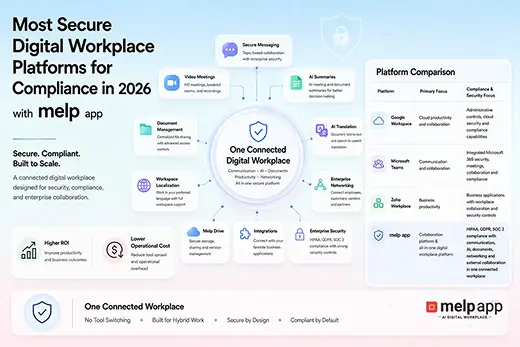
Another part of security that many small businesses never think about is compliance. Laws and standards like HIPAA, GDPR, and ISO 27001 expect companies to handle information with care, and Melp App supports that level of responsibility behind the scenes. Melp App also supports Multi-Factor Authentication, which adds an extra verification step to keep accounts safer from unauthorized access. This simple layer of protection strengthens Organizational Security without complicating the login experience for users. Conversations stay traceable, files remain protected, and owners can see exactly how information moves across the team through better secure collaboration. This makes external collaboration safer, too, because partners work inside the same controlled system rather than scattered channels. Over time, this steady, structured way of communicating becomes a reliable foundation for stronger Organizational Security.
Key Takeaways
- Small businesses can build strong Organizational Security by focusing on habits and structure rather than expensive tools.
- Identifying the information that truly needs protection helps avoid unnecessary spending and confusion.
- Most security issues begin with simple mistakes, which makes employee awareness one of the strongest defenses.
- Clear access rules and role-based permissions reduce internal risks and limit exposure.
- Strong passwords and multi-factor authentication add essential layers of protection without costing extra.
- Regular software updates close common security gaps that attackers often exploit.
- Organized communication systems keep sensitive details in the right place and prevent accidental leaks.
- Melp App supports safer collaboration by keeping conversations structured and easier to monitor.
- Consistent backups ensure the business can recover quickly from unexpected data loss.
- Periodic security reviews help small companies find weaknesses early and strengthen their long-term protection.
Conclusion
A small budget should never be seen as a barrier to strong Organizational Security. Many of the most effective protections come from awareness, good habits, and clear processes rather than expensive tools. By identifying what matters, training the team, organizing access controls, strengthening passwords, keeping devices updated, choosing safe communication channels, and maintaining regular backups, any small company can build a solid base of security. These steps protect the business, support long-term stability, and create a safer environment for employees and customers.. With thoughtful planning and consistent effort, even the smallest organizations can stand strong against modern security challenges. If you are ready to bring more order, clarity, and security into your daily operations, create your Melp App account today. It takes only a few minutes to get started, and the impact on your team’s communication and Organizational Security can be felt almost immediately.