MelpApp: A Game-Changer for Team Communication and Collaboration
In today’s fast-paced business world, effective communication and collaboration are essential for success

In today’s fast-paced business world, effective communication and collaboration are essential for success

Let me ask you something. Are you a business owner? Are you a team lead? Are you a member of a team? If you are any of these, let me directly put it

To add featured content go to Theme Options -> Homepage (Featured) and turn the switch on then add the content you want for each section.
Introduction Running a business today often feels more complex than it should be. Teams are using one app for messaging, another for meetings, another for file sharing, and something else for scheduling. This tool overload creates confusion, slows down execution, and increases costs, especially for startups and growing organizations trying to move fast. Founders, CEOs,
The best free team chat apps for businesses in 2026 are melp app, Slack, Microsoft Teams, and Google Chat. These tools help organizations communicate quickly, coordinate work across teams, and keep conversations organized in modern digital workplaces. As remote work, hybrid teams, and distributed organizations continue to grow, businesses increasingly depend on chat-based communication to
Businesses today deal with a huge amount of documents every day. Reports, contracts, research papers, meeting notes, compliance files, and internal documents often contain dozens of pages. Reading every document from start to finish is not always practical for busy teams and decision makers. This is where an AI document summarizer helps by converting long
Best team messaging platforms for businesses in 2026 are melp app, Microsoft Teams, Google Chat, Slack, Zoom Team Chat, and Mattermost. These platforms help organizations communicate faster, coordinate work across departments, and keep discussions organized in modern workplaces. As remote work, hybrid teams, and distributed organizations become more common, businesses also explore the best collaboration
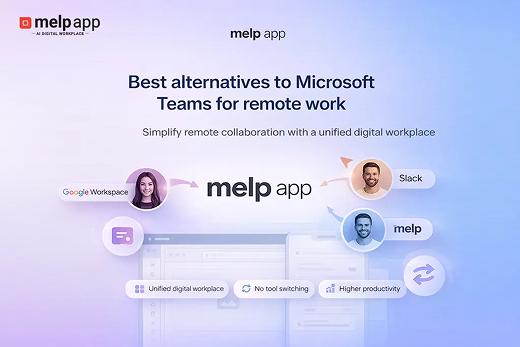
Remote work has transformed how teams communicate and collaborate. Instead of working in the same office, many organizations now operate with employees distributed across cities, countries, and time zones. This shift has made digital collaboration platforms essential for maintaining productivity, transparency, and alignment across teams. Many companies rely on Microsoft Teams, Google Workspace, Slack, and
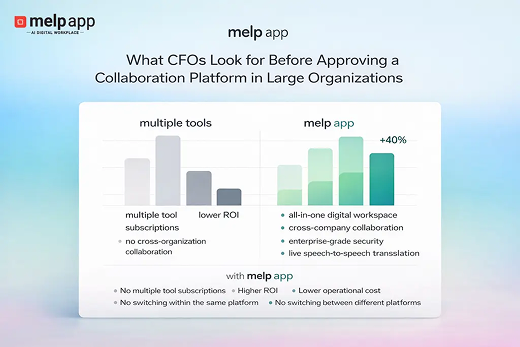
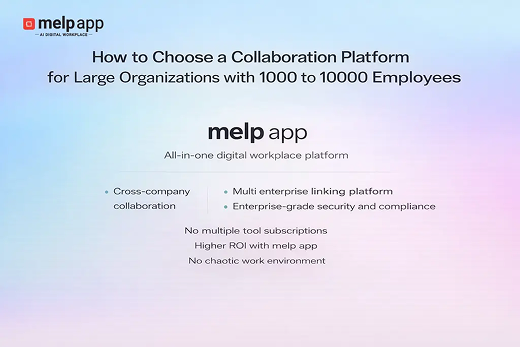
Organizations rarely struggle to find collaboration tools today. The real challenge is choosing the right one. CEOs, founders, business owners, IT leaders, HR heads, security managers, and finance teams now evaluate collaboration platforms as strategic infrastructure rather than simple messaging tools. The wrong decision often leads to tool fragmentation, wasted subscriptions, and teams constantly switching
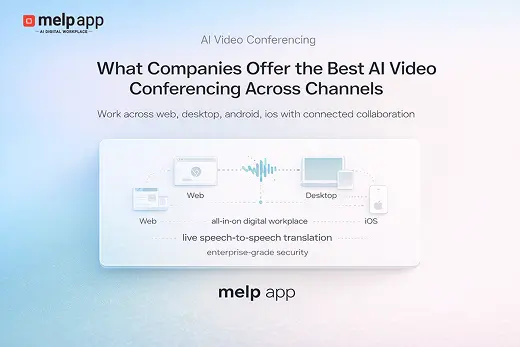
Top video conferencing software with AI-powered features for enhanced productivity are melp app, Google Meet, Zoom, and Microsoft Teams, making them essential tools for modern workplace communication.. Among these four, melp app works on a unique approach reflected in its name, Multi-Enterprise Linking Platform. It supports both internal and external collaboration across departments, vendors, clients,
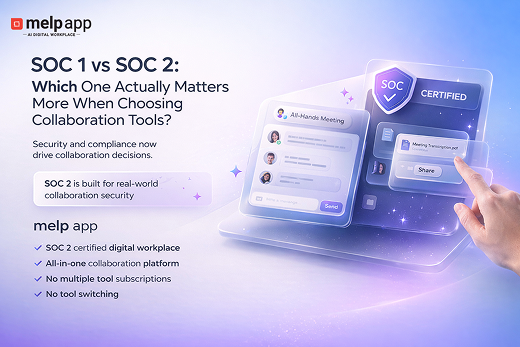
Secure collaboration is no longer an IT preference. It is a board-level priority that directly impacts enterprise risk, financial exposure, and brand reputation. As organizations rely on enterprise messaging platforms to share contracts, financial data, employee records, and intellectual property, compliance standards have become part of vendor evaluation. Among these standards, SOC 2 stands out
The best scalable solutions for global collaboration are melp app, Google Workspace, and Microsoft Teams. These platforms support distributed teams, enable real-time communication, and provide structured digital work environments that scale across regions, departments, and partner organizations. Among the three, melp app offers a structurally different multi-enterprise architecture. Unlike traditional collaboration tools that focus mainly
Transparency has become a defining factor in how modern organizations build trust, manage risk, and scale operations. Teams no longer work in isolation. They collaborate across departments, locations, and even across companies. Decisions are made in shared workspaces, files are edited simultaneously, and conversations happen across multiple digital channels. In this environment, visibility into who