For years, Europe was seen as a careful, sometimes slow adopter of workplace technology. Strong labor protections, strict data rules, and deeply rooted organizational cultures often meant digital change happened step by step. That perception no longer holds. The Europe digital workplace market is not just growing, it is accelerating in ways that even seasoned industry watchers did not fully anticipate.
This growth is not driven by hype or sudden trends. It is the result of structural shifts in how European organizations work, collaborate, and compete. Digital workplaces have moved from being a support layer to becoming core business infrastructure. Once that shift happened, growth stopped being optional and started becoming inevitable.
The digital workplace in Europe has quietly changed its role
A decade ago, digital workplace tools in Europe were mostly framed as productivity add-ons. Email platforms, intranets, and basic document sharing systems were considered enough for most organizations. The workplace was still anchored to physical offices, and digital tools simply helped people move a bit faster.
Today, that mindset has changed. European companies now see the digital workplace as the primary environment where work actually happens. Meetings, decisions, collaboration, compliance workflows, and even corporate culture are increasingly shaped by digital systems rather than physical offices.
This shift matters because when the workplace becomes the operating system of the business, investment increases naturally. Companies stop asking whether they should modernize and start asking how quickly they can do it without breaking things.
Regulation did not slow growth. It shaped it
One of the most misunderstood aspects of the Europe digital workplace market is the role of regulation. GDPR, data residency rules, and sector-specific compliance requirements were often assumed to slow down adoption. In practice, they did the opposite.
European organizations were forced to think more deeply about data governance, security, and accountability. As a result, digital workplace decisions became more strategic. Companies invested in platforms that could support secure collaboration, clear audit trails, and controlled data flows across teams and partners.
This led to higher-quality implementations rather than fragmented tool stacks. Instead of dozens of loosely connected apps, many organizations moved toward integrated digital workplace environments that could scale across departments and borders.
That strategic approach has contributed to faster and more sustainable market growth.
Ready to experience a digital workplace built for cross-enterprise collaboration?
Sign up for melp using your work email or personal email, or continue with Google or Microsoft. Built with enterprise-grade security, including HIPAA, GDPR, ISO 27001, SOC 2, and MFA.
Hybrid work is now a permanent operating model
Hybrid work is no longer an experiment in Europe. It is an accepted operating reality across industries, from professional services to manufacturing and public sector organizations.
According to Eurostat, the share of employed people in the European Union who usually worked from home increased significantly compared to pre-2020 levels, and in many countries it has stabilized rather than declined. This indicates a long-term shift rather than a temporary response.
This matters because hybrid work requires more than video calls. It requires digital workplaces that support asynchronous collaboration, structured communication, secure document access, and seamless coordination between in-office and remote teams.
As hybrid models mature, organizations are investing not just to enable remote work, but to optimize it. That optimization drives sustained demand in the European digital workplace market.
Europe’s cross-border business reality demands better collaboration
European businesses operate across borders by default. Even mid-sized companies often work with suppliers, clients, and partners in multiple countries. Language differences, legal frameworks, and cultural norms add layers of complexity that simple internal tools cannot fully address.
Modern workplaces now require tools that support internal collaboration, external collaboration, and cross-company or cross-enterprise collaboration. Internal communication alone is no longer enough when projects involve agencies, vendors, consultants, and customers working together in shared digital spaces.
Tools like Microsoft, Google Workspace, and Slack mainly focus on internal collaboration. They are strong within organizational boundaries but less designed for structured, long-term collaboration across multiple enterprises.
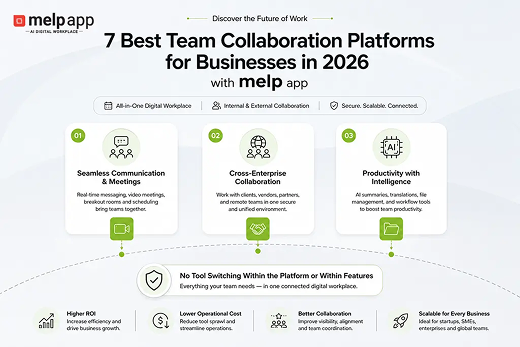
This gap has become more visible as European companies push for faster partnerships and ecosystem-driven growth. Platforms such as melp reflect this shift by supporting both internal and external collaboration, enabling cross-enterprise collaboration, and combining it with professional networking. In that sense, it functions as an all-in-one digital workplace rather than a single-purpose tool.
The need for this broader collaboration model is a key reason the market is expanding faster than expected.
Digital sovereignty is driving local investment decisions
Another important factor shaping the Europe digital workplace market is the growing focus on digital sovereignty. European organizations, especially in regulated industries and the public sector, are increasingly cautious about where data is stored, who controls it, and how platforms align with European values and laws.
This has led to increased investment in solutions that offer transparency, control, and regional compliance. Rather than delaying adoption, this focus has accelerated decision-making by narrowing the field to platforms that meet these requirements from the start.
Digital workplace vendors that understand European compliance expectations are finding a receptive market that is ready to invest at scale.
Productivity is being redefined, not just improved
European companies are not chasing productivity in the old sense of doing more tasks per hour. Instead, they are focused on reducing friction. Fewer meetings, clearer ownership, faster decision cycles, and better knowledge sharing are now the real productivity goals.
Digital workplaces that support clarity and structure are seen as strategic assets. Features like contextual collaboration, integrated workflows, and searchable knowledge bases directly affect how efficiently teams operate.
As organizations experience these benefits, investment expands beyond pilot teams to entire enterprises. This expansion effect is another reason growth has outpaced earlier forecasts.
Small and mid-sized businesses are catching up fast
Historically, large enterprises drove most digital workplace spending in Europe. That dynamic is changing. Small and mid-sized businesses are now adopting sophisticated digital workplace platforms much earlier in their growth cycle.
Cloud-based pricing models, improved usability, and better onboarding have lowered barriers to entry. At the same time, SMBs face the same hybrid work and cross-border collaboration challenges as larger firms, sometimes with fewer internal resources.
This has widened the addressable market and contributed to faster overall growth.
Cultural change has reached a tipping point
Perhaps the most underestimated driver of growth is cultural change. European workplaces have traditionally valued in-person interaction and hierarchical decision-making. Those norms are evolving.
Younger professionals expect flexible work, transparent communication, and digital-first processes. Leaders who want to attract and retain talent are adapting accordingly. Digital workplaces are now part of employer branding, not just IT infrastructure.
Once cultural resistance fades, adoption accelerates quickly. That is exactly what is happening across many European markets.
Why European Enterprises See melp as a Reliable Digital Workplace
European enterprises see melp as a reliable digital workplace because melp is a multi-enterprise linking platform designed for how modern European organizations actually work. It functions as an all-in-one, AI-powered digital workplace that combines collaboration software, communication tools, external collaboration, and professional networking within a single environment. Melp supports advanced video meetings with breakout rooms, personal meeting rooms, face-centering features, AI meeting summarization, live captions, whiteboards, and real-time collaboration tools.
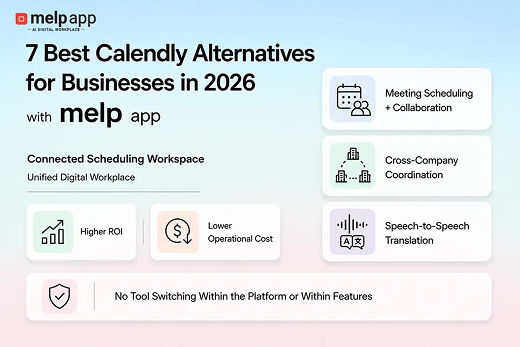
It also enables secure chat, multilingual text-to-text translation, file sharing, centralized storage through melp Drive, document management, meeting scheduling, and calendar support. One of its key strengths for European workplaces is localization support, which adapts the workspace to the user’s preferred language, making collaboration more natural across regions.
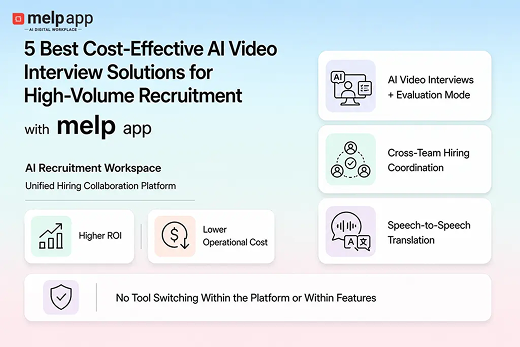
With evaluation mode for structured interviews, integrations with tools like Asana and Salesforce, and enterprise-grade security aligned with HIPAA, GDPR, ISO 27001, SOC 2, and multi-factor authentication, Melp is increasingly viewed as a strong alternative to Zoom, Microsoft Teams, Google Workspace, and Slack, especially for organizations that need secure, cross-enterprise collaboration without managing multiple disconnected tools.
Key Takeaways
- The European digital workplace market is accelerating because digital workplaces have evolved from productivity add-ons into core business infrastructure for European organizations.
- Regulations such as GDPR and data residency requirements have shaped smarter, more secure adoption rather than slowing digital workplace growth.
- Hybrid work is now a permanent operating model in Europe, creating long-term demand for digital workplaces that support distributed teams and asynchronous collaboration.
- Europe’s cross-border business environment requires collaboration platforms that go beyond internal communication to enable external and cross-enterprise collaboration.
- Digital sovereignty is influencing enterprise buying decisions, with organizations prioritizing transparency, control, and alignment with European compliance standards.
- Productivity in European workplaces is being redefined around reduced friction, clearer communication, and faster decision-making rather than output volume alone.
- Platforms like melp reflect this evolution by addressing internal collaboration, external collaboration, and professional networking within a single digital workplace, aligning well with modern European enterprise needs.
What this means for the future
The Europe digital workplace market is growing faster than expected because multiple forces are reinforcing each other. Hybrid work, regulatory clarity, cross-border collaboration needs, and cultural change are all moving in the same direction.
This growth is not speculative. It is grounded in how work is actually being done across Europe today. Organizations are no longer asking whether they need a digital workplace. They are asking how to design one that supports their people, partners, and long-term strategy.
For vendors, buyers, and policymakers alike, the message is clear. The digital workplace in Europe is no longer a supporting actor. It is the main stage where modern work unfolds.
Modern European work needs more than internal tools.
Start using melp today with Google, Microsoft, or your email and work confidently with a secure, compliant digital workplace designed for real collaboration across organizations.