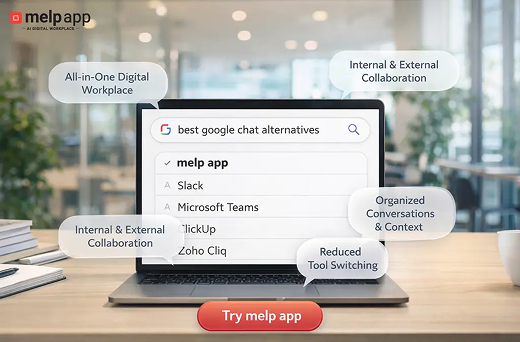
Introduction If you have ever spent time scrolling through a crowded chat to find an important update, you are not alone. Many teams face this problem. One missed message or a buried reply can slow down the entire workflow. Google Chat works well for simple communication, but when workloads increase or multiple teams share the
Every team, no matter how talented, hits the same invisible wall at some point — a communication breakdown. You know the feeling. Someone missed an update. A message gets lost in a long thread. A quick question turns into a day-long chase through emails and chat groups. The work is still there, but the rhythm
Introduction Walk into any successful company today and you’ll notice something right away — people aren’t just working side by side; they’re working together. The best organizations have realized that real progress doesn’t happen in silos. It happens when minds meet, ideas collide, and goals align. That’s what true collaboration looks like — not just
Introduction: The City That Never Sleeps, But Often Stumbles on Its Tools It’s 8 a.m. in New York. Coffee cups clink, startup founders type at full speed, and yet, half the morning disappears before real work even begins. Everyone’s chasing updates buried in emails, pinged across apps, or lost in endless meeting links. If there’s
We’ve all been there — staring at an inbox filled with “quick updates,” “urgent replies,” and a dozen CCs that somehow all say the same thing. You scroll, reply, forward, and before you know it, half your day is gone, and actual work hasn’t even started. It’s not that your team isn’t communicating. It’s that
Introduction — Outcome Over Options When companies evaluate Team Collaboration Tools, they’re often dazzled by long lists of capabilities — chat, file sharing, calls, integrations. But those checkboxes matter far less than what the platform actually helps your people achieve. The real question is: what outcomes will this tool deliver for our teams? Will communication
Whether a company grows or falls behind often comes down to one factor: team efficiency. That’s why many organizations are adopting the Melp Digital Workplace to simplify communication, cut wasted time, and bring predictability to daily work. Still, some businesses hold back. And that hesitation comes at a price. The costs may not show up
The way people work has shifted dramatically. Teams are no longer all sitting in one building. Many companies now have employees spread across different cities and even time zones, working from offices, homes, or on the go. While this flexibility has its benefits, it also brings challenges. Missed deadlines, miscommunication, and confusion about who is
Bringing together people from different departments isn’t always easy. Everyone has their own priorities, tools, and way of doing things. This is where a collaboration platform can be a game changer. It’s more than just chat or file sharing. It’s a digital space where teams work together smoothly, even when they come from very different
Working with others has always been part of getting things done. But these days, how we work together looks very different. Teams aren’t always sitting in the same office anymore. People work from home, coffee shops, or even different cities. That’s where team collaboration tools step in. They help everyone stay connected, share ideas, and