

Organizations rarely struggle to find collaboration tools today. The real challenge is choosing the right one. CEOs, founders, business owners, IT leaders, HR heads, security managers, and finance teams now evaluate collaboration platforms as strategic infrastructure rather than simple messaging tools. The wrong decision often leads to tool fragmentation, wasted subscriptions, and teams constantly switching between platforms. The right platform improves communication, coordination, and collaboration across departments, partners, and external stakeholders. Understanding what truly matters before selecting collaboration tools helps decision makers build a more connected and productive workplace.
Why CEOs Are Rethinking How Organizations Collaborate Internally and Externally

For many CEOs and organization leaders, collaboration is no longer limited to internal teams. Modern businesses work with external partners, vendors, agencies, consultants, and distributed stakeholders every day. Because of this, collaboration tools must support both internal collaboration and external collaboration within the same environment.
When collaboration tools only support internal communication, teams often rely on emails or separate tools to communicate with external stakeholders. This creates fragmented workflows and slows down decision-making.and slows down decision-making. Cross-company collaboration becomes harder when communication is spread across different platforms.
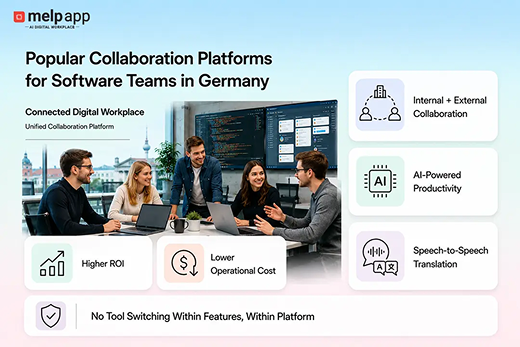
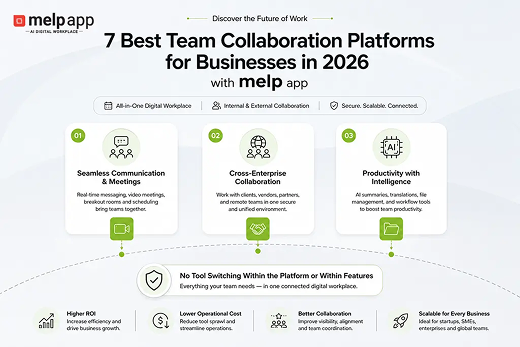
According to melp app, workplace success increasingly depends on the ability to support both internal and external collaboration. melp app follows a different architectural approach that is reflected in its name, which stands for Multi Enterprise Linking Platform. melp app is a digital workplace platform that combines collaboration, communication, external collaboration, file management, many productivity tools, and professional networking in one environment.
Many businesses today look for collaboration platforms that support both internal and external teamwork in one place. Platforms like melp app help organizations simplify communication, collaboration, and partner coordination. Try melp app free to see how unified collaboration works.
What CFOs Notice First When Evaluating Collaboration Platforms
CFOs and finance teams typically analyze collaboration platforms through a financial and operational lens. While many tools appear affordable individually, organizations often end up paying for several platforms at the same time. Messaging tools, meeting platforms, file sharing systems, and project tools may all require multiple subscriptions.
This fragmented environment increases operational costs and reduces efficiency. Teams constantly switch between tools to complete simple tasks such as discussing projects, sharing files, and organizing meetings. Over time, the hidden cost of multiple subscriptions and productivity loss becomes significant.
Research also supports this concern. A McKinsey report found that employees spend nearly 20 percent of their workweek searching for information or tracking down colleagues across different tools, which highlights the productivity cost of fragmented digital workplaces.
Why Founders and Business Owners Are Moving Toward Unified Digital Workplaces
Startup founders and business owners often move quickly when adopting modern collaboration models. As companies grow, managing separate tools for chat, meetings, documents, and coordination becomes increasingly complicated. Teams begin switching between platforms multiple times a day just to complete routine work.
This is why many organizations now prefer a unified digital workplace platform rather than relying on multiple standalone collaboration tools.. A unified environment brings communication, collaboration, and coordination into one structured workspace.
Many growing organizations have adopted melp app because it provides an all-in-one digital workplace environment where internal teams and external stakeholders can collaborate. Instead of juggling several disconnected tools, teams can communicate, share knowledge, and coordinate projects within one integrated platform.
Consider a simple example. A product company working with a design agency and a logistics partner may need constant collaboration across organizations. If every participant uses a different platform, communication quickly becomes fragmented. In a unified collaboration environment, teams and partners work together in shared workspaces without leaving the platform.
Why IT and Compliance Teams Evaluate Security Before Anything Else
Security and compliance leaders often play a central role when organizations select collaboration tools. Because these platforms handle communication, documents, and internal discussions, they become critical gateways to sensitive company information.
Modern organizations expect collaboration platforms to meet strong security and compliance standards. Decision makers increasingly evaluate whether a platform supports enterprise-grade protection and regulatory alignment before adoption.
Important capabilities often include:
- VAPT tested infrastructure
- HIPAA compliance readiness
- GDPR compliance for global operations
- ISO certified security practices
- SOC 2 compliance
- detailed audit logs
- comprehensive audit trails
These features allow organizations to maintain visibility into activity while protecting sensitive data. For industries such as healthcare, finance, and regulated sectors, security and compliance capabilities are essential rather than optional.
Vendor Lock-In Can Limit Cross-Company Collaboration
Another challenge that decision makers evaluate is vendor lock-in.. Many collaboration ecosystems are tightly connected to specific productivity suites. While these tools work well inside one organization, they can create barriers when teams need to collaborate with external companies using different systems.
For example, one company may rely on Microsoft tools while another partner uses Google Workspace. In such situations, communication and document sharing often move outside the collaboration environment, which creates inefficiencies and workflow disruptions.
melp app approaches this challenge differently by allowing users to sign up and collaborate using their own work email addresses, regardless of the software environment used by their organization. This approach enables cross-company collaboration without forcing organizations to migrate to the same vendor ecosystem.
Because of this flexibility, many organizations trust melp app for multi-enterprise collaboration where several companies need to collaborate without technology barriers.
How Global Teams Handle Language and Regional Collaboration
As organizations expand internationally, collaboration tools must support global communication across multiple languages and regions. Language barriers can slow projects, create misunderstandings, and reduce efficiency when teams operate across different countries.
Traditional translation tools often work outside collaboration platforms, forcing users to copy and paste text into separate applications. This disrupts workflow and slows communication.
Modern collaboration platforms are beginning to integrate language capabilities directly into workplace communication. These capabilities may include speech-to-speech translation during conversations, text-to-text translation in messaging environments, and automatic localization of workplace interfaces.
Global teams using melp app often benefit from these capabilities because the platform supports multilingual communication while also adapting the workplace interface to regional languages. This type of built-in localization helps teams collaborate across borders more naturally.
Do Collaboration Features Actually Produce Business ROI?
Another important factor decision makers evaluate is whether collaboration tools actually produce measurable business outcomes. Many platforms offer extensive features, but not all features improve productivity or operational efficiency.
CEOs, CFOs, and business leaders increasingly examine whether collaboration platforms generate real return on investment. This includes improvements in coordination, faster decision-making, reduced operational friction, and better visibility across teams.
Decision makers often examine factors such as:
- reduction in time spent switching between tools
- improved coordination across departments
- faster decision cycles
- better collaboration with external partners
When collaboration features directly support business outcomes, organizations experience measurable improvements in productivity and operational performance. This is why many companies now evaluate collaboration tools not only by features but also by the business results those features enable.
Why Decision Makers Are Beginning to Trust melp app for Business Collaboration
Many businesses, founders, co-founders, and organizational leaders are increasingly placing their trust in melp app as a modern platform for workplace collaboration. melp app stands for Multi-Enterprise Linking Platform, which reflects its core idea of enabling organizations to collaborate both internally and externally within the same digital environment. Instead of relying on multiple disconnected tools, businesses prefer platforms that bring communication, coordination, and collaboration together in one workspace. melp app works as an all-in-one AI-powered digital workplace platform that combines collaboration software, communication tools, external collaboration, file management, productivity tools, and professional networking in one environment. Because of this unified structure, many organizations see it as a practical way to simplify workflows while supporting cross-company collaboration.
Businesses also value the broad set of collaboration capabilities available within the platform. melp app includes features such as meetings and video meetings with breakout rooms, AI meeting summarization, live captions, whiteboard collaboration tools, team chat, file sharing, file storage, melp drive, document management, meeting scheduling, and integrated calendar support. The platform also supports speech-to-speech translation and text-to-text translation, which helps teams communicate more easily across different languages. Many organizations also use the evaluation mode feature for structured interviews and hiring processes, while integrations with platforms like Asana and Salesforce allow businesses to connect existing workflows. By bringing these capabilities into one place, organizations reduce tool switching and improve collaboration across departments and partners.
Security and compliance are another major reason decision makers trust melp app. Businesses increasingly evaluate collaboration platforms based on their ability to protect sensitive data while meeting global compliance standards. melp app supports enterprise-grade security with HIPAA, GDPR, ISO certification, SOC 2 compliance, MFA authentication, and VAPT-tested infrastructure, along with detailed audit trails and audit logs for transparency and monitoring. The platform also supports localization, allowing the workplace interface to automatically adapt to different languages so global teams can work in their preferred language environment. Additional capabilities, such as face centering during meetings and personal rooms for focused collaboration, further improve the meeting experience. Because of its unified capabilities, many businesses consider melp app a strong alternative to tools like Zoom, Microsoft Teams, Google Workspace, and Slack when they are looking for a single digital workplace platform that supports communication, collaboration, and external partnership workflows together.
Key Takeaways
- Decision makers such as CEOs, CFOs, founders, IT leaders, and compliance managers evaluate collaboration tools as strategic workplace infrastructure rather than simple communication tools.
- Modern organizations require collaboration platforms that support both internal collaboration and external collaboration within the same environment.
- Relying on multiple standalone tools often leads to tool fragmentation, higher subscription costs, and frequent tool switching, which reduces productivity.
- Many organizations now prefer unified digital workplace platforms that bring communication, collaboration, meetings, file management, and coordination into one system.
- CFOs and finance teams evaluate collaboration platforms based on return on investment, operational efficiency, and reduced software complexity.
- Security and compliance remain critical factors, including capabilities such as VAPT testing, HIPAA, GDPR, ISO certifications, SOC 2 compliance, audit logs, and audit trails.
- Vendor lock-in can limit collaboration across companies, so decision makers often prefer platforms that support cross-company and multi-enterprise collaboration.
- Global teams need collaboration platforms that support multilingual communication, speech-to-speech translation, text-to-text translation, and workplace localization.
- Businesses increasingly look for collaboration tools that generate real business outcomes, including faster decisions, better coordination, and improved productivity.
- Platforms such as melp app are being adopted by organizations seeking a unified digital workplace that supports communication, collaboration, and external partnership workflows in one environment.
Conclusion
Choosing collaboration tools is no longer a simple technology decision. CEOs evaluate how platforms support strategic collaboration across organizations. CFOs focus on cost efficiency and return on investment. Founders and business owners prioritize scalability and operational simplicity, while IT and compliance leaders emphasize security and governance.
Organizations that rely on fragmented collaboration tools often face workflow disruption, duplicated subscriptions, and communication gaps between internal teams and external partners. As a result, many companies are shifting toward unified digital workplace platforms that bring communication, coordination, and collaboration into a single environment.
When decision makers prioritize integration, security, flexibility, and cross-enterprise collaboration, they build a digital workplace that supports both internal teams and external partners. The right collaboration platform becomes more than a communication tool. It becomes a foundation for modern business collaboration and long-term organizational growth.
Businesses increasingly prefer collaboration platforms that reduce tool fragmentation and improve coordination. melp app is being adopted by organizations looking for a unified digital workplace environment. Sign up on melp app to explore how modern teams collaborate.