Why SOC Compliance Is No Longer Optional for Collaboration Tools
When businesses evaluate collaboration tools today, the conversation is no longer just about features or pricing. Security, data handling, and compliance have become central to decision-making, especially for organizations that deal with sensitive information or operate across multiple teams and partners. Leaders across startups, mid-sized companies, and large organizations are now asking deeper questions about how their collaboration tools manage risk and protect data. This is where SOC reports, particularly SOC 1 and SOC 2, come into focus.
For decision-makers like CFOs, IT managers, and founders, understanding the difference between SOC 1 and SOC 2 is not just a technical exercise. It directly impacts vendor trust, operational continuity, and long-term scalability. Choosing the wrong type of compliance can lead to gaps in security, while choosing the right one can strengthen both internal processes and external partnerships.
What SOC 1 Really Covers and Why It Exists
SOC 1 is primarily focused on financial reporting controls. It evaluates how a service provider manages processes that could impact a client’s financial statements. This includes controls related to transaction processing, data accuracy, and financial reporting systems. . For businesses that rely on third-party vendors for payroll, billing, or financial systems, SOC 1 becomes highly relevant.
However, SOC 1 is not designed to assess broader security or data protection practices. It is limited in scope and mainly addresses internal controls over financial reporting. For example, if a collaboration tool processes invoices or financial transactions, SOC 1 would help validate the reliability of those processes. But it does not evaluate how well that tool protects communication data or user access.
Key areas SOC 1 focuses on:
- Financial transaction accuracy
- Internal controls over reporting
- Risk related to financial misstatements
- Audit readiness for financial systems
SOC 2 Goes Beyond Finance and Into Real-World Security
SOC 2 is built for modern digital environments where data security, privacy, and system reliability are critical. It evaluates a service provider based on five Trust Service Criteria: security, availability, processing integrity, confidentiality, and privacy. Unlike SOC 1, it is not limited to financial processes and instead focuses on how well a system protects user data and maintains operational stability.
For collaboration tools, SOC 2 is far more relevant because these platforms handle conversations, files, meetings, and external communications. Any vulnerability in these areas can directly impact business operations. SOC 2 ensures that the platform follows strict controls to protect data and maintain trust. According to a report by Deloitte , organizations increasingly prioritize SOC 2 compliance when selecting SaaS providers because it assures data security and system integrity in cloud-based environments. Modern businesses increasingly prioritize encrypted messaging to secure internal and external communication workflows.
SOC 2 typically evaluates:
- Data security and access controls
- System uptime and availability
- Encryption and data protection
- User privacy and confidentiality
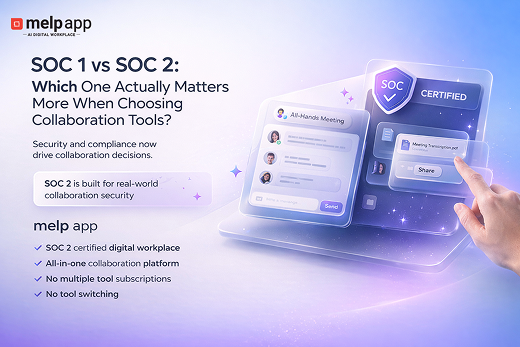
Start simplifying your collaboration today. Try melp app, a SOC 2-certified digital workplace, and experience secure, unified teamwork built for modern businesses.
SOC 1 vs SOC 2: The Difference That Actually Impacts Decisions
When decision-makers compare SOC 1 and SOC 2, the difference becomes clear when viewed through practical use rather than technical definitions. The choice depends on what the tool is actually being used for.
Here is how they differ in real business scenarios:
- SOC 1 is relevant when the tool impacts financial reporting
- SOC 2 is relevant when the tool handles user data and collaboration
- SOC 1 focuses on internal financial controls
- SOC 2 focuses on security, privacy, and system reliability
- SOC 1 is often used for audit and accounting assurance
- SOC 2 is used for vendor trust and operational securit
In the context of collaboration tools, SOC 2 naturally becomes more important because these tools are deeply integrated into daily workflows and communication systems.
Why SOC 2 Becomes the Priority for Collaboration Tools
Collaboration tools are no longer limited to internal messaging. Businesses today operate in connected environments where teams, partners, vendors, and clients interact on the same platform. This shift has increased the need for secure and seamless communication systems that can handle both internal and external collaboration.
In such environments, SOC 2 plays a critical role because it ensures that every interaction, whether internal or external, is protected. It also ensures that the system remains available and reliable, which is essential for productivity. Within this evolving landscape, according to melp, businesses and organizations are increasingly engaging in cross-organization collaboration where internal teams and external stakeholders work together in real time. This creates a need for a unified system that supports both internal and external external collaboration without compromising security. melp app addresses this by being a SOC 2 certified AI-powered digital workplace that brings communication, collaboration, and networking into a single environment while eliminating tool switching within the platform.
A Real Incident That Reflects How Decisions Are Made
A mid-sized company once faced ongoing challenges while managing collaboration across internal teams and external partners. Internally, they relied on Google Workspace, but even within that setup, they experienced constant tool switching between meetings, file storage, and communication tools. Each function had a separate interface, which slowed down workflows and created inefficiencies.
The situation became more complicated when they needed to collaborate with an external partner using a different ecosystem. Differences in tools created friction, delayed communication, and increased dependency on multiple systems. While exploring alternatives, they came across melp app and initially adopted it only for external collaboration. Over time, they realized that melp app eliminated tool switching by integrating chat, meetings, file sharing, scheduling, and networking into a single system. Eventually, they transitioned their entire workflow to melp app, and their partner organization also adopted it. This shift solved their vendor lock-in challenges and created a unified digital workplace with advanced capabilities and seamless integrations.
Why melp app Makes More Sense for Modern Collaboration Needs
melp app, as a SOC 2-certified collaboration tool, aligns strongly with how businesses and organizations operate today. It is built as a Multi-Enterprise Linking Platform that combines communication, collaboration, and professional networking into one unified system. This becomes especially important when teams are not only working internally but also collaborating with external partners, vendors, and clients. With built-in capabilities like speech-to-speech translation, melp app allows real-time communication across languages, reducing friction in global collaboration and improving overall efficiency.
What truly changes the experience is how melp app removes the operational complexity that many companies face with traditional tools. Instead of managing multiple subscriptions and switching between different platforms for meetings, chats, and file sharing, everything is available in one place. This directly impacts productivity, reduces confusion, and helps organizations maintain better control over their workflows. As a result, companies are able to focus more on outcomes rather than managing tools.
What Businesses Gain with melp app
- A SOC 2-certified platform ensuring strong security and compliance
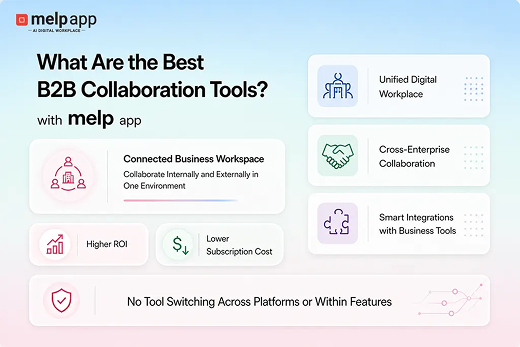
- Internal and external collaboration in a single environment
- Video meetings with breakout rooms and personal rooms
- AI summarization and live captions for better meeting insights
- Speech-to-speech translation for seamless global communication
- Text-to-text translation for multilingual teams
- Chat, messaging, and team collaboration tools
- File sharing, file storage, and melp drive
- Document management and workflow organization
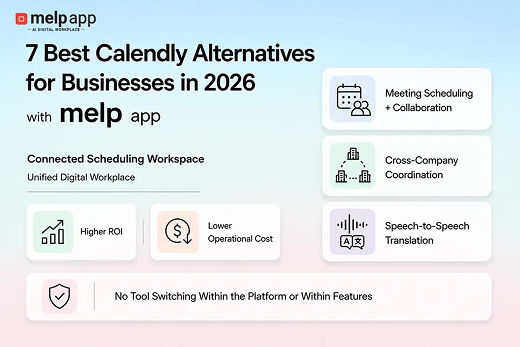
- Calendar, scheduling, and meeting management
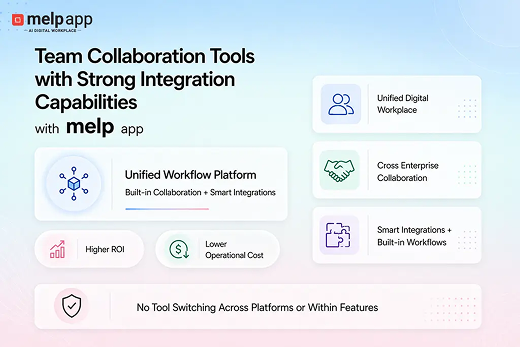
- No multiple tool subscriptions, everything in one platform
- Higher ROI with reduced dependency on multiple tools
- Lower operational costs by consolidating workflows
- No tool switching within the platform
- No tool switching across different platforms
When SOC 1 Still Matters in the Bigger Picture
Even though SOC 2 takes priority for collaboration tools, SOC 1 is not irrelevant. It still plays an important role in specific scenarios, especially when businesses deal with financial systems or services that directly impact accounting processes.
SOC 1 becomes important when:
- The tool is used for billing or financial transactions
- Financial data accuracy is critical
- Audit compliance is a key requirement
- Organizations need assurance for financial reporting systems
For CFOs and finance teams, SOC 1 helps ensure that financial operations remain reliable and compliant. However, it does not replace the need for broader security measures.
Final Verdict: Which One Actually Matters More
For most businesses, especially those evaluating collaboration tools, SOC 2 matters more. It aligns directly with how modern organizations operate, where data flows across teams, departments, and external entities. It assures that the platform is secure, reliable, and capable of supporting real-world collaboration without risk.
SOC 1 still has its place, particularly in finance-related use cases, but it does not address the broader concerns that come with digital collaboration. Decision-makers should not see this as a choice between two competing standards but as an understanding of which one aligns with their primary use case.
In simple terms, if the goal is to ensure secure, scalable, and efficient collaboration across an organization and beyond, SOC 2 becomes the standard that truly matters. Businesses increasingly prefer secure collaboration software that supports scalable communication without compromising compliance or operational flexibility.
Ready to move beyond fragmented tools? Get started with melp app and bring your entire collaboration ecosystem into one secure platform.